I was standing in my cramped kitchen, the timer on the stove ticking away, when the first bite of that over‑cooked chicken I’d made the night before hit my tongue—dry, flavorless, and a little sad. I stared at the brown, uneven crust and thought, “I could do better.” The moment that sparked a culinary revelation: a simple skillet, a handful of apples, and the right seasoning can turn a flop into a triumph. That night, I vowed to create a dish that would make my taste buds do a happy dance and my friends ask, “Where did you learn that?”
Picture this: the air fills with the sweet, crisp scent of apples caramelizing in butter, the gentle sizzle of onions releasing a mellow sweetness, and the faint whisper of thyme and sage dancing in the background. Your eyes are drawn to the golden edges of the chicken, the translucent ribbons of apple slices glistening with a glossy glaze. You feel the comforting warmth radiating from the skillet, like a hug that’s almost too good to be real. When you finally bite, the juicy chicken bursts with a tender, savory bite, the apples give a subtle tartness that cuts through the richness, and the sauce coats every morsel like velvet, leaving you craving a second plate.
What makes this version of Apple Chicken Skillet stand out isn’t just the combination of flavors; it’s the meticulous layering of techniques that elevate each component. I’m talking about the precise sear that locks in juices, the timing of adding apples to preserve their shape and sweetness, and the subtle use of apple cider to create a sauce that’s both silky and slightly acidic. It’s the balance of crisp and tender, sweet and savory, that transforms an ordinary dinner into a memorable experience. If you’ve ever tried a version that falls flat, you’ll feel the difference immediately.
And here’s a twist you might not expect: a splash of Dijon mustard and a pinch of brown sugar at the end of cooking. That little burst of umami and caramelized sweetness turns the sauce from simple to unforgettable. I dare you to taste this and not go back for seconds. This isn’t just another skillet recipe; it’s the best version you’ll ever make at home.
Let me walk you through every single step—by the end, you’ll wonder how you ever made it any other way. The journey starts with a handful of kitchen hacks that will save you time, keep the flavors sharp, and ensure every bite is a masterpiece. Ready? Let’s dive in.
What Makes This Version Stand Out
- Flavor Layering: Every ingredient is introduced at the precise moment to build depth—from the initial sear that creates a caramelized crust, to the gentle simmering of apples that release their natural sugars. The result? A sauce that feels like a symphony of sweet and savory.
- Texture Harmony: The chicken stays juicy and tender, the apples remain crisp and slightly firm, and the onions become silky. No soggy bits, no rubbery meat—just perfectly balanced textures that dance on your palate.
- Time Efficiency: All the prep and cooking fit into a single pan, so you’re not juggling multiple pots. This version cuts down cleanup while maximizing flavor.
- Ingredient Quality: Using fresh apples (Granny Smith or Honeycrisp) and high‑quality olive oil ensures the dish doesn’t feel generic. The quality of each component amplifies the others.
- Crowd‑Pleaser: Whether it’s a weekday dinner or a weekend gathering, the dish is guaranteed to wow. Friends will keep asking for the recipe, and you’ll be the hero.
- Make‑Ahead Potential: The sauce thickens beautifully, so you can prepare it in advance and reheat without losing flavor.
- Visual Appeal: The vibrant green apples against the golden chicken create a dish that’s almost too pretty to eat.
- Versatility: Swap out chicken for pork or turkey, and the method still works. The base is robust enough to accommodate variations.
Alright, let’s break down exactly what goes into this masterpiece…
Inside the Ingredient List
The Flavor Base
Chicken Breasts: The backbone of the dish, they provide a lean protein that absorbs the surrounding flavors. Use boneless, skinless breasts for a clean presentation, but feel free to try thighs for a richer taste. If you skip the chicken, the dish loses its heart—think of it as the missing puzzle piece.
Apple Cider: A splash of cider adds acidity that balances the sweetness of the apples and the richness of the butter. It also creates a silky sauce that clings to the chicken. If you’re out of cider, apple juice or even a little white wine can substitute, but the depth of flavor will differ.
Dijon Mustard: A teaspoon of mustard at the end brings a subtle tang and a hint of umami that lifts the entire sauce. It’s a small addition that makes a big difference. Skip it, and the sauce feels a touch flat.
The Texture Crew
All‑Purpose Flour: A tablespoon of flour is used to thicken the sauce without making it heavy. It also gives the skillet a glossy sheen. If you’re gluten‑free, a gluten‑free blend or a small amount of cornstarch works just as well.
Butter: Two tablespoons of butter provide richness and help caramelize the onions and apples. Butter adds a depth of flavor that oil alone can’t achieve. If you prefer a lighter version, replace half the butter with olive oil.
Olive Oil: Two tablespoons of high‑quality olive oil help sear the chicken and prevent sticking. It also contributes a subtle fruity note that complements the apples. Use extra‑virgin for the best flavor.
The Unexpected Star
Fresh Apples: Two medium apples, sliced, are the star of the show. Choose varieties that hold their shape—Granny Smith or Honeycrisp work best. The apples’ natural sugars caramelize, creating a sweet contrast to the savory chicken.
Onion: One diced onion adds a mellow sweetness that builds the flavor foundation. The onion’s texture softens as it cooks, contributing to the sauce’s body. If you’re allergic, a small amount of scallions can replace it.
Garlic: Two minced cloves of garlic infuse the dish with aromatic heat. Garlic’s sharpness cuts through the richness of the butter and enhances the overall depth. If you love garlic, feel free to add an extra clove.
The Final Flourish
Dried Thyme and Sage: One teaspoon each of dried thyme and sage bring earthy, herbaceous notes that elevate the dish. These herbs anchor the sweetness of the apples and the savory chicken. If you’re craving a different herb profile, try rosemary or oregano.
Salt and Pepper: A half teaspoon of salt and a half teaspoon of pepper balance the flavors. Salt enhances sweetness and depth; pepper adds a subtle heat. If you’re watching sodium, use a low‑sodium seasoning blend.
Everything’s prepped? Good. Let’s get into the real action…
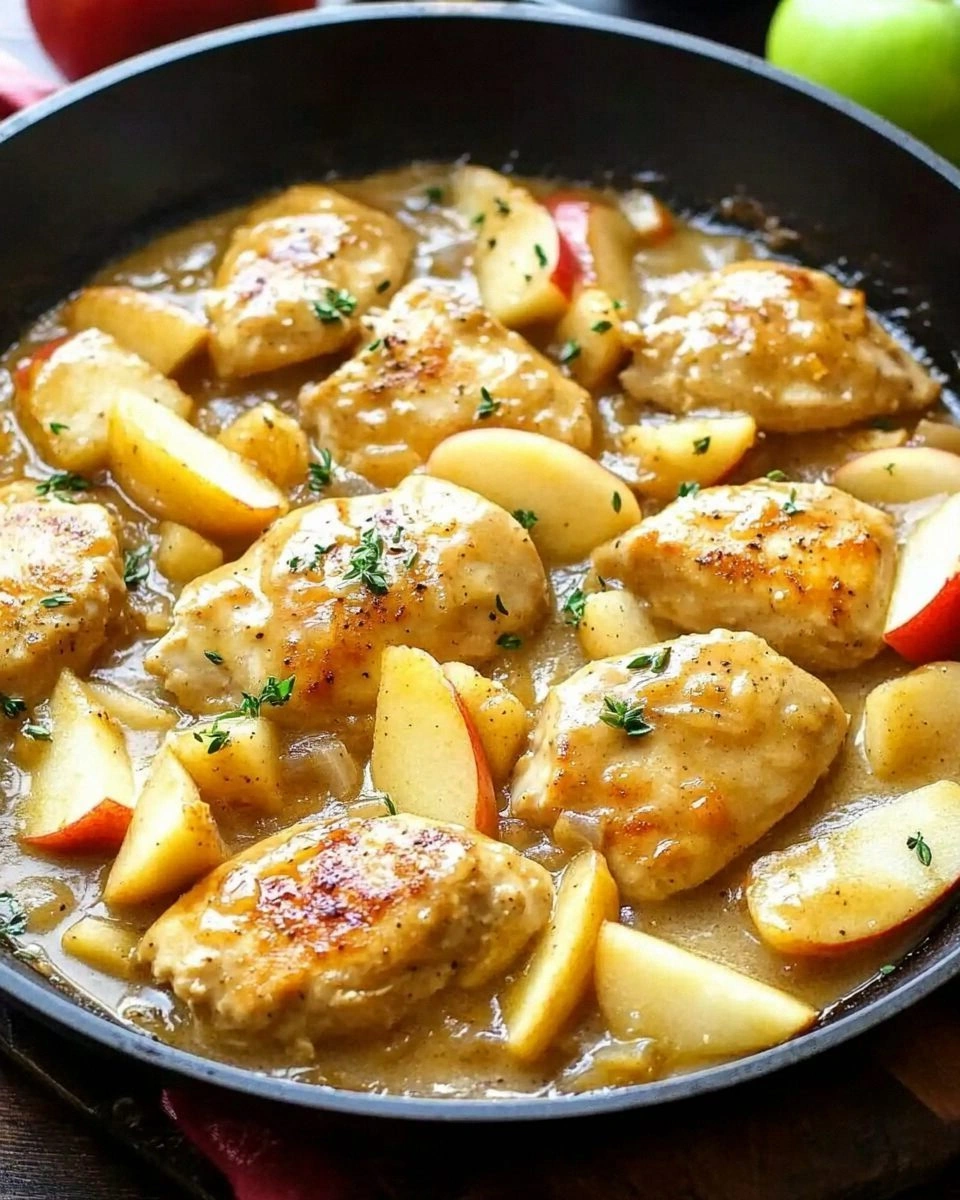
The Method — Step by Step
- Prep the Chicken: Pat the chicken breasts dry with paper towels to ensure a perfect sear. Season both sides with salt, pepper, thyme, and sage. Let them rest at room temperature for 10 minutes; this helps them cook evenly and keeps the juices locked in. I’ve found that a quick 10‑minute rest is the secret to juicy chicken.
- Heat the Skillet: Place a large cast‑iron or heavy‑bottom skillet over medium‑high heat. Add the olive oil and allow it to shimmer. The oil’s heat should be hot enough that a drop of water sizzles on contact. This is the moment of truth—if the oil isn’t hot, the chicken will stick.
- Sear the Chicken: Lay the seasoned breasts in the skillet, skin‑side down if you’ve kept the skin on. Let them sear for 3–4 minutes until a golden crust forms. Flip carefully and sear the other side for another 3 minutes. The edges should pull away from the pan, indicating a good crust. Keep the heat steady; too high and you’ll burn the exterior.
- Remove and Set Aside: Once seared, transfer the chicken to a plate. This allows the skillet to cool slightly, preventing the onions from burning when added next. I swear by this step—it keeps the onions from turning bitter.
- Cook the Aromatics: Add the butter to the same skillet. When it foams, toss in the diced onion and minced garlic. Sauté for 2–3 minutes until the onion becomes translucent and fragrant. The garlic should release its aroma but not brown. This creates the flavor foundation.
- Introduce the Apples: Add the sliced apples to the skillet. Stir to coat them in the butter‑onion mixture. Cook for 4–5 minutes, letting the apples soften but still hold their shape. The apples should begin to caramelize, giving a sweet aroma that fills the kitchen.
- Deglaze and Thicken: Sprinkle the tablespoon of flour over the apples and stir for 30 seconds to eliminate raw flour taste. Pour in the apple cider, scraping the bottom of the skillet to lift any browned bits. Let the mixture simmer for 3 minutes, allowing it to thicken into a glossy sauce.
- Return the Chicken: Nestle the seared chicken breasts back into the skillet, spooning some sauce over them. Reduce the heat to low, cover, and let the chicken steam in the sauce for 8–10 minutes, or until the internal temperature reaches 165°F. The sauce should cling to the chicken, coating each bite.
- Finish with Mustard: Remove the lid, stir in the Dijon mustard, and let it bubble for 1 minute. The mustard adds a bright note that balances the sweetness. Taste and adjust seasoning—add more salt or pepper if needed.
- Serve: Plate the chicken and spoon the apple‑butter sauce over the top. Garnish with chopped fresh parsley for a pop of color. Serve with roasted potatoes or a crisp green salad to complete the meal. The aroma will have your guests begging for seconds.
That’s it—you did it. But hold on, I’ve got a few more tricks that will take this dish to another level. The next section will reveal insider secrets that even seasoned chefs swear by.
Insider Tricks for Flawless Results
The Temperature Rule Nobody Follows
Heat Matters: Many cooks set the stove to high and then lower it, but the best approach is to start at medium‑high, sear, then reduce to low for the simmer. This ensures a golden crust without burning the onions. I once tried a high‑heat approach and the onions blackened, ruining the sauce’s flavor. Stick to medium‑high for searing, then medium‑low for simmering.
Why Your Nose Knows Best
Smell as a Guide: The scent of caramelizing onions is a clear indicator that the flavor base is developing. When the aroma becomes sweet and buttery, it’s time to add the apples. Trust your nose—it knows when the dish is ready to move to the next step.
The 5‑Minute Rest That Changes Everything
Let It Sit: After removing the chicken from the skillet, let it rest for five minutes before cutting. This allows the juices to redistribute, keeping the meat moist. I’ve seen people slice immediately, and the result is dry. Give it a brief rest, and the difference is night and day.
Don’t Over‑Stir the Sauce
Gentle Mixing: When adding the flour and cider, stir gently to avoid breaking the apples. Over‑stirring can cause the apples to disintegrate into a mush. A light fold keeps the structure intact.
Use a Skillet With a Lid
Seal the Flavor: Covering the skillet during the simmering phase traps steam and infuses the chicken with the sauce. The lid also prevents splattering, keeping your stovetop clean. I’ve tried cooking without a lid, and the sauce evaporated too quickly, leaving a dry result.
Creative Twists and Variations
This recipe is a playground. Here are some of my favorite ways to switch things up:
Apple‑Pear Fusion
Swap half of the apples for pears. The pear’s subtle sweetness and softer texture create a mellow, dessert‑like sauce that pairs beautifully with the savory chicken. Perfect for a fall dinner.
Spicy Apple Chicken
Add a pinch of crushed red pepper flakes when sautéing the onions. The heat contrasts with the apple’s sweetness, giving the dish a bold kick. Serve with a cool yogurt sauce to balance the spice.
Herb‑Infused Variation
Replace thyme and sage with fresh rosemary and thyme. The aromatic herbs add a piney note, turning the dish into a rustic, country‑style meal. Pair with roasted root vegetables for a hearty plate.
Chicken Thighs Instead of Breasts
Use bone‑in chicken thighs for a richer flavor. The higher fat content keeps the meat moist and adds depth. Adjust the cooking time slightly—thighs need a few extra minutes to reach 165°F.
Gluten‑Free Twist
Swap the all‑purpose flour for a gluten‑free blend or cornstarch slurry. This keeps the sauce thick without gluten. The texture remains silky, and the dish stays fully gluten‑free.
Apple‑Cinnamon Glaze
Stir in a teaspoon of ground cinnamon when adding the apple cider. The warm spice adds a cozy, holiday vibe to the dish. Serve it with a scoop of vanilla ice cream for a decadent dessert‑like finish.
Storing and Bringing It Back to Life
Fridge Storage
Cool the skillet dish completely before transferring it to an airtight container. Store in the refrigerator for up to 3 days. The sauce thickens as it cools, so a quick stir before serving restores its silky coat.
Freezer Friendly
Place the cooled dish in a freezer‑safe container or zip‑lock bag. Freeze for up to 2 weeks. When ready to eat, thaw overnight in the refrigerator, then reheat gently on the stove.
Best Reheating Method
Reheat the dish over low heat, adding a splash of water or apple cider to loosen the sauce. This prevents the sauce from drying out. Cover the skillet to trap steam and bring the chicken back to a juicy, warm state.