I still remember the day I nearly set my kitchen on fire trying to make jalapeño cornbread in a cast-iron skillet that was older than my grandmother. The edges were burnt, the center was gooey, and my roommate walked in just as I was fanning the smoke detector with a dish towel. Fast forward through three failed attempts, a mountain of dirty dishes, and one very dramatic phone call to my mom, and I discovered the ultimate solution: turn that spicy, cheesy, corn-kissed batter into waffles. Yes, waffles. Because if life gives you cornbread disasters, you apparently make the most addictive brunch item this side of the Mississippi.
Picture this instead: golden grids with crispy cheddar-laced edges that shatter like thin caramel, revealing a tender crumb that tastes like your favorite Southern cornbread got a promotion. The pickled jalapeños weave through every bite like little green ribbons of joy, hitting you with a tangy heat that makes your lips tingle in the best possible way. Your kitchen smells like a Texas roadhouse married a Parisian bistro, and you get to eat something that legally counts as breakfast but tastes like dinner party material. I dare you to taste these and not go back for thirds — I certainly couldn't, and I ate half the batch before anyone else even knew they existed.
Most recipes mess this up by treating cornbread batter like pancake batter and simply dumping it in a waffle iron. That approach gives you soggy, dense squares that taste like regret. Here's what actually works: we harness the Maillard reaction by bumping up the fat content, use the waffle iron's heat to create those crave-worthy crispy pockets, and fold in the cheese at the exact moment so it creates lacy fringes rather than rubbery clumps. Stay with me here — this is worth it. You're about to become the person who brings the dish that disappears first at every potluck, the friend who gets invited to brunch because everyone secretly hopes you'll make these again.
Let me walk you through every single step — by the end, you'll wonder how you ever made it any other way.
What Makes This Version Stand Out
- Texture Revolution: These waffles deliver the holy grail of cornbread textures — crispy, caramelized edges with a fluffy, almost pudding-soft interior. The waffle iron's direct heat creates a crust that no cast-iron skillet could ever achieve, while the steam vents prevent the dreaded gummy center that ruins most cornbread attempts.
- Flavor Bomb Balance: Sharp cheddar brings umami depth, pickled jalapeños add bright acidity and controlled heat, and a whisper of honey rounds everything out so you taste complexity, not just spice. It's the difference between a one-note song and a full brass band in your mouth.
- Foolproof Technique: Unlike traditional cornbread that can sink faster than your 2020 sourdough starter, this batter is forgiving. The combination of baking powder and soda plus the waffle iron's even heat means you get perfect rise every single time, even if your buttermilk is slightly cold or your eggs are straight from the fridge.
- Breakfast-Meets-Dinner Magic: Serve these under fried chicken and you've got Nashville's best-kept secret. Top them with a runny egg and hot honey, and suddenly brunch is a religious experience. I've even crumbled them over chili, and yes, that's as incredible as it sounds.
- Make-Ahead Champion: These reheat like a dream, going from frozen to crispy-hot in under five minutes. I make double batches on Sunday, freeze them in single layers, and become a weekday breakfast hero without lifting a finger before coffee.
- Cheese Strategy: We fold in cheddar at two stages — some in the batter for melty pockets, more sprinkled right before closing the waffle iron for those Instagram-worthy lacy edges. Most recipes dump it all in at once and wonder why they get cheese volcanoes erupting onto the counter.
Alright, let's break down exactly what goes into this masterpiece...
Inside the Ingredient List
The Flavor Base
Cornmeal is the soul of this recipe, but not all cornmeals are created equal. I use medium-grind yellow cornmeal for that authentic cornbread bite — stone-ground if you can find it because it still has the corn's natural oils, giving you a deeper, almost nutty flavor. Skip the fine cornmeal unless you want waffles that taste like bland corn-flavored cake. And please, for the love of all that's crispy, don't use corn flour; you'll end up with something that tastes like polenta's sad cousin.
Sharp cheddar is non-negotiable here. I reach for an aged white cheddar that's been hanging out in the cheese cave for at least 12 months — it has those crunchy tyrosine crystals that add tiny explosions of umami throughout your waffle. Pre-shredded cheese is coated in cellulose that prevents melting, so buy a block and grate it yourself. Your future self will thank you when you pull those gorgeous, melty waffles apart like a cheese pull in a commercial.
The Texture Crew
All-purpose flour might seem like a supporting actor, but it's the secret to keeping these waffles from turning into corn rocks. Just enough gluten development happens to give structure without toughness — think of it as the scaffolding that lets the cornmeal shine. I've tested versions with 100% cornmeal, and while they're authentically Southern, they also authentically crumble into your syrup like wet sand.
Buttermilk brings the tang that makes cornbread sing, but here's what most people miss: it needs to be room temperature. Cold buttermilk causes the melted butter to seize into tiny flecks, giving you greasy waffles with yellow polka dots. Set it out while you prep everything else, or give it a 15-second zap in the microwave. Your batter will be silky smooth instead of curdled-looking, and the baking soda will activate properly for maximum lift.
The Unexpected Star
Pickled jalapeños are the dark horse here. Fresh jalapeños taste green and vegetal, plus their heat is unpredictable — one might be mild, the next could melt your face. Pickled ones bring consistent, tangy heat that cuts through the richness like a bright salsa. I dice them small so every bite gets a little pop of spice, but not so much that someone hits a jalapeño landmine and can't taste anything else for ten minutes.
The honey is optional, but here's my confession: I always add it. Just one tablespoon balances the heat and brings out the corn's natural sweetness without making these taste like dessert. It's like the difference between a great cocktail and just booze in a glass — that tiny bit of sweet makes all the savory flavors sing in harmony.
The Final Flourish
Baking powder and soda work together like a tag team — the powder gives you sustained lift, while the soda reacts instantly with the buttermilk's acid for that initial puff. Using both means your waffles rise immediately when they hit the hot iron, then keep rising as they cook. Skip one and you'll get dense, sad waffles that taste like failure and broken dreams.
That tablespoon of melted butter in the batter? It's not for richness — it's for insurance. Butter's milk solids brown faster than oil, creating those gorgeous golden pockets that make people think you're a wizard. The real richness comes from the cheese; the butter is there for color and flavor development. Picture yourself pulling these out of the waffle iron, the kitchen smelling like a State Fair booth, and tell me that extra tablespoon isn't worth it.
Everything's prepped? Good. Let's get into the real action...
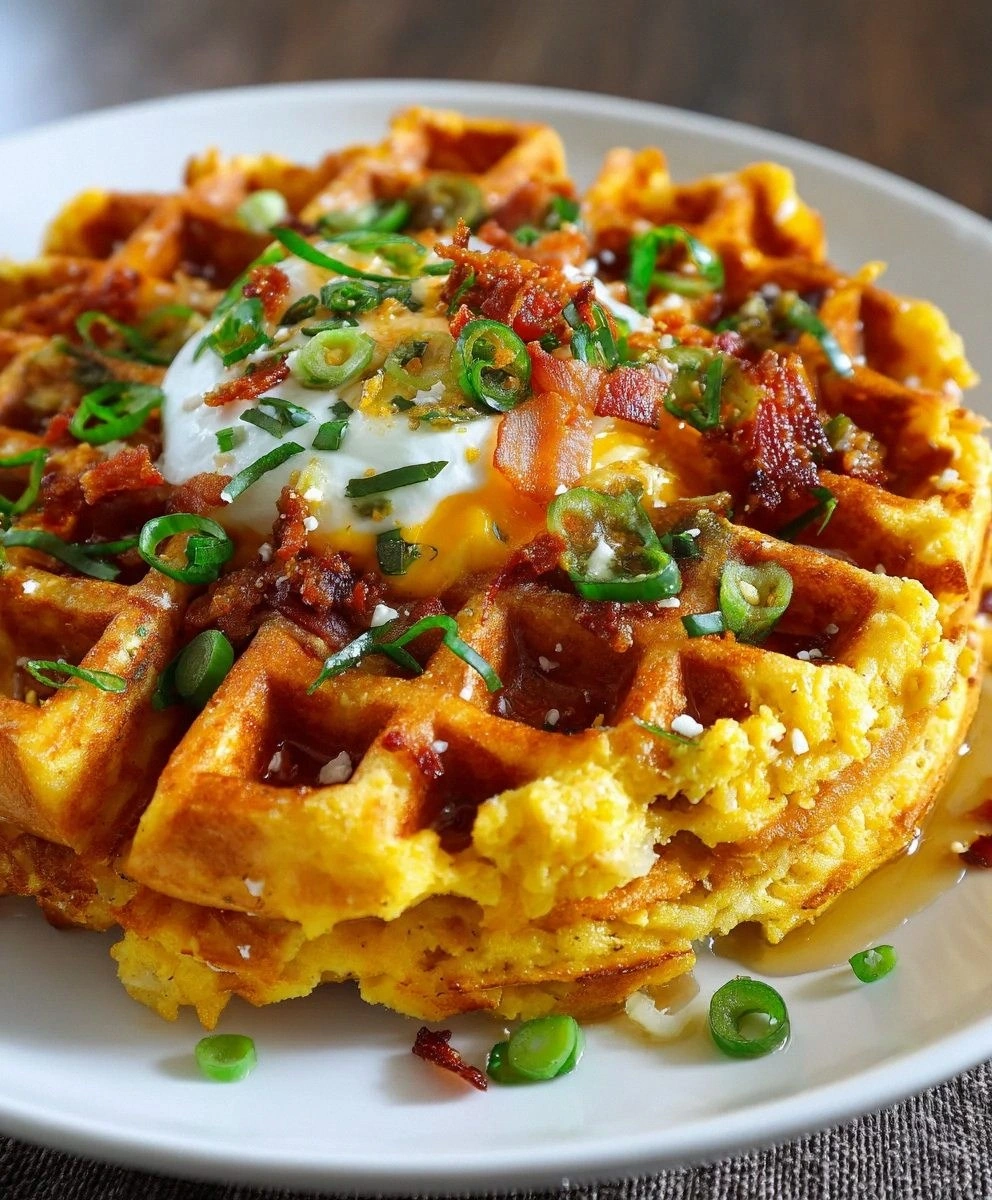
The Method — Step by Step
- Start by preheating your waffle iron to medium-high — this is crucial and most people get it wrong. Too low and your waffles steam instead of sizzle; too high and the outside burns before the inside cooks through. I set mine to about 4 out of 5 on the dial, but every iron is different. While it heats, place your buttermilk on the counter if you haven't already. That sizzle when the batter hits the iron? Absolute perfection, and you'll only hear it if the temperature is right.
- In a large bowl, whisk together the cornmeal, flour, baking powder, baking soda, and salt until they look like one uniform sandy mixture. This step seems basic, but it's where most people rush and end up with bitter pockets of baking soda in their finished waffles. Whisk for a full 30 seconds — set a timer if you're impatient like me. You should see the baking powder and soda disappear completely into the pale yellow cornmeal, with no white streaks remaining.
- In a separate medium bowl, beat the eggs until the yolks and whites are completely combined and slightly frothy. This takes about 45 seconds of vigorous whisking, or 20 seconds if you channel all your frustration from Monday morning traffic into it. The eggs should lighten in color and thicken slightly — this incorporates air that helps with lift. Stream in the melted butter while whisking constantly; the mixture should emulsify and look like glossy sunshine. If your buttermilk is still cold, microwave it for 10-second bursts until it's lukewarm, then whisk it in along with the honey.
- Now for the moment of truth — pour the wet ingredients into the dry and fold with a rubber spatula just until you see no dry streaks of cornmeal. The batter will look lumpy and slightly thicker than pancake batter; resist the urge to overmix or you'll activate the gluten and get tough waffles. Think of it like making biscuits: 12 to 15 folds maximum. Those little lumps will disappear as the cornmeal hydrates and the leaveners do their magic in the hot iron.
- Fold in three-quarters of the cheddar and all of the diced jalapeños with just 3-4 gentle strokes. You want pockets of cheese, not homogeneous orange batter. The cheese will melt and create little lava flows of deliciousness, while the jalapeños distribute like green confetti. Okay, ready for the game-changer?
- Open your hot waffle iron and hit it with a quick blast of cooking spray or brush with melted butter using a pastry brush. The butter gives better flavor but spray is easier — choose your own adventure here. Ladle in about 2/3 cup of batter for a standard Belgian waffle iron, spreading it slightly with the back of the ladle to reach the edges. Sprinkle the remaining cheddar directly onto the surface of the batter — this creates that gorgeous lacy cheese skirt that will make people weep with joy.
- Close the iron and don't peek for at least 3 minutes. The smell will start changing from raw batter to toasty corn and melting cheese — that's when you know magic is happening. After 4 minutes, gently lift the top; the waffle should release cleanly and have deep golden color with darker cheese laces around the edges. If it sticks, close it for another 30 seconds. Transfer to a wire rack (not a plate — steam makes bottoms soggy) and repeat with remaining batter.
- Here's the pro move most people miss — let them rest for 2 minutes before serving. This sets the cheese and allows steam to redistribute, so when you cut into them they don't deflate like sad balloons. During this time, you can fry an egg or warm some honey with a pat of butter for drizzling. And now the fun part: watching people's faces when they take that first bite and realize cornbread can be this incredible.
That's it — you did it. But hold on, I've got a few more tricks that'll take this to another level...
Insider Tricks for Flawless Results
The Temperature Rule Nobody Follows
If you've ever struggled with waffles that are pale and limp or burnt outside with raw centers, your iron's temperature is the culprit. Here's what actually works: let the iron heat for a full 5 minutes after the "ready" light clicks on. That light lies — it's only telling you the heating element cycled off, not that the whole surface is evenly hot. I test by flicking a drop of water on the iron; it should dance and evaporate in 2 seconds, not sit there like a lazy puddle or disappear instantly.
Also, resist cranking it to maximum heat. High heat makes the sugars in the cornmeal and cheese burn before the interior sets. Medium-high gives you that slow, even browning that develops complex flavors. A friend tried rushing this step once — let's just say her waffles tasted like licking a campfire, and nobody asked for seconds.
Why Your Nose Knows Best
Don't trust timers — trust your nose. When these waffles are perfectly done, your kitchen will smell like a State Fair booth crossed with a fancy cheese shop. The scent shifts from raw corn and butter to something deeper, almost caramel-like with tiny whiffs of spicy jalapeño. That's your cue to check them, even if your timer still has a minute left. Ovens and waffle irons vary wildly, but your nose is calibrated to what perfect smells like.
The 5-Minute Rest That Changes Everything
After mixing your batter, let it rest for exactly 5 minutes before cooking. This isn't some fancy chef nonsense — it's chemistry. The cornmeal needs time to fully hydrate, which thickens the batter slightly and prevents it from seeping out the sides of your iron. Meanwhile, the leavening agents start activating with the buttermilk's acid, giving you extra lift. Skip this step and your first waffle will be thin and sad, while the rest puff up properly. I've tested this with a stopwatch — 5 minutes is the sweet spot. Less and they're dense; more and they start to lose air.
During this rest, grate your cheese if you haven't already, prep your toppings, or just dance around the kitchen to one song. Consider it mandatory fun time.
The Cheese Placement Secret
Most recipes dump all the cheese into the batter and call it a day. That's why you get rubbery clumps instead of gorgeous lacy edges. The fix is stupidly simple: reserve one-third of your cheese to sprinkle on top of the batter after you ladle it into the iron. The direct heat hits the cheese first, causing it to fry and crisp into golden fringes that taste like the best part of a grilled cheese sandwich. The cheese inside stays melty and gooey. You get two textures of cheddar in every bite, which is honestly better than most restaurant experiences.
Storage That Actually Works
Let leftover waffles cool completely on a wire rack, then layer them between sheets of parchment in an airtight container. They'll keep 3 days in the fridge or 2 months in the freezer. But here's the real trick: reheat them in your toaster on the bagel setting. The direct heat revives the crispy edges while warming the center through. Microwave makes them rubbery, and the oven takes too long. My toaster has seen more of these waffles than actual bread at this point.
Creative Twists and Variations
This recipe is a playground. Here are some of my favorite ways to switch things up:
Tex-Mex Mashup
Swap the cheddar for pepper jack and add 2 tablespoons of canned green chiles along with the jalapeños. Stir 1 teaspoon of cumin and 1/2 teaspoon of smoked paprika into the dry ingredients. Serve topped with avocado, pico de gallo, and a fried egg for a breakfast that'll cure even the worst tequila regrets. The smokiness plays beautifully with the corn's natural sweetness.
Breakfast-for-Dinner Deluxe
Add 1/3 cup of cooked and crumbled breakfast sausage to the batter along with the cheese. Use maple syrup instead of honey for that sweet-savory magic. Top with a drizzle of maple syrup mixed with a splash of hot sauce — it's like chicken and waffles without the chicken. My kids think this is the greatest thing since cartoon cereal, and honestly, they're not wrong.
Green Chile Heaven
Replace the jalapeños with 1/3 cup of roasted, peeled, and diced Hatch green chiles when they're in season. Use Monterey Jack instead of cheddar for a more authentic New Mexico flavor. Add 1/4 teaspoon of ground coriander to the dry ingredients — it's subtle but makes people ask "what's that amazing flavor?" Serve with honey butter for the full Southwest experience.
Everything Bagel Remix
Cut the jalapeños to 2 tablespoons and add 2 tablespoons of everything bagel seasoning to the dry ingredients. Use cream cheese cubes instead of some of the cheddar — fold them in gently so they stay in chunks. The result tastes like your favorite bagel but in waffle form, complete with those garlicky, oniony bits in every bite. Top with smoked salmon and capers for a brunch that'll make your bagel shop jealous.
Thanksgiving Leftover Savior
Stir 1/3 cup of leftover stuffing and 2 tablespoons of chopped fresh sage into the batter. Use white cheddar and skip the jalapeños. Serve under turkey and gravy for a leftovers situation that's arguably better than the original meal. The stuffing bits get crispy on the outside while staying moist inside, creating little flavor bombs throughout.
Italian Stallion
Swap the cheddar for aged provolone, use Calabrian chiles instead of jalapeños, and add 2 tablespoons of chopped sun-dried tomatoes. Stir 1 teaspoon of Italian seasoning into the dry ingredients. Serve with a fried egg and a drizzle of balsamic glaze. It's like a spicy Italian sub had a beautiful baby with cornbread, and honestly, I could eat this every day.
Storing and Bringing It Back to Life
Fridge Storage
Let waffles cool completely on a wire rack — this prevents condensation that leads to sogginess. Stack them in an airtight container with parchment paper between layers. They'll keep 4 days in the refrigerator, though honestly, they've never lasted more than 2 in my house. The cheese can start to taste a bit sharp after day 3, so if you're making these for meal prep, consider storing the batter (without cheese) and mixing in fresh cheese when you cook them.
Freezer Friendly
These freeze like champions. Cool completely, then flash-freeze on a baking sheet for 2 hours before transferring to freezer bags. This prevents them from freezing into a solid block. They'll keep for 3 months, though I dare you to forget about them for that long. Label the bag with the date — future you will thank present you when you're hangry and need breakfast in 90 seconds.
Best Reheating Method
Toaster is king here — set it to medium-dark and let it go twice if needed. The direct heat revives the crispy edges while warming the center. For a large batch, bake frozen waffles on a sheet pan at 400°F for 8-10 minutes, flipping halfway. Add a tiny splash of water to the pan and cover with foil for the first 5 minutes — it steams them back to perfection, then uncover to re-crisp. Microwave works in a pinch, but wrap in a damp paper towel and only heat for 30 seconds to avoid rubbery cheese syndrome.