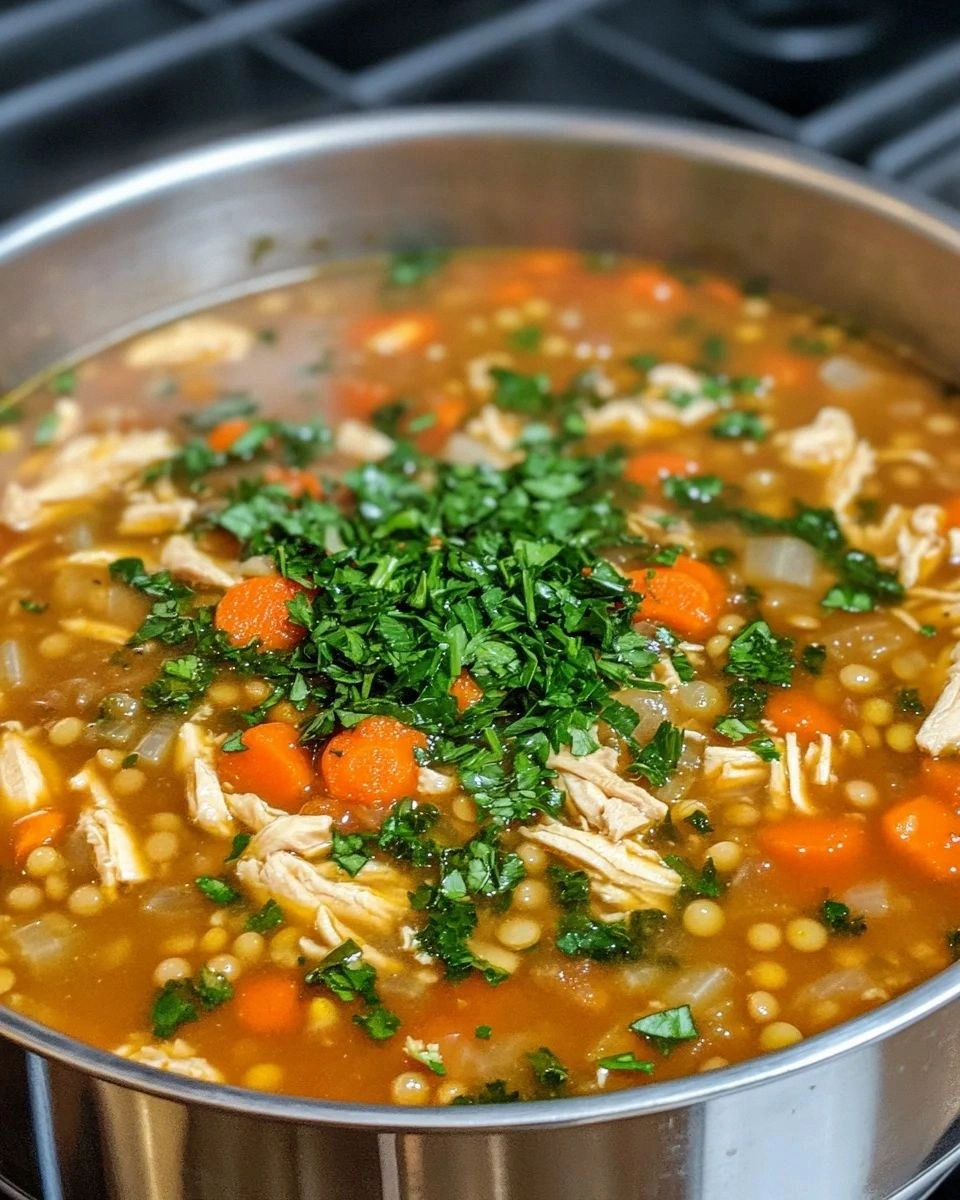
The first time I made this chicken lentil soup, I was running on three hours of sleep, my apartment was freezing because the heat had decided to quit during the coldest week of January, and I was convinced I had nothing edible left in my kitchen except a half-eaten rotisserie chicken and some sad-looking vegetables. What started as a desperate attempt to avoid another takeout bill turned into the kind of culinary revelation that makes you question every soup recipe you've ever followed. The smell alone—this rich, herbaceous aroma with hints of smoky paprika and earthy cumin—had my neighbor knocking on my door to ask if I was running a secret restaurant. By the time I ladled myself a bowl, I was already planning to make it again the next day, which, let's be honest, is the highest compliment any recipe can receive.
Here's the thing about most chicken lentil soups: they're either watery disappointments that taste like someone waved a chicken over a pot of lentils, or they're so aggressively spiced that you can't taste anything but the spice cabinet. This version hits that perfect middle ground where every spoonful tastes like comfort food that's been to finishing school. The lentils provide this velvety texture that makes the soup feel luxurious without any cream, while the chicken stays tender and shreddy in the best possible way. The addition of kale at the end gives you these little pockets of green that taste like they were born to be in this exact soup, not tossed in as an afterthought because someone told you to eat more vegetables.
What really sets this recipe apart is how it transforms humble ingredients into something that tastes like it came from a restaurant where the chef studied in Tuscany and has opinions about your olive oil choices. The secret lies in building layers of flavor at every step—starting with properly caramelized vegetables that create a flavor base so good you'll be tempted to eat it with a spoon before adding anything else. Then there's the moment when you add the spices to the hot oil and your kitchen fills with this intoxicating aroma that makes you understand why people fall in love with cooking in the first place.
Let me walk you through every single step—by the end, you'll wonder how you ever made it any other way.
What Makes This Version Stand Out
Depth: This isn't just throwing ingredients in a pot and hoping for the best. We're building flavor like architects build skyscrapers—layer by layer, with precision and purpose. The caramelization of the vegetables creates a foundation so flavorful that you'll be tempted to bottle it and sell it as soup base.
Texture: The lentils break down just enough to create this silk-smooth body that coats your spoon like velvet, while still maintaining their integrity so you get that satisfying bite. It's the difference between soup and stew, and we've nailed the sweet spot right in between.
Efficiency: Despite tasting like it simmered for hours, this entire recipe comes together in under 45 minutes, making it perfect for weeknight dinners when you want something that tastes like Sunday supper but don't have the energy for a production.
Flexibility: Using cooked chicken means this soup comes together in record time, but the flavors develop so beautifully that it tastes like it's been cooking all day. Plus, you can customize the spices and vegetables based on what you have on hand without compromising the soul of the dish.
Crowd Appeal: I've served this to picky toddlers, spice-averse grandparents, and self-proclaimed soup snobs, and every single person has asked for the recipe. It's got that magical quality of tasting familiar enough to comfort but interesting enough to impress.
Make-Ahead Magic: This soup actually gets better overnight as the flavors meld together in the fridge. Make a double batch on Sunday and you've got lunches that'll make your coworkers jealous all week.
Nutrient Density: Between the protein-packed chicken, fiber-rich lentils, and vitamin-loaded kale, this is basically a multivitamin in soup form that actually tastes like something you want to eat rather than something you feel obligated to consume for health reasons.
Alright, let's break down exactly what goes into this masterpiece...
Inside the Ingredient List
The Flavor Foundation
The olive oil isn't just for preventing sticking—it's your first opportunity to build flavor. When you heat it properly, it becomes the carrier for all the aromatic compounds that'll make your kitchen smell like a professional kitchen. The onion, carrots, and celery aren't just there for nutrition; they're the holy trinity of soup-making, creating a flavor base that dates back centuries for good reason. When these vegetables hit that hot oil and start to soften and caramelize, they're undergoing the Maillard reaction, which is just a fancy way of saying they're turning into flavor bombs that'll make your soup taste like it's been simmering for hours.
Garlic comes next, and timing matters here. Add it too early and it'll burn, turning bitter and ruining everything. But add it just right, when the vegetables have started to soften but still have some bite, and it infuses the entire dish with this mellow, nutty flavor that raw garlic could never achieve. The cumin and smoked paprika are where the magic really happens—these aren't just random spices thrown in for complexity. Cumin brings this warm, earthy depth that makes the soup taste like it's been cooking since dawn, while smoked paprika adds a subtle campfire note that makes everything taste more interesting without being able to quite put your finger on why.
The Texture Crew
Lentils are the unsung heroes of this soup, and not just any lentils will do. We're using regular brown lentils here because they hold their shape while releasing enough starch to create that luxurious texture that makes this soup feel like a warm hug in a bowl. Rinse them thoroughly—this isn't just about cleanliness. Rinsing removes excess starch that can make your soup cloudy and muddy-tasting. The chicken broth isn't just a liquid to cook everything in; it's the canvas that carries all these flavors, so use the best quality you can find. If you're using store-bought, go for low-sodium so you can control the seasoning yourself.
The cooked chicken is where this recipe gets smart. Using pre-cooked chicken means you can focus on building incredible flavor in the broth without worrying about raw meat timing. But don't just throw in plain chicken—shred it into bite-sized pieces that'll nestle perfectly on your spoon alongside the lentils. The diced tomatoes add acidity and sweetness, balancing the earthiness of the lentils and creating a more complex flavor profile that tastes like it has depth and history.
The Unexpected Star
Kale gets a bad rap, but in this soup, it transforms from tough health food to tender, flavorful bites that soak up all the surrounding flavors. The key is adding it at the very end so it wilts just enough to become tender but retains enough structure to provide textural contrast. If kale really isn't your thing, spinach works too, but kale holds up better if you're planning on leftovers. The salt isn't an afterthought—it's a crucial ingredient that needs to be added at the right time. Add it too early and it'll draw moisture out of the vegetables, preventing them from caramelizing properly. Wait until the end and you'll be chasing flavor that never quite develops.
The Final Flourish
Fresh parsley isn't just a garnish—it's a crucial final ingredient that brightens the entire dish with its fresh, slightly peppery flavor. Chop it just before serving to keep it vibrant and flavorful. The black pepper should be freshly ground; pre-ground pepper has lost most of its volatile compounds and won't provide the same aromatic lift. These finishing touches are what separate good soup from great soup, and once you start paying attention to them, you'll never go back to throwing a handful of dried herbs into a pot and calling it a day.
Everything's prepped? Good. Let's get into the real action...
The Method — Step by Step
- Heat the olive oil in a large pot over medium heat until it shimmers and moves like liquid gold across the surface. This isn't just about getting hot—properly heated oil creates a seal around each ingredient, locking in moisture and preventing that dreaded sticking that can ruin your beautiful vegetables. Swirl the pan to coat the bottom evenly, then wait another 30 seconds. Your oil should be hot enough that a piece of onion sizzles enthusiastically when it hits the pan but doesn't burn immediately. This is the foundation of flavor building, and rushing this step is like trying to build a house on quicksand.
- Add the chopped onion and immediately start stirring with a wooden spoon, coating each piece with that hot oil. Listen for the sound—it should be a gentle sizzle, not an angry hiss. Cook for 3-4 minutes, stirring occasionally, until the onions turn translucent and start to take on a golden hue around the edges. This is where patience pays off; properly softened onions release their natural sugars, creating a sweetness that'll balance the earthiness of the lentils. Don't rush this by cranking up the heat unless you want onions that are burnt on the outside and raw in the middle.
- Stir in the carrots and celery, continuing to cook for another 4-5 minutes. These vegetables should start to soften but still maintain some bite—they'll cook more once the liquid goes in. The celery will become more vibrant in color, and the carrots will start to release their natural sweetness. This is your mirepoix moment, where three humble vegetables transform into something greater than the sum of their parts. The bottom of your pan might start to develop some brown bits—this is pure flavor gold, not something to be scraped away.
- Clear a space in the center of the pot and add the minced garlic, letting it sit undisturbed for about 30 seconds. This brief contact with the hot surface allows the garlic to release its aromatic compounds without burning. Then stir everything together, cooking for another minute until the garlic becomes fragrant and loses its raw edge. Your kitchen should start smelling like you know what you're doing, even if you're winging it. The garlic will infuse the oil and vegetables, creating a flavor base that tastes like it's been developing for hours.
- Sprinkle in the cumin, smoked paprika, dried thyme, and black pepper, stirring constantly for 60 seconds. This is where the magic really happens—the heat activates the essential oils in the spices, releasing their full potential. The mixture should become intensely aromatic, and you'll see the oil take on a beautiful rusty color from the paprika. Don't walk away here; spices can go from perfectly toasted to bitterly burnt in seconds. Your nose will tell you when it's ready—when the cumin smells nutty and the paprika has lost its raw edge.
- Pour in the rinsed lentils and chicken broth, stirring to combine and scraping up any browned bits from the bottom of the pot. These browned bits are concentrated flavor bombs that'll dissolve into your broth and make it taste like it's been simmering since dawn. The liquid should just cover the lentils by about an inch—add more broth or water if needed. Bring everything to a boil, then reduce to a gentle simmer. This transition from boiling to simmering is crucial; too vigorous a boil will break down the lentils too quickly, while too gentle won't extract their starches properly.
- Add the shredded chicken and diced tomatoes, stirring to combine. The chicken should be distributed evenly throughout, creating little pockets of protein in every spoonful. The tomatoes add acidity that brightens the entire dish and prevents it from tasting one-note. Let everything simmer together for 15-20 minutes, stirring occasionally. During this time, the lentils will start to break down slightly, releasing their starch and creating that luxurious texture that makes this soup feel like comfort food royalty. The broth will thicken and become more cohesive, coating each ingredient rather than just surrounding it.
- Stir in the chopped kale or spinach and cook for 2-3 minutes until wilted but still vibrant. The greens should brighten in color and become tender without losing their structure. If using kale, make sure to remove the tough stems—they'll stay fibrous and unpleasant even with cooking. The greens will absorb some of the broth's flavor while adding their own subtle earthiness. Taste the soup at this point and adjust the seasoning with salt. You might be surprised how much salt is needed—lentils can handle more than you'd think, and under-seasoned soup is a tragedy that's easily avoided.
- Remove from heat and let the soup rest for 5 minutes. This brief pause allows the flavors to meld and the temperature to come down to that perfect eating warmth where you can taste everything without burning your tongue. Ladle into bowls and sprinkle with fresh parsley. The parsley adds a pop of color and fresh flavor that brightens the entire dish. Serve with crusty bread if you're feeling indulgent, or enjoy it as is for a meal that's both virtuous and deeply satisfying.
That's it—you did it. But hold on, I've got a few more tricks that'll take this to another level...
Insider Tricks for Flawless Results
The Temperature Rule Nobody Follows
Here's something that'll change your soup game forever: the temperature of your ingredients matters more than you think. Don't dump cold chicken broth straight from the fridge into your hot pot—it shocks the vegetables and can make them seize up instead of continuing to caramelize. Let your broth come to room temperature for 30 minutes before cooking, or better yet, warm it in a separate pot while you're sautéing the vegetables. This simple step ensures everything cooks evenly and maintains that beautiful texture we're after. I learned this the hard way when my first attempt resulted in vegetables that were mushy on the outside and raw in the middle.
Why Your Nose Knows Best
Trust your sense of smell—it knows when each step is done better than any timer ever could. When the onions are properly softened, they'll smell sweet and slightly nutty, not sharp and sulfurous. The spices are toasted perfectly when your kitchen fills with their aroma but you can't smell any raw or harsh edges. If something smells like it's burning, it probably is, and you should move to the next step immediately. This intuitive cooking might feel scary at first, but it's how all great cooks learned to make food that tastes like it has soul rather than just following instructions.
The 5-Minute Rest That Changes Everything
That resting period at the end isn't just about avoiding burnt tongues—it's when the magic really happens. During these five minutes, the starches from the lentils continue to thicken the broth, creating that perfect consistency that coats your spoon. The flavors that were separate and distinct start to meld together into something cohesive and harmonious. It's like letting a good wine breathe; the transformation is subtle but profound. Skip this step and your soup will taste like ingredients thrown together. Wait, and it tastes like they've been best friends forever.
The Acid Balance Secret
That can of diced tomatoes isn't just adding flavor—it's providing crucial acid that brightens all the other ingredients. But here's the thing: not all tomatoes are created equal. If using fresh tomatoes, add a splash of lemon juice at the end if they taste flat. If your canned tomatoes taste too acidic, a tiny pinch of sugar will balance them out. The goal is brightness, not sourness. Taste your soup before serving and adjust with small amounts of acid or sweetness until it tastes vibrant and alive rather than heavy and dull.
The Texture Tweak That Makes It Restaurant-Quality
Want to know why restaurant soups always have that perfect texture? They pay attention to the size of every ingredient. Dice your vegetables uniformly—not just for looks, but so they cook evenly and you get the perfect ratio of broth to solids in every spoonful. Shred your chicken into pieces that are roughly the same size as your cooked lentils. This attention to detail means every bite has the perfect balance of flavors and textures, rather than some bites being all chicken while others are mostly broth. It's a small detail that makes a huge difference in the final experience.
Creative Twists and Variations
This recipe is a playground. Here are some of my favorite ways to switch things up:
The Mediterranean Escape
Swap the cumin and paprika for oregano and rosemary, add a bay leaf with the broth, and finish with a squeeze of lemon and some crumbled feta cheese. The herbs transport you to a seaside taverna where the soup is served with crusty bread and the worries of the world melt away with each spoonful. The feta adds a salty, creamy element that plays beautifully against the earthy lentils.
The Spicy Southwest Adventure
Replace the smoked paprika with chipotle powder, add a diced jalapeño with the vegetables, and finish with fresh cilantro and a dollop of sour cream. The heat builds slowly rather than overwhelming, and the cooling sour cream provides the perfect counterpoint. This version tastes like it came from a New Mexican grandmother's kitchen, where they've been perfecting the art of comfort food with a kick for generations.
The Coconut Curry Dream
Add a tablespoon of curry powder with the other spices, swap half the broth for coconut milk, and finish with fresh lime juice and cilantro. The coconut milk creates this luxurious texture that makes the soup feel indulgent while the curry powder adds warmth and complexity. It's like your soup took a trip to Thailand and came back with stories to tell.
The Italian Wedding Remix
Replace the thyme with Italian seasoning, add a parmesan rind to the simmering soup, and finish with fresh basil and a drizzle of good olive oil. The parmesan rind melts into the broth, adding this incredible umami depth that makes you wonder why every soup doesn't include this trick. Top with some mini meatballs if you're feeling ambitious.
The Moroccan Spice Market
Add cinnamon and coriander along with the other spices, include a diced sweet potato with the vegetables, and finish with harissa and preserved lemon. The cinnamon adds warmth without sweetness, while the harissa provides a complex heat that's more about flavor than fire. This version tastes like it came from a spice merchant's kitchen in Marrakech.
The Green Goddess Version
Double the kale, add a handful of fresh herbs (parsley, dill, chives) at the end, and stir in some pesto just before serving. The herbs make this version taste like spring in a bowl, bright and fresh while still being deeply satisfying. It's the perfect antidote to heavy winter food without being a sad diet meal.
Storing and Bringing It Back to Life
Fridge Storage
This soup keeps beautifully in the refrigerator for up to 4 days, and honestly, day 2 might be even better than day 1 as the flavors continue to meld. Store it in an airtight container—those glass ones with the locking lids are perfect because they don't absorb odors and you can see exactly what leftovers you have. Let the soup cool completely before refrigerating, but don't leave it out for more than 2 hours. If you made a double batch, consider storing it in individual portions so you can grab a quick lunch without reheating the whole container. The kale might darken slightly, but it will still taste delicious and retain most of its nutrients.
Freezer Friendly
This soup freezes like a dream for up to 3 months, making it perfect for meal prep or those nights when cooking feels impossible. Freeze it in portion-sized containers so you can thaw exactly what you need. Leave about an inch of space at the top of each container because liquids expand when frozen. Pro tip: freeze some in ice cube trays for those times when you just want a cup of soup or need to thin out leftovers. Thaw overnight in the refrigerator or use the defrost setting on your microwave. The texture might be slightly different after freezing—the lentils might be a bit softer—but the flavor will be just as incredible.
Best Reheating Method
Forget the microwave for the best results—this soup deserves better. Reheat it gently in a pot over medium-low heat, stirring occasionally, until it's heated through but not boiling. Add a splash of water or broth if it's thickened too much in the fridge. If you're in a hurry, the microwave works, but heat it in 30-second intervals, stirring between each, to prevent hot spots and maintain the texture. For frozen soup, let it thaw completely before reheating for the best texture. And here's a game-changer: add a handful of fresh greens when reheating to brighten up the flavor and make it taste like you just made it.