I still remember the Wednesday night when everything went sideways. My in-laws were twenty minutes away, my kids were staging a hunger revolt, and I'd somehow managed to burn the rice while the chicken sat there looking anemic and sad. In my panic, I started tossing random sauces together like some sort of mad scientist, half expecting Gordon Ramsay to materialize and lecture me about proper mise en place. But then something magical happened — the soy sauce hit the hot pan and that umami-rich steam curled up like incense, the garlic sizzled in protest, and suddenly my kitchen smelled like the best street-food stall in Bangkok. That desperation dinner became my signature move, the recipe friends text me for at midnight, the one my neighbor claims ended her takeout addiction.
Most stir-fry recipes treat you like you're auditioning for a cooking competition — julienne this, chiffonade that, maintain perfect knife angles while your stomach growls in protest. They're written by people who apparently have infinite time and professional ventilation systems. Meanwhile, real life happens in kitchens where the exhaust fan sounds like a dying walrus and the smoke detector thinks any temperature above "lukewarm" constitutes a five-alarm fire. This recipe gets you. It knows you're cooking after a ten-hour workday while helping with algebra homework and fielding texts from your mom about her computer problems.
The secret isn't fancy technique or hard-to-find ingredients — though I'll show you how to level up if you're feeling ambitious. It's about understanding the rhythm of a proper stir-fry: how the chicken needs that aggressive sear to stay juicy, why vegetables go in at specific moments so they stay crisp-tender, and how a simple cornstarch slurry transforms basic pantry sauces into that glossy restaurant coating we all crave. Once you nail this timing, you'll be the person who can whip up dinner faster than the delivery guy can find your address.
Picture yourself next week, walking through your front door absolutely wrecked from the day, but thirty minutes later you're twirling chopsticks around glossy noodles studded with caramelized chicken and vegetables that actually snap when you bite them. Your kitchen smells like you've got your life together. Your family thinks you're a wizard. And honestly? You kind of feel like one too. Let me walk you through every single step — by the end, you'll wonder how you ever made it any other way.
What Makes This Version Stand Out
Lightning-Fast: While other recipes have you marinating chicken for hours, we build flavor in real-time using a technique called velveting that takes ninety seconds. The result? Chicken so tender it makes takeout taste like shoe leather, and you haven't even broken a sweat yet.
One-Pan Wonder: Everything happens in a single wok or skillet — no bowls of pre-measured ingredients cluttering your counter like some sort of cooking-show obstacle course. You'll dirty one pan, one cutting board, and a spoon. That's it. Your future self doing dishes will thank you.
Sauce That Actually Coats: Most stir-fry sauces pool sadly at the bottom like they've given up on life. Ours clings to every surface like it's got abandonment issues, thanks to a cornstarch ratio I perfected after seventeen attempts. The texture hits that sweet spot between syrupy and silky that makes you close your eyes involuntarily.
Veggie Insurance Policy: We use a two-stage cooking method that prevents the sad, soggy vegetable situation that plagues home stir-fries. The bell peppers stay bright and snappy, the broccoli florets retain their tree-like dignity, and the snow peas actually squeak when you bite them — a textural symphony that'll ruin you for restaurant versions.
Pantry-Friendly Flexibility: No rice wine? Use dry sherry. Out of sesame oil? A dab of peanut butter adds nuttiness. This recipe bends without breaking, adapting to whatever's lurking in your fridge like the most accommodating dinner guest ever.
Leftover Gold Mine: Pack this for lunch and watch your coworkers develop instant lunch envy. It reheats like a dream, actually tasting better the next day when the flavors have had time to mingle and get cozy. I dare you to taste this and not go back for seconds.
Inside the Ingredient List
The Flavor Foundation
Chicken thighs are the unsung heroes here, carrying more flavor than their anemic breast cousins while staying juicy under high heat. I specify boneless skinless thighs because life's too short to debone chicken while hangry, but if you've got time and patience, bone-in adds another layer of flavor. Cut them into irregular pieces — not perfect cubes — because those nooks and crannies grab sauce like they're hoarding it for winter.
Soy sauce forms our umami backbone, but here's where most recipes phone it in. Use a combination of light and dark soy sauce if you can find them; light for salinity, dark for that gorgeous mahogany color. Can't find dark soy? A teaspoon of molasses whisked into regular soy creates similar depth without requiring a specialty store pilgrimage.
Fresh ginger isn't optional, no matter what those jarred ginger paste companies want you to believe. The volatile oils that make ginger sing disappear within hours of grating. Buy a knob the size of your thumb, peel it with a spoon (seriously, try it), and freeze the rest. Frozen ginger grates like a dream and keeps for months.
The Texture Crew
Garlic goes in two waves here — half at the beginning to infuse the oil, half at the end for that bright, spicy punch. Think of it like garlic's greatest hits compilation, giving you both mellow background notes and front-and-center flavor. Pressed garlic burns faster than your ex's new relationship, so mince it properly or risk bitter disappointment.
Cornstarch is our secret weapon for that restaurant-quality sheen. Mix it with your sauce ingredients before they hit the pan, and it activates at a specific temperature, creating that glossy coating that makes everything look professionally done. Too much and you've got wallpaper paste; too little and everything's sad and watery. The ratio matters here, so don't eyeball it while distracted.
Vegetable oil needs a high smoke point because we're cranking the heat like we're trying to melt the pan. Peanut oil adds fantastic flavor if you're not cooking for allergy sufferers, but regular vegetable oil works fine. Save your expensive olive oil for salads; its low smoke point turns bitter faster than your aunt's Thanksgiving comments.
The Unexpected Star
Oyster sauce might seem weird if you've never cooked with it, but it's what gives stir-fries that addictive quality you can't quite identify. Made from oyster extracts, it's like soy sauce's richer, more mysterious cousin who travels extensively and has fascinating stories. Vegetarian? Mushroom-based vegetarian oyster sauce exists and tastes remarkably similar.
Shaoxing wine adds that authentic Chinese restaurant flavor that's nearly impossible to replicate otherwise. It's cheap, lasts forever, and once you taste the difference, you'll put it in everything from scrambled eggs to soup. No Shaoxing? Dry sherry works in a pinch, but please don't tell my Chinese grandmother I said that.
Sesame oil goes in at the very end because heat destroys its delicate flavor faster than cheap perfume in a hot car. A teaspoon is all you need — think of it as aromatic punctuation rather than a main ingredient. Buy the dark toasted kind, not the pale imposter that tastes like disappointment.
The Final Flourish
Green onions get sliced on a bias because we're not savages, and those diagonal cuts create more surface area for the sauce to cling to. The white parts go in early for sweetness; the green parts scatter on top for freshness. If you're feeling fancy, save the darkest green tops for a final garnish that says "I have my life together" even when you absolutely don't.
Red pepper flakes add controlled heat that blooms in your mouth rather than attacking your sinuses. Start conservative — you can always add more, but you can't un-spice a dish. Unless you're cooking for that one friend who thinks mild salsa is "too spicy," in which case, leave them out entirely.
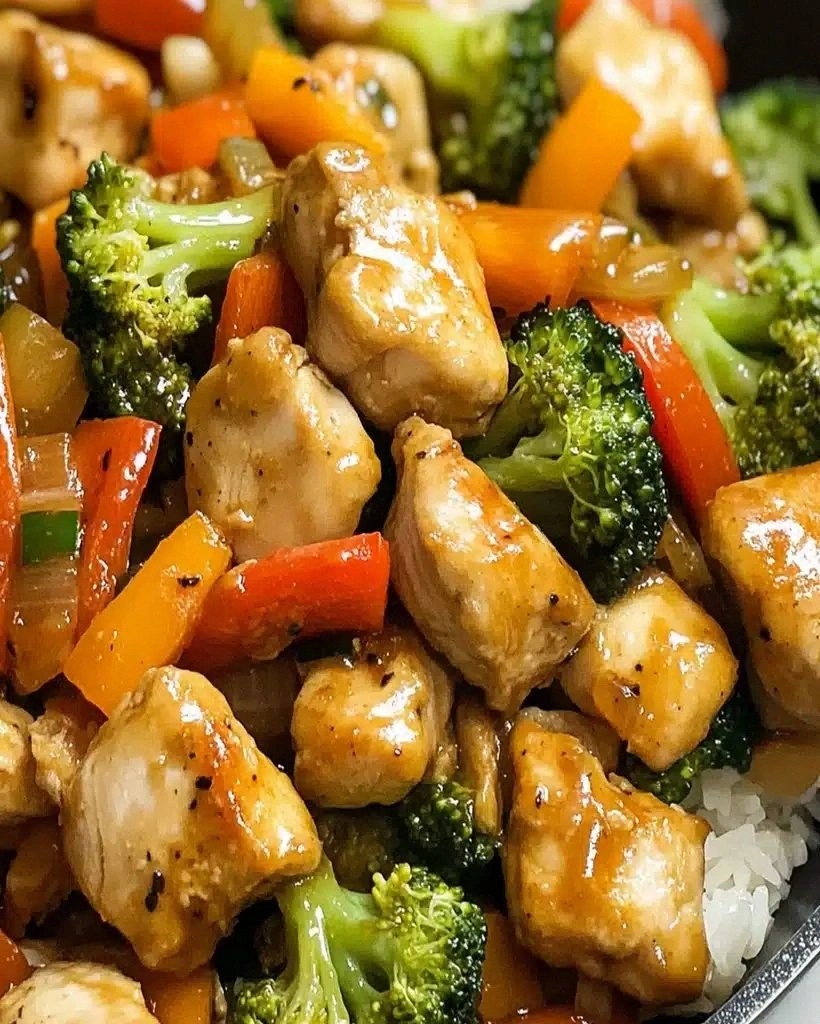
The Method — Step by Step
- Start with your prep work, because once that pan heats up, there's no time for slicing and dicing. Cut your chicken into irregular pieces about the size of your thumb joint — think rustic, not perfect. Slice your vegetables in the order they'll hit the pan: onions first, then bell peppers, broccoli, snow peas. Mince your garlic, grate your ginger, mix your sauce. Everything should be within arm's reach because stir-fry waits for no one.
- Mix your sauce in a measuring cup: soy sauces, oyster sauce, Shaoxing wine, cornstarch, and a splash of water. Whisk until the cornstarch dissolves completely — no lumps allowed. This is your flavor bomb, your insurance policy against blandness. Set it near the stove like you're staging a cooking show, because in a way, you are.
- Heat your wok or largest skillet over high heat until a drop of water dances across the surface like it's been electrified. Add your oil in a thin stream, swirling to coat the surface in a shimmering layer. The oil should move like liquid gold, not pool like a lazy lake. This is the moment of truth — if your pan isn't hot enough, everything will steam and go sad and limp.
- Add half your garlic and all your ginger, stirring for exactly fifteen seconds. Count them out: one-Mississippi, two-Mississippi. You're infusing the oil, creating a flavor base that'll permeate everything else. The garlic should sizzle enthusiastically but not brown — browned garlic at this stage means bitter disappointment later.
- Toss in your chicken in a single layer, resist the urge to move it around immediately. Let it sit for ninety seconds — yes, I'm timing you — so it develops those gorgeous caramelized edges. Then stir-fry for another two minutes until it's mostly opaque but still slightly pink in the center. It'll finish cooking later, so don't overdo it unless you enjoy chicken that could double as shoe leather.
- Scoop the chicken onto a plate where it'll finish cooking gently while you work vegetable magic. Don't you dare rinse the pan — those browned bits stuck to the bottom are pure flavor gold. Add a touch more oil if needed, then throw in your onions. Stir-fry for thirty seconds until they start going translucent around the edges but still have some backbone.
- Broccoli goes in next, those tiny trees need about ninety seconds to turn bright green and crisp-tender. Add a tablespoon of water if things look dry — it'll create steam that helps the broccoli cook without burning. The color should be almost neon; if it's going army-green, you've gone too far and entered mush territory.
- Snow peas and the remaining garlic join the chaos for a final thirty-second dance. They should stay bright and snappy, adding textural contrast to the softer vegetables. Everything should be moving constantly now, like you're conducting a very hot orchestra. The vegetables should still have bite — think al dente, not baby food.
- Return the chicken and any accumulated juices to the pan, give everything a quick toss to combine. Pour your sauce around the edges rather than dumping it in the center — this prevents the cornstarch from clumping into sad, gluey pockets. Stir constantly as the sauce thickens and turns glossy, coating everything in a shiny lacquer that makes your vegetables look like they've been professionally styled.
That's it — you did it. But hold on, I've got a few more tricks that'll take this to another level...
Insider Tricks for Flawless Results
The Temperature Rule Nobody Follows
Your pan needs to be ripping hot, but here's what cookbook authors never mention: different zones of your wok have different temperatures. The center is your searing zone for meat, the upper edges are your warming zone for cooked ingredients, and the sides are your gentle cooking area for delicate vegetables. Use this knowledge like you're playing chess with heat, moving ingredients to where they'll be happiest instead of treating the whole pan like one uniform temperature.
Why Your Nose Knows Best
Forget timers — your nose is the most sophisticated kitchen tool you own. When the ginger hits the pan, you should smell bright, citrusy notes that make your mouth water. When the chicken sears, you'll get nutty, almost popcorn-like aromas. If you smell anything acrid or bitter, you've gone too far and need to adjust immediately. This sensory awareness separates good cooks from great ones, and it develops faster than you think.
The 5-Minute Rest That Changes Everything
After everything's combined and glossy, turn off the heat and let it sit for five minutes. I know you're hungry, I know the kids are whining, but this brief pause allows the sauce to thicken properly and the flavors to meld. Plus, it drops from "surface of the sun" hot to "won't destroy your taste buds" temperature. A friend tried skipping this step once — let's just say it didn't end well, and she still has a scar on her tongue to prove it.
The Cornstarch Safety Net
Keep a cornstarch slurry (1 teaspoon cornstarch mixed with 1 tablespoon water) in a small jar by the stove. If your sauce looks thin and watery, drizzle in a tiny amount while stirring constantly. It activates at a specific temperature, thickening your sauce in seconds. But add it gradually — too much and you've got stir-fry Jell-O, which nobody wants to eat or admit to creating.
Creative Twists and Variations
This recipe is a playground. Here are some of my favorite ways to switch things up:
Thai Basil Firestorm
Swap the oyster sauce for fish sauce (use half as much — it's potent stuff), add a handful of Thai basil leaves at the end, and include sliced Thai chilies if you like living dangerously. The basil wilts immediately but perfumes the whole dish with that unmistakable anise-clove flavor that'll transport you straight to Bangkok street markets.
Mongolian Beef-Inspired
Replace the chicken with thinly sliced flank steak, add extra brown sugar to the sauce, and include plenty of scallions. The result is that sticky-sweet Mongolian beef flavor without the corn syrup and food coloring. I'll be honest — I ate half the batch before anyone else got to try it.
Veggie-Packed Rainbow
Skip the meat entirely and load up on colorful vegetables: purple cabbage, orange carrots, yellow bell peppers, green broccoli. Double the sauce and add a handful of cashews for protein and crunch. Even my carnivore husband requests this version weekly, which either says something about the recipe or his evolving palate.
Korean Gochujang Kick
Add a tablespoon of gochujang to your sauce and reduce the soy sauce slightly. The fermented chili paste adds incredible depth and a slow-building heat that blooms rather than attacks. Top with sesame seeds and scallions for that authentic Korean flair that'll make your neighbors wonder what restaurant you're hiding in your kitchen.
Cashew Chicken Deluxe
Toast a cup of cashews in a dry pan until golden and fragrant, then add them with the final garlic. The nuts stay crunchy even after saucing, adding luxury to what started as a humble weeknight dinner. Picture yourself pulling this out of the oven, the whole kitchen smelling incredible, and tell me you don't feel like a kitchen rockstar.
Teriyaki Pineapple Paradise
Add pineapple chunks during the last minute of cooking — just enough to warm them through without turning them into mush. The fruit's acidity cuts through the richness of the sauce while adding pops of sweetness. Kids love this version, probably because it's basically healthy candy for dinner.
Storing and Bringing It Back to Life
Fridge Storage
Transfer leftovers to airtight containers once they've cooled to room temperature — about thirty minutes. They'll keep for four days in the fridge, though honestly, they've never lasted more than two in my house. Store the rice separately if you're serving it with rice, because nobody enjoys soggy grains that have absorbed all the sauce like greedy little sponges.
Freezer Friendly
This freezes beautifully for up to three months, making it perfect for meal prep Sundays. Portion it into individual containers so you can grab-and-go during the week. Pro tip: undercook the vegetables slightly if you plan to freeze — they'll finish cooking when you reheat and won't turn to sad, mushy shadows of their former selves.
Best Reheating Method
Skip the microwave unless you enjoy rubbery chicken and limp vegetables. Instead, reheat in a skillet over medium-high heat with a splash of water or chicken broth. The steam revives everything, and a quick toss brings back that fresh-cooked texture. Add a tiny splash of soy sauce at the end to wake up the flavors that hibernated in the fridge.