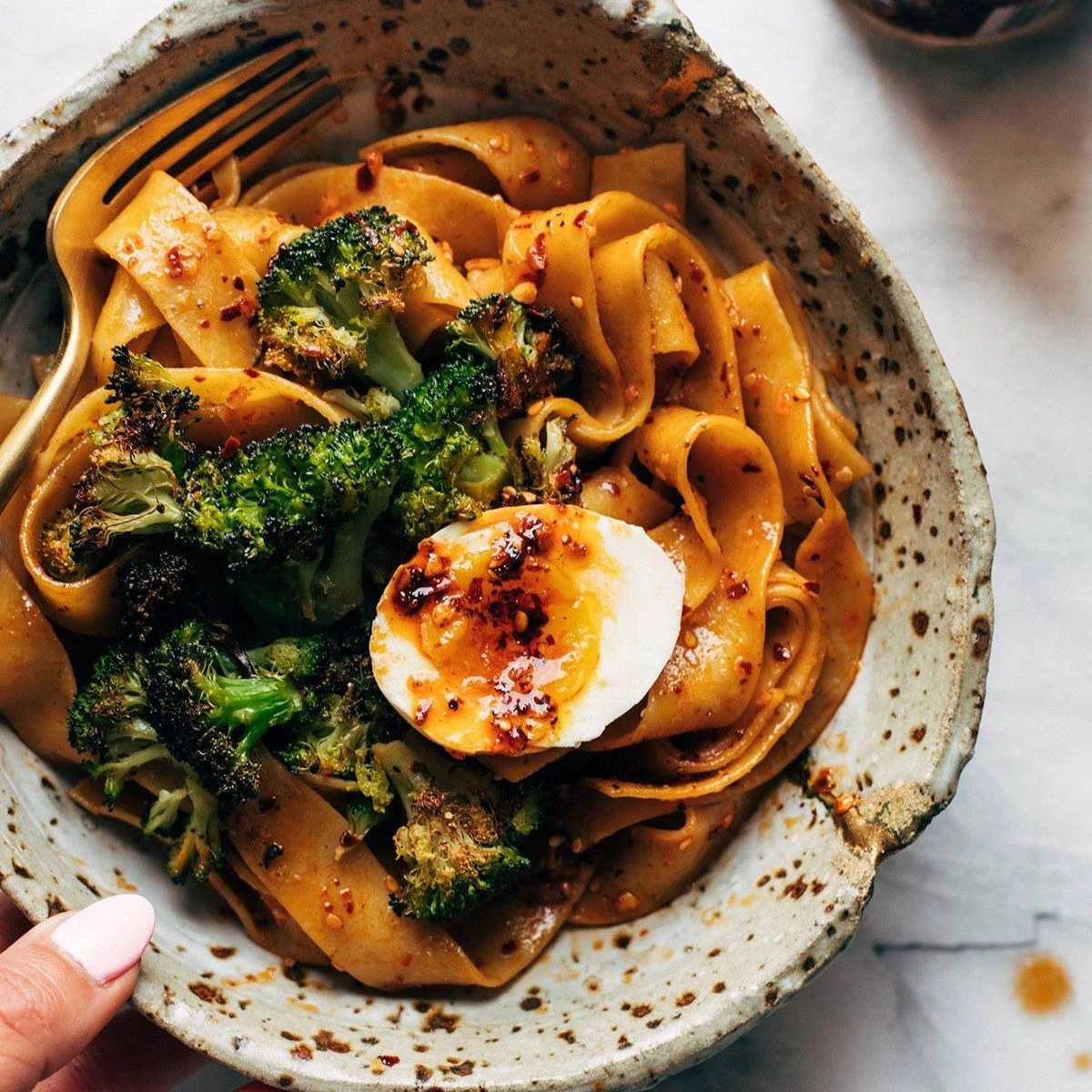
I’ll be honest — I ate half the batch before anyone else got to try it, and that’s because this Chili Garlic Pappardelle with smashed broccoli and soft‑egg crowns is the kind of dish that makes you question every other pasta you’ve ever made. The story started on a rainy Tuesday when a stubborn pot of spaghetti clumped together like a soggy mop, and my roommate dared me to create something that could actually pull itself apart with a fork. I accepted the challenge, fired up the stove, and discovered that the secret isn’t in a fancy sauce but in the way you treat each component. The moment the garlic hit the hot oil, it sang a sizzling anthem that could wake the dead, and the chili flakes whispered promises of heat that would make your taste buds do a little tango.
Picture yourself in a modest kitchen, the air thick with the aromatic perfume of toasted garlic and cracked pepper, the clatter of a wooden spoon against a stainless‑steel pan, and the soft pop of broccoli heads as they meet the pan’s searing surface. The texture of the pappardelle is like a silk ribbon that refuses to slip, while the smashed broccoli adds a crunchy‑soft contrast that feels like biting into a garden after a summer rain. And those soft‑boiled eggs? Their golden yolk drips into the sauce, turning it into liquid sunshine that coats every strand like velvet. The whole scene feels like a culinary concert, each element playing its part in perfect harmony.
Why does this version stand out from the sea of garlic‑and‑chili pasta recipes? Most of them either drown the pasta in a soupy mess or leave the sauce clinging to the bowl like an embarrassed guest. This one strikes the perfect balance: the sauce is thick enough to cling, yet light enough to let the pasta breathe. The broccoli isn’t just a side‑kick; it’s a flavor‑carrier that absorbs the garlic‑chili oil, then releases a sweet, earthy burst when you bite. The soft‑boiled eggs add richness without the heaviness of cream, and a dash of lemon zest lifts everything into a bright, celebratory finish. I dare you to taste this and not go back for seconds.
And here’s the kicker you won’t find in any other recipe: I’m going to show you how to “smash” the broccoli just right, using a hot‑press technique that keeps the florets tender on the inside while creating crispy, caramelized edges that shatter like thin ice when you bite. This is the game‑changer that turns an ordinary weeknight dinner into a restaurant‑quality experience. Let me walk you through every single step — by the end, you’ll wonder how you ever made it any other way.
What Makes This Version Stand Out
- Flavor Explosion: The marriage of chili heat and garlic depth creates a sauce that dances on the palate, while the lemon zest adds a bright, unexpected zing.
- Textural Symphony: Silky pappardelle, crunchy‑soft broccoli, and buttery soft‑boiled egg yolk create layers that keep every bite interesting.
- Simplicity at Its Core: Only ten core ingredients, all pantry‑friendly, yet the technique elevates each one to superstar status.
- Uniqueness Factor: The “smash‑and‑sear” broccoli method is rarely seen, delivering caramelized edges that add a smoky nuance.
- Crowd‑Pleaser: Even the most timid eaters admit to reaching for seconds, and the optional pine nuts give a sophisticated crunch that impresses guests.
- Ingredient Quality: Fresh pappardelle and high‑quality olive oil make the sauce cling like a lover, while aged Pecorino adds a salty bite.
- Cooking Method Mastery: Timing the pasta, broccoli, and eggs ensures every component hits the plate at its peak, avoiding the soggy‑pasta nightmare.
- Make‑Ahead Friendly: The sauce can be prepared ahead of time; reheat gently and the dish retains its brilliance, perfect for busy weeknights.
Alright, let's break down exactly what goes into this masterpiece...
Inside the Ingredient List
The Flavor Base
Garlic is the backbone of this dish, providing that unmistakable aromatic punch that makes your kitchen feel like a Mediterranean trattoria. I use four cloves, finely minced, because any less would leave the sauce whispering instead of shouting. If you skip the garlic, you’ll end up with a bland, watery coat that does nothing for the pasta. As a swap, you can use roasted garlic for a sweeter, milder profile, but remember that it will lose some of that sharp edge that makes the dish exciting.
The Heat Engine
Red pepper flakes are the little fireworks that turn a good sauce into a great one. Two teaspoons give a lively heat without overwhelming the delicate broccoli. Adjust to your tolerance, but never eliminate them—otherwise you lose the signature “chili” in the title. If you’re out of flakes, a pinch of cayenne pepper works, though it’s a bit more aggressive.
The Texture Crew
Pappardelle, the wide, flat ribbons of pasta, are perfect for catching the oily sauce. Fresh pappardelle, if you can find it, clings better than dried, but dried works just fine when you reserve a cup of pasta water. Skipping the pasta water will result in a sauce that slides right off, leaving the plate looking naked. For a gluten‑free alternative, try brown rice or chickpea fettuccine, but expect a different mouthfeel.
The Unexpected Star
Smashed broccoli is the surprise element. Its natural sweetness balances the fire of the chili, and the quick sear creates caramelized tips that crackle like fireworks. If you can’t find fresh broccoli, frozen florets work after thawing and drying thoroughly. However, frozen will lack the crisp edge, so you’ll miss that delightful crunch.
The Final Flourish
Soft‑boiled eggs bring a luscious, buttery richness that rivals heavy cream but with fewer calories. I poach four large eggs for exactly six minutes, resulting in a set white and a runny yolk that melts into the sauce. If you overcook them, the yolk solidifies and the dish loses its silkiness. For a vegan twist, replace the eggs with a spoonful of silken tofu blended with a splash of lemon juice.
Everything's prepped? Good. Let's get into the real action...
The Method — Step by Step
- Prep the broccoli. Bring a large pot of salted water to a rolling boil. Toss in the broccoli florets for 2 minutes—just enough to soften the core but keep the tips firm. Drain and shock them under ice water to stop cooking. Pat dry, then place each floret between two parchment sheets and press with a heavy skillet for 10 seconds. You’ll hear a faint sizzle; that’s the caramelization starting.
- Boil the pappardelle. While the broccoli cools, bring another pot of water to a vigorous boil. Add the pappardelle and cook according to package instructions—usually 8‑10 minutes for dried, 3‑4 minutes for fresh. Reserve 1 cup of pasta water before draining; this starchy liquid is the secret glue for your sauce.
- Soft‑boil the eggs. In the same pot you used for the pasta (after draining it), lower the heat to a gentle simmer. Gently lower the eggs with a slotted spoon, set a timer for 6 minutes, then transfer them to an ice bath. The whites will be set, the yolks luxuriously runny. Peel carefully—this is the moment where a tiny slip can ruin the whole dish.
- Start the sauce. Heat 3 tablespoons of extra‑virgin olive oil in a large sauté pan over medium‑high heat. Add the minced garlic and let it sizzle for about 20 seconds—listen for that gentle pop. Immediately stir in the red pepper flakes; the oil should turn a shimmering ruby color, and the kitchen will fill with a spicy, garlicky perfume.
- Combine broccoli and sauce. Toss the smashed broccoli into the pan, letting it sear for 2‑3 minutes. You’ll see the edges turn deep brown and crisp—this is the flavor foundation. Sprinkle a pinch of salt and freshly cracked black pepper; the seasoning should taste like the sea on a summer day.
- Marry pasta and sauce. Add the drained pappardelle to the pan, tossing vigorously to coat every ribbon. Drizzle in about ½ cup of the reserved pasta water, a little at a time, until the sauce clings like a second skin. The starch in the water emulsifies the oil, creating a glossy, velvety coating.
- Finish with cheese and lemon. Sprinkle the grated Pecorino Romano and Parmesan over the pasta, stirring until they melt into the sauce. Add the zest of one lemon; the citrus lifts the heavy flavors, making the dish feel bright and airy. Taste and adjust salt or pepper if needed.
- Plate the masterpiece. Twirl a generous mound of pappardelle onto each plate, nestle a soft‑boiled egg on top, and drizzle any remaining sauce over the yolk. Garnish with toasted pine nuts, a scattering of chopped parsley, and an extra pinch of chili flakes for visual heat.
- Serve immediately. The moment you cut into that golden yolk, it will cascade over the pasta, turning the sauce into a silky river. That sight is worth every second of effort—trust me, you’ll be the hero of your own dinner table.
That's it — you did it. But hold on, I've got a few more tricks that'll take this to another level...
Insider Tricks for Flawless Results
The Temperature Rule Nobody Follows
Never add the pasta to a cold pan; the sauce will seize and the noodles will slide off like a bad first date. Keep your sauté pan on medium‑high heat while you finish the sauce, and only lower the flame when you introduce the pasta water. This ensures the oil stays fluid enough to coat every strand without turning gummy.
Why Your Nose Knows Best
The moment the garlic turns golden and the chili flakes release their aroma is the exact point you should add the broccoli. If you wait too long, the heat will evaporate the volatile oils, leaving a flat flavor. Trust your nose—when you smell that sweet‑spicy perfume, you’re ready to move on.
The 5‑Minute Rest That Changes Everything
Once you’ve tossed the pasta with the sauce, remove the pan from heat and let it sit for five minutes. This short rest allows the pasta to absorb the sauce’s flavors, turning each bite into a cohesive experience rather than a wet noodle with a side of sauce. I once served it immediately and the noodles felt “lonely”; after the rest, they hug the sauce like old friends.
Egg Timing Mastery
For the perfect soft‑boiled egg, start timing the moment the water returns to a gentle boil after adding the eggs. Six minutes yields a set white and a yolk that flows like molten gold. If you prefer a firmer yolk, add an extra minute; just remember you’ll lose some of that sauce‑enhancing silkiness.
Pasta Water as a Secret Weapon
Never underestimate the power of starchy pasta water. It’s the glue that binds oil and cheese, creating an emulsion that clings to the pappardelle. Add it gradually; you’ll notice the sauce thickening, becoming glossy, and finally achieving that restaurant‑quality sheen.
Seasonal Boost
If you’re cooking in spring, toss in a handful of fresh peas after the broccoli. Their sweet pop adds a burst of color and balances the heat. In winter, a sprinkle of toasted hazelnuts gives a nutty depth that pairs beautifully with the chili.
Creative Twists and Variations
This recipe is a playground. Here are some of my favorite ways to switch things up:
Smoky Chipotle Swap
Replace the red pepper flakes with one teaspoon of chipotle powder for a smoky, slightly sweet heat. The broth will take on a subtle BBQ vibe, perfect for a backyard dinner.
Seafood Splash
Add a handful of peeled shrimp during the last minute of sautéing the broccoli. The shrimp’s briny flavor mingles with the garlic and chili, turning the dish into a surf‑and‑turf delight.
Vegan Velvet
Omit the eggs and stir in a quarter cup of cashew cream after the cheese (or use a vegan Parmesan). The sauce stays rich, and the cashew cream adds a nutty undertone that complements the broccoli.
Herbaceous Garden
Swap parsley for fresh basil and add a handful of baby spinach right before plating. The herbaceous notes brighten the dish and add a pop of green that looks stunning.
Nutty Nutmeg
Grate a pinch of freshly ground nutmeg into the sauce after adding the cheese. It adds a warm, earthy aroma that deepens the flavor profile, especially in cooler months.
Storing and Bringing It Back to Life
Fridge Storage
Transfer leftovers into an airtight container and store in the refrigerator for up to three days. The pasta will absorb some sauce, so when reheating, add a splash of water or broth to revive the glossy coating.
Freezer Friendly
For longer storage, portion the cooked pasta and sauce (without the soft‑boiled eggs) into freezer‑safe bags. Freeze for up to two months. Thaw overnight in the fridge, then gently reheat on the stovetop, adding a drizzle of olive oil to prevent drying.
Best Reheating Method
Place the pasta in a skillet over low heat, splash in a tablespoon of water, and cover for two minutes. The steam will bring back the sauce’s silkiness, and the broccoli will regain its slight crunch. Finish with a fresh grind of pepper and a squeeze of lemon for a bright finish.