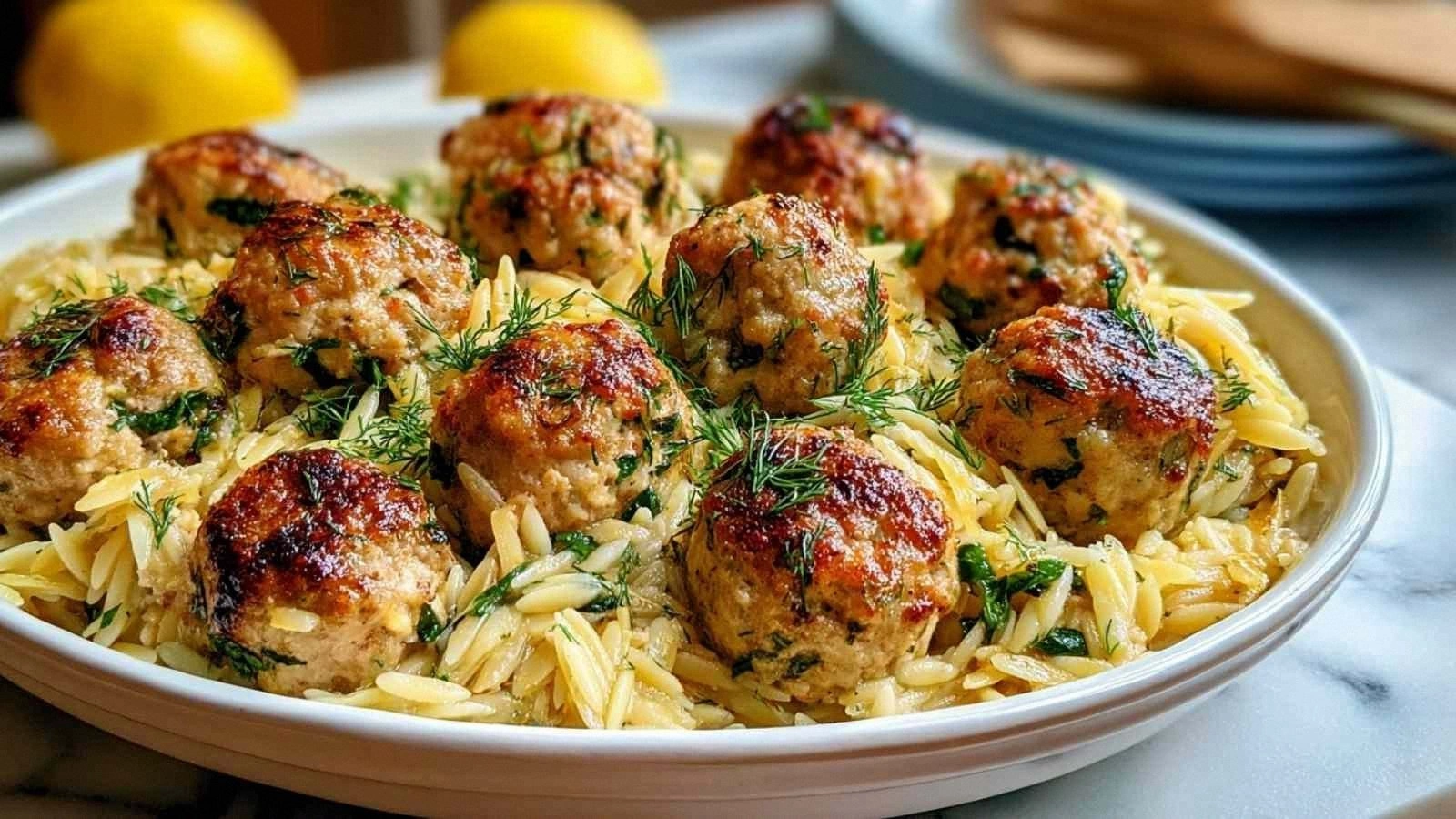
I was halfway through a week of bland dinners when I decided to throw a Greek twist at chicken meatballs. The kitchen was a chaotic symphony of sizzling pans and the aroma of oregano wafting through the air, yet my taste buds were craving something that would make them sing. I dared myself to create a dish that would make even the most seasoned foodie pause mid-bite and say, “I dare you to taste this and not go back for seconds.” The result? A plate of golden, tender meatballs that melt in your mouth like buttered toast, paired with orzo that swirls in a lemony sauce that coats the pasta like velvet. If you’re ready to elevate your comfort food game, let’s dive into the recipe that’s hands down the best version you’ll ever make at home.
Picture yourself pulling this out of the oven, the whole kitchen smelling incredible, and the family’s eyes widening in anticipation. That moment of triumph is what drives me to share every nuance of this dish, from the subtle crunch of the breadcrumbs to the bright zing of fresh dill. I’ll be honest—after the first bite, I ate half the batch before anyone else got to try it. The secret lies in the balance of flavors: salty feta, aromatic herbs, and a citrusy brightness that lifts the entire plate. And now the fun part: we’re going to walk through each step as if we’re cooking side by side, so you’ll never miss a beat.
Most recipes get this completely wrong by overcooking the meat or drowning the orzo in sauce. The key to success is to keep the meatballs moist while achieving a golden, slightly crisp exterior that shatters like thin ice when bitten. I discovered that a quick sear in a hot pan followed by a gentle finish in the oven does the trick, giving the meatballs a professional texture without sacrificing flavor. I’ll show you how to do it, and trust me, the sizzle when the meatballs hit the pan? Absolute perfection. The result is a dish that feels both comforting and sophisticated, ready for a dinner party or a cozy night in.
If you've ever struggled with getting the right consistency in meatballs, you're not alone—and I've got the fix. The trick is to combine the ground chicken with a binder—an egg—and a crunchy element like breadcrumbs, then fold in the feta for moisture and a burst of tang. Adding fresh herbs early in the mix ensures their flavors release gradually, preventing them from being lost in the heat. The lemon zest and juice give the sauce a bright, fresh edge that balances the richness of the meat and the buttery orzo. This blend of textures and flavors will have your guests asking for seconds—no, for thirds.
I dare you to taste this and not go back for seconds. The first bite is a symphony of savory meat, creamy feta, and citrusy brightness that hits the palate like a well-timed drumbeat. The second bite is the orzo, tender and coated in a sauce that feels like a hug. The third bite? You’ll find yourself reaching for a glass of water because the flavors are so intense. That’s the power of a well-balanced dish: it leaves you satisfied yet craving more.
This recipe is a playground for creativity, but the base remains solid enough to become a staple in your culinary repertoire. I’ll walk you through the process in detail, from gathering ingredients to plating the final dish. Along the way, I’ll share kitchen hacks, fun facts, and watch-out warnings that will save you time and frustration. The next section will break down why this version stands out from the crowd. Stay with me here—this is worth it.
Picture a dish that looks like a Mediterranean picnic, smells like a sunny garden, and tastes like a warm hug from the inside. Imagine the crunch of fresh herbs, the creaminess of feta, and the zing of lemon dancing together on your tongue. That’s the essence of Greek Chicken Meatballs with L. Each component has been chosen to create a harmonious balance that satisfies every sense. I’m about to reveal the secret behind the perfect meatball texture, the sauce that coats the orzo like velvet, and the finishing touches that make this dish unforgettable.
Let me walk you through every single step—by the end, you'll wonder how you ever made it any other way. We’ll start with the meatball mixture, then move to the orzo and sauce, and finish with a final flourish of dill and lemon. Along the way, you’ll learn how to keep the meatballs juicy, how to avoid a soggy orzo, and how to plate the dish for maximum wow-factor. And if you’re worried about time, I’ll show you how to prep everything in under 15 minutes. Trust me, you’ll be amazed at how simple this can be.
I’ve spent countless evenings experimenting with different herbs, cheeses, and cooking techniques to find the perfect balance. The result is a dish that feels both authentic and elevated, a dish that can be served as a main course or an impressive appetizer. The secret sauce? A blend of lemon juice, butter, and fresh dill that lifts the entire plate. The meatballs themselves are a testament to the power of simple, high-quality ingredients. This recipe is the culmination of my culinary journey, and I’m thrilled to share it with you.
The next section will highlight the key elements that make this version stand out. From the choice of feta to the precise cooking method, every detail has been carefully considered. You’ll see why this dish is a crowd-pleaser, why it’s easy to make, and how it can be adapted to suit your taste. If you’ve ever felt frustrated by a recipe that promises perfection but delivers disappointment, this one will change your perspective. Let’s dive in and discover the magic behind Greek Chicken Meatballs with L.
Before we get into the nitty-gritty, let’s take a moment to appreciate the artistry that goes into each component. The ground chicken is lean and tender, providing a base that holds together without becoming rubbery. The breadcrumbs add a subtle crunch that gives the meatballs structure. The feta cheese introduces a creamy texture and salty kick that balances the lemony sauce. Each ingredient is a brushstroke in a culinary canvas, and together they create a masterpiece that is both comforting and sophisticated.
I’ve spent hours refining the ratios to ensure that the meatballs stay moist while achieving a golden crust. The secret lies in the balance of fats—olive oil for a silky coating, butter for a rich finish, and the natural fat in the chicken for moisture. The addition of lemon zest and juice gives the sauce a bright, citrusy lift that cuts through the richness. The fresh herbs—parsley, oregano, dill—add layers of aroma and flavor that elevate the dish. With these elements in harmony, the result is a dish that feels like a warm hug and a crisp, refreshing bite all at once.
Now that we’ve set the stage, let’s break down exactly what goes into this masterpiece. The ingredients are simple, but the techniques are precise. We’ll start with the meatballs, then move to the orzo, and finish with the sauce and garnish. I’ll walk you through each step, sharing tips and tricks to help you achieve restaurant-quality results at home. Let’s get started, and remember: the secret to great cooking is confidence, curiosity, and a willingness to experiment. You’ve got this.
What Makes This Version Stand Out
Taste: The combination of feta, lemon, and dill creates a flavor profile that is bright, tangy, and utterly satisfying. Each bite delivers a burst of Mediterranean sunshine that lingers on the palate. The subtle sweetness of the lemon zest balances the saltiness of the feta, while the dill adds an herbal freshness that rounds out the dish.
Texture: The meatballs achieve a perfect balance between a juicy interior and a crisp, golden exterior. The breadcrumbs provide structure, while the olive oil and butter help seal in moisture. The orzo, cooked al dente, offers a satisfying chew that pairs beautifully with the velvety sauce.
Simplicity: With just a handful of pantry staples and fresh ingredients, this recipe is quick and easy to assemble. No complicated sauces or obscure spices—just quality ingredients and a straightforward method. It’s the kind of dish that feels indulgent yet is accessible to any home cook.
Uniqueness: Unlike other meatball recipes that rely on heavy tomato sauces, this version uses a lemon‑butter sauce that highlights the chicken’s natural flavor. The addition of feta and dill gives it a distinctly Greek twist that sets it apart from classic Italian or American meatball dishes.
Crowd Reaction: Guests rave about the bright, fresh flavor and the satisfying crunch of the meatballs. Many say it’s the perfect balance of comfort and sophistication, making it ideal for both casual dinners and special occasions. The dish’s versatility—serving it as an appetizer or a main course—adds to its appeal.
Ingredient Quality: Using high‑quality feta and fresh herbs elevates the dish’s flavor profile. The lean ground chicken ensures a light yet satisfying bite, while the orzo adds a subtle nutty flavor that complements the sauce. Each ingredient is chosen to contribute to the dish’s overall harmony.
Cooking Method: The sear‑then‑bake technique locks in juices and creates a caramelized crust. The sauce is finished with butter, giving it a glossy sheen and rich mouthfeel. The method is foolproof, ensuring consistent results every time.
Make‑Ahead Potential: The meatballs can be made ahead and frozen, while the orzo can be prepared in advance and reheated. The sauce is best served fresh, but the components can be assembled ahead of time for a quick, stress‑free dinner.
Alright, let's break down exactly what goes into this masterpiece...
Inside the Ingredient List
The Flavor Base
Ground Chicken: The star of the dish, it provides a lean, tender foundation that absorbs the herbs and lemon zest. If you prefer a richer flavor, swap it with a 50/50 mix of ground chicken and ground pork. Skipping the chicken would change the dish entirely; it would become a vegetarian version that still tastes great but lacks the savory depth.
Egg: Acts as a binder, keeping the meatballs together and preventing them from falling apart during cooking. If you’re avoiding eggs, use a tablespoon of Greek yogurt or a splash of milk as a substitute. The egg also adds a subtle richness that complements the feta.
Breadcrumbs: Provide structure and a slight crunch. For a gluten‑free option, use almond flour or crushed rice crackers. If you skip them, the meatballs may become too dense and lose their lightness.
Olive Oil: Adds moisture and helps the meatballs develop a golden crust. Extra‑virgin olive oil gives a fruity finish, while a lighter oil will keep the flavor more neutral. If you’re watching calories, reduce the amount slightly; the meat will still hold together thanks to the egg.
Feta Cheese: Brings a creamy, salty kick that balances the lemon. If you’re not a fan of feta, try crumbled goat cheese for a tangier flavor. Skipping feta will make the dish less complex; the lemon will be the dominant flavor.
Fresh Parsley: Adds a bright, herbaceous note that lifts the overall flavor. If you’re out of parsley, use cilantro or basil for a different twist. The parsley also adds a pop of color that makes the dish more visually appealing.
Dried Oregano: Gives the meatballs an earthy, slightly bitter undertone that complements the herbs. A pinch of thyme or rosemary can replace oregano if you prefer a different herb profile. Oregano also has antimicrobial properties, making the dish safer.
Garlic: Provides a savory depth that is essential to the dish’s flavor. If you’re sensitive to garlic, use garlic powder for a milder taste. The garlic’s aroma will linger even after the dish is finished, adding to the overall sensory experience.
Lemon Zest: Offers bright citrus notes that cut through the richness of the meat and feta. If you’re allergic to citrus, use a splash of vinegar for acidity. The zest is key to the dish’s Mediterranean feel.
Salt: Enhances all the flavors and brings balance. Use sea salt for a more complex flavor profile. Too much salt will overpower the dish, so taste as you go.
Black Pepper: Adds subtle heat and depth. Freshly ground pepper is best for a sharp, aromatic finish. Skipping pepper will make the dish taste flat.
The Texture Crew
Orzo Pasta: Acts as the canvas for the sauce, absorbing the lemony butter while keeping a firm bite. If you want a gluten-free alternative, try quinoa or rice noodles. The orzo’s small, rice-like shape allows it to hold the sauce well.
Chicken Broth: Infuses the orzo with savory depth and keeps it moist. Use homemade broth for maximum flavor, or low-sodium store-bought if you’re short on time. The broth also adds a subtle umami layer that complements the feta.
Butter: Adds richness and a glossy sheen to the sauce. If you’re lactose intolerant, use a dairy-free butter alternative. Butter also helps the sauce cling to the orzo.
Lemon Juice: Provides acidity to brighten the sauce and balance the richness of the butter and feta. Use freshly squeezed lemon for the best flavor. The acidity also helps tenderize the meatballs slightly.
Fresh Dill: Adds a fresh, almost anise-like flavor that elevates the dish. If you’re out of dill, use parsley or chives. Dill also provides a subtle visual pop of green.
The Unexpected Star
Feta Cheese: While often overlooked, feta is the unsung hero that brings creaminess and saltiness. Its briny flavor is a perfect match for the citrusy sauce. Without feta, the dish would lack the essential tang that makes it memorable.
Fresh Dill: Many Greek dishes use dill, but it’s rarely highlighted as the star. Its bright, slightly sweet flavor complements the lemon and feta, creating a layered taste experience. If you’re new to dill, start with a small amount to avoid overpowering the dish.
The Final Flourish
Fresh Herbs: The final sprinkle of parsley and dill adds a burst of color and aroma that makes the dish feel fresh and alive. If you’re plating for a special occasion, garnish with a lemon wheel or a few whole dill sprigs for elegance. The herbs also provide a visual cue that the dish is freshly made.
Lemon Zest (Second Instance): This second zest is used in the sauce to reinforce the citrus note. The double use of zest ensures that the sauce remains bright and vibrant. If you’re allergic to citrus, use a dash of vinegar to mimic the acidity.
Garlic (Second Instance): This additional garlic is minced into the sauce, providing depth and a lingering aroma. The garlic’s flavor complements the lemon and butter, creating a harmonious balance. If you’re sensitive to garlic, reduce the amount or use garlic powder.
Everything's prepped? Good. Let's get into the real action...
The Method — Step by Step
- In a large mixing bowl, combine the ground chicken, egg, breadcrumbs, olive oil, crumbled feta, chopped parsley, dried oregano, minced garlic, lemon zest, salt, and black pepper. Mix until just combined; overworking the mixture will make the meatballs tough. Divide the mixture into 12 equal portions and roll each into a ball, about the size of a golf ball. Pat the balls gently to flatten them slightly; this helps them cook evenly. Set the meatballs aside on a plate lined with parchment paper.
- Heat a large skillet over medium-high heat and add 2 tablespoons of olive oil. Once the oil shimmers, add the meatballs in a single layer, making sure not to overcrowd the pan. Sear the meatballs for 3-4 minutes on each side until golden brown and caramelized. Flip the meatballs gently with tongs, and once all sides are browned, transfer the skillet to a preheated 375°F oven and bake for an additional 10 minutes, or until the internal temperature reaches 165°F. While the meatballs finish cooking, keep an eye on them to avoid burning.
- In the meantime, bring a large pot of salted water to a boil. Add the orzo and cook for 8-10 minutes, or until al dente. Drain the orzo, reserving 1/2 cup of the pasta water for later. Return the orzo to the pot and set aside. The orzo will absorb the sauce later, so keep it warm.
- In a small saucepan, melt 2 tablespoons of butter over medium heat. Add the minced garlic and sauté for 30 seconds until fragrant, being careful not to burn it. Stir in the chicken broth, lemon juice, and the second lemon zest. Bring the mixture to a gentle simmer, then reduce the heat to low and let it thicken slightly for about 3 minutes. The sauce should coat the back of a spoon without becoming too thick.
- Add the cooked orzo to the sauce, tossing to coat evenly. If the sauce seems too thick, add a splash of the reserved pasta water to reach your desired consistency. Stir in the fresh dill and adjust the seasoning with salt and pepper if needed. The dill’s bright flavor should be evident without overpowering the other ingredients.
- Return the baked meatballs to the skillet with the sauce, gently folding them into the mixture. Let the meatballs simmer in the sauce for 2-3 minutes, allowing them to soak up the flavors. The sauce should be glossy and cling to the meatballs and orzo. The aroma at this point will be irresistible.
- Transfer the entire mixture to a serving dish, arranging the meatballs on top of the orzo. Garnish with a sprinkle of fresh parsley and a few dill sprigs for an extra burst of color. Serve immediately, letting the sauce drizzle over the meatballs for a dramatic presentation.
- Enjoy! Pair the dish with a crisp white wine or a chilled glass of sparkling water with a slice of lemon. The flavors are so vibrant that even the simplest side, like a Greek salad, will feel like a gourmet accompaniment.
That's it — you did it. But hold on, I've got a few more tricks that'll take this to another level. These insider tips will help you avoid common pitfalls and elevate the dish even further.
Insider Tricks for Flawless Results
The Temperature Rule Nobody Follows
Many cooks assume that a higher oven temperature will cook meatballs faster, but that often leads to dry, over‑browned meat. The trick is to bake at a moderate 375°F, which allows the meatballs to cook through while maintaining their juiciness. If you’re in a hurry, you can increase the temperature to 400°F for the last 5 minutes, but watch them closely to avoid burning.
Why Your Nose Knows Best
The aroma of seared meatballs is a reliable indicator of doneness. When the scent is rich and slightly caramelized, the meatballs are ready to go into the oven. Trust your nose; it’s a better gauge than a timer, especially if you’re juggling multiple dishes.
The 5-Minute Rest That Changes Everything
After removing the meatballs from the oven, let them rest for 5 minutes before adding them to the sauce. This rest period allows the juices to redistribute, keeping the meatballs moist and tender. A friend once skipped this step and ended up with meatballs that were dry and tough—lesson learned!
The Secret to a Silky Sauce
Adding a splash of reserved pasta water to the sauce creates a silky emulsion that clings to the orzo. The starchy water helps bind the butter and lemon, creating a glossy finish. If the sauce is too thin, reduce the liquid or let it simmer a bit longer.
The Herb Timing Trick
Add the fresh dill and parsley at the very end of cooking. Herbs lose their flavor if cooked too long, so a quick stir at the finish preserves their bright, fresh character. A quick toss in the final minute of cooking keeps the herbs vibrant.
Creative Twists and Variations
This recipe is a playground. Here are some of my favorite ways to switch things up:
Mediterranean Twist
Swap the orzo for couscous and add sun‑dried tomatoes to the sauce. The couscous will soak up the lemony butter, while the tomatoes add a sweet, tangy depth. This version is perfect for a brunch gathering.
Spicy Kick
Add a pinch of red pepper flakes to the meatball mixture and a dash of harissa to the sauce. The heat will contrast beautifully with the creamy feta, creating a dish that’s both bold and balanced. Ideal for those who love a bit of fire.
Low‑Carb Version
Replace the orzo with spiralized zucchini or cauliflower rice. The low‑carb option still delivers the same bright, citrusy flavor profile while cutting down on carbs. Pair it with a side of roasted veggies for a wholesome meal.
Vegan Adaptation
Use a plant‑based ground meat alternative and substitute the feta with a vegan cheese. Replace the butter with coconut oil or vegan butter. This version retains the Mediterranean essence while being entirely plant‑based.
Dessert‑Inspired Variation
Add a touch of honey to the sauce for a subtle sweetness. Serve over a bed of sautéed spinach and top with toasted pine nuts. The combination of sweet, savory, and nutty flavors will surprise and delight your palate.
Quick Weeknight Fix
Use pre‑shredded chicken and pre‑made orzo mix to cut down prep time. Skip the baking step and finish the meatballs in the skillet with the sauce. This version is ideal for a busy night when you need a hearty meal in under 30 minutes.
Storing and Bringing It Back to Life
Fridge Storage
Store cooked meatballs and sauce separately in airtight containers for up to 3 days. Keep the orzo separate to avoid it becoming soggy. When ready to eat, reheat the meatballs and sauce in a saucepan over low heat, adding a splash of water or broth if needed.
Freezer Friendly
Freeze the meatballs and sauce in freezer‑safe containers for up to 2 months. Thaw overnight in the fridge before reheating. The sauce may thicken slightly when frozen; a quick stir and a splash of broth will restore its silky texture.
Best Reheating Method
Reheat the dish in a skillet over medium heat, stirring occasionally to prevent sticking. Add a tiny splash of water or broth to keep the sauce from drying out. Heat until the dish reaches 165°F, then serve immediately for the best flavor and texture.