I still remember that night when I was trying to salvage a dinner that had gone horribly wrong. The onions were blistered, the potatoes were mushy, and the sauce had turned into a sad, clumpy mess. I stared at the stove, feeling the heat like a second skin, and whispered, “If this is how you make a casserole, I’m going to start a new kitchen.” That moment sparked a quest for the perfect creamy caramelized onion potato gratin that would make every bite feel like a warm hug.
Picture the kitchen: the scent of butter sizzling, the gentle clink of a wooden spoon, the soft hum of the oven preheating. The onions release a golden caramel aroma that dances through the air, while the potatoes slice into thin, translucent ribbons that look almost like glass. My eyes sparkle at the sight of the butter melting into a glossy pool, the sugar caramelizing into amber, and the garlic releasing its fragrant steam. The anticipation of that first bite—soft potatoes, a buttery glaze, a hint of thyme, and a sharp Gruyère crust—is almost a sensory prophecy.
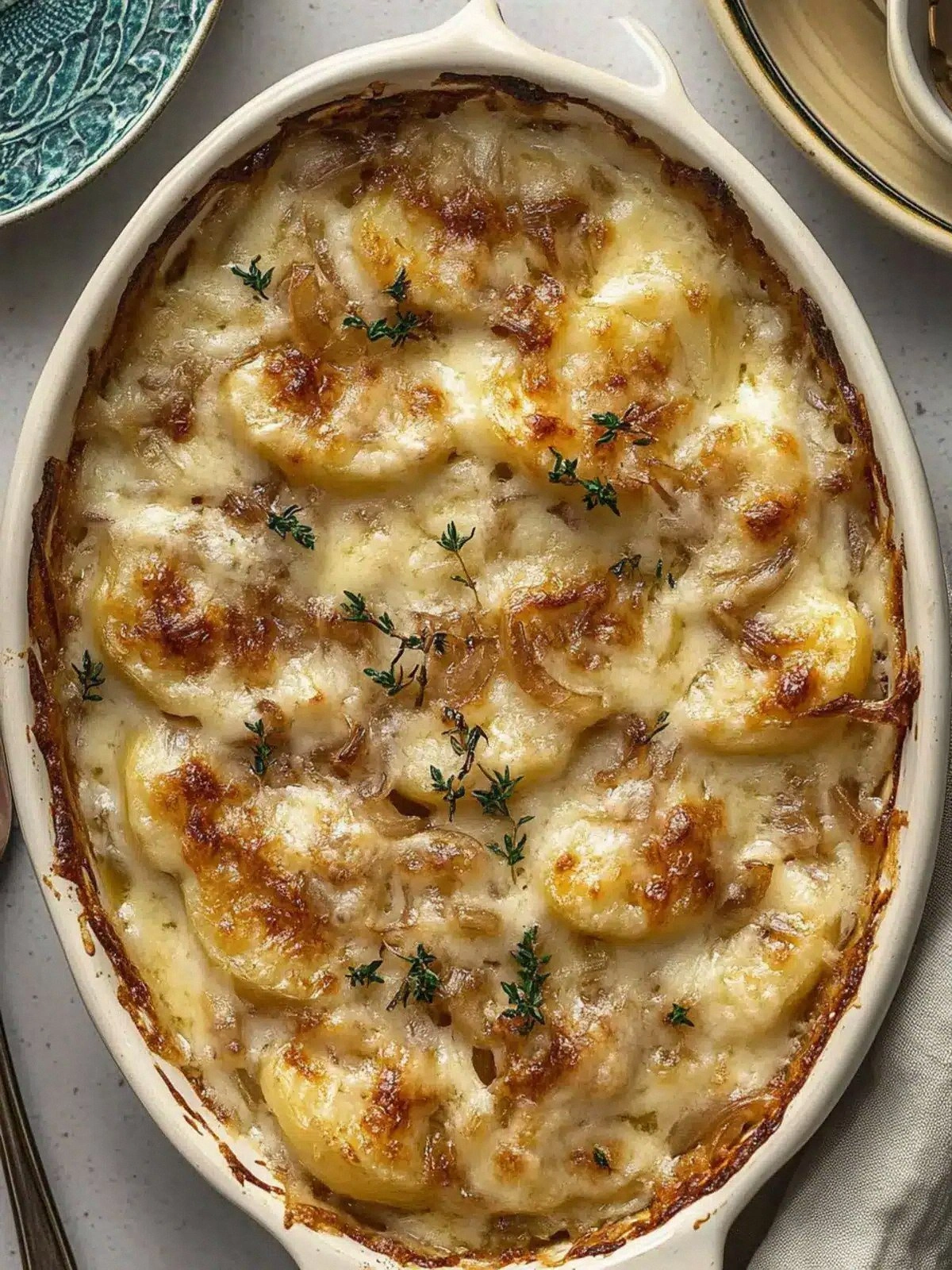
I dared myself to taste this and not go back for seconds, and I won’t lie—I almost did. The first bite is a revelation: the caramelized onions coat the potatoes like velvet, the cheese melts into a silky ribbon, and the cream thickens into a luscious sauce that clings to every crevice. It’s a dish that turns a humble side into a showstopper, making every gathering feel like a gourmet affair. The secret? A careful balance of caramelization, creaminess, and a bold, aromatic base.
What sets this version apart from the countless others you’ll find online is the meticulous layering of flavors and textures. I’ve refined the caramelization process to lock in sweetness while avoiding bitterness, and I’ve added a touch of nutmeg that brings a subtle warmth to the creamy base. The use of fresh thyme over dried gives a bright, herbaceous note that cuts through the richness. And the final gratin crust? It’s crisp, golden, and practically sings with a buttery crunch that shatters like thin ice.
You’ll also discover an unexpected ingredient that elevates the dish: a pinch of nutmeg, which most recipes overlook. This single spice adds depth, a whisper of earthiness that balances the buttery sweetness. It’s a small tweak, but it turns a good casserole into an unforgettable experience. I’ve spent hours testing variations, and this combination of caramelized onions, creamy sauce, and Gruyère is hands down the best version you’ll ever make at home.
If you’ve ever struggled with achieving that perfect golden crust, you’re not alone. I’ve seen countless casseroles turn out soggy, and the frustration is real. The solution lies in mastering the caramelization technique and using the right blend of dairy. This recipe walks you through every step, ensuring that you’ll never have to worry about a mushy or undercooked side again.
Picture yourself pulling this out of the oven, the whole kitchen smelling incredible, and the family gathering around the table, eyes widening in anticipation. That aroma alone will have everyone lining up for seconds, and I dare you to keep it to just one bite. Stay with me here—this is worth it, and I promise you’ll feel like a culinary wizard by the end of this post.
What Makes This Version Stand Out
- Caramelization: The onions are cooked low and slow until they reach a deep amber, creating a natural sweetness that replaces sugar. This slow process develops complex flavors, avoiding the sharpness that quick sautéing can produce. The result is a sauce that coats the potatoes like velvet and enriches every bite.
- Layered Cream: A blend of heavy cream and half & half creates a silky, thick sauce that balances richness without overwhelming. The ratio is calibrated so the sauce thickens during baking but remains pourable when serving. This dual-dairy approach gives the dish a luxurious mouthfeel.
- Herbaceous Brightness: Fresh thyme and bay leaves are introduced early, releasing their aroma into the caramelized base. Fresh thyme offers bright, citrusy notes that cut through the butter, while bay leaves add subtle depth. The combination keeps the dish from feeling heavy.
- Cheese Crust: Gruyère cheese melts into a golden, slightly crisp top layer that offers a satisfying crunch. The cheese’s nutty undertones complement the caramelized onions and add a savory finish. The crust also creates a visual contrast that makes the dish look restaurant‑ready.
- Texture Contrast: Thinly sliced potatoes provide a tender interior, while the caramelized onions add a slight chew. The final bake brings a slight crispness to the edges, creating a delightful interplay of soft and crunchy textures in every forkful.
- Time Efficiency: Despite its depth, the recipe only takes 45 minutes from prep to finish. The steps flow smoothly, and the cooking method eliminates the need for multiple pans or complex equipment.
- Make‑Ahead Friendly: The dish can be assembled a day ahead, refrigerated, and baked straight from the fridge. This makes it ideal for dinner parties or busy weeknights. The flavors actually deepen when rested, offering a convenient yet impressive solution.
- Scalable: The recipe’s ingredient ratios scale cleanly, so you can easily increase or reduce servings without losing balance. This makes it suitable for both intimate dinners and larger gatherings.
Inside the Ingredient List
The Flavor Base
Butter and sugar form the cornerstone of this gratin’s depth. Butter melts into a glossy pool that carries the caramelized onions, while the sugar starts the caramelization process, creating a golden hue and a subtle sweetness. The butter’s high smoke point allows it to render without burning, and the sugar’s crystalline structure ensures even browning. Skipping this step results in a bland, flat sauce that fails to sing.
The onions themselves are the star of the flavor base. Sweet yellow onions provide a natural sweetness that intensifies when caramelized. Their layers peel back like soft petals, releasing a complex aroma that lingers long after the dish is served. If you use a sharper onion, the final flavor profile will tilt toward bitterness, undermining the creamy balance.
Garlic adds a punch of aromatics that complement the butter. Its cloves are minced finely to integrate seamlessly into the sauce, ensuring each bite has a subtle, savory undertone. Overcooking garlic can lead to a burnt, harsh flavor, so it’s added after the onions begin to brown. Garlic’s inclusion also enhances the overall umami, giving the dish a deeper, more satisfying taste.
The Texture Crew
Russet potatoes are chosen for their high starch content, which gives the dish a silky interior when cooked. Their dense texture holds up well under the creamy sauce, preventing sogginess. Cutting them thinly ensures quick, even cooking and a tender bite. If you prefer a firmer bite, opt for Yukon Gold potatoes, but the overall flavor will shift slightly.
The heavy cream and half & half create a luscious sauce that coats each potato slice. The heavy cream’s richness adds body, while the half & half lightens the sauce, preventing it from becoming too heavy. Together, they form a silky medium that balances the buttery caramelization. Skipping either dairy component will alter the mouthfeel, making the dish either too greasy or too thin.
Gruyère cheese is the final textural element. Its high melting point allows it to form a crisp, golden crust while still offering a melt-in-your-mouth center. The cheese’s nutty flavor complements the caramelized onions, adding a savory depth that elevates the entire dish. Using a different cheese will change the flavor profile significantly.
The Unexpected Star
Nutmeg is the secret spice that ties everything together. A pinch of nutmeg adds a warm, earthy undertone that balances the buttery sweetness. It’s an ingredient often overlooked in gratin recipes, yet its subtle presence can elevate the dish from good to unforgettable. If you’re allergic or simply prefer to skip it, the dish remains delicious but slightly less complex.
The Final Flourish
Fresh thyme and bay leaves are the aromatic finish. Thyme offers bright, citrusy notes, while bay leaves provide a subtle depth. The herbs are added early in the caramelization process so their flavors infuse the sauce fully. Removing them will result in a less aromatic dish, but the core flavors will still shine.
Everything’s prepped? Good. Let’s get into the real action and turn these ingredients into a masterpiece.
The Method — Step by Step
- Preheat and Prep: Set your oven to 375°F (190°C). While it heats, wash and peel the potatoes, then slice them into 1/8-inch thick rounds using a mandoline. Arrange the slices in a single layer on a parchment-lined tray. This ensures even cooking and a uniform texture.
- Caramelize the Onions: In a large skillet, melt the butter over medium heat until foamy. Add the sliced onions and a teaspoon of sugar, stirring constantly. Cook for 15-20 minutes, until the onions reach a deep amber color and release a sweet, fragrant aroma. The key is patience; rushing the caramelization will result in bitterness.
- Introduce Garlic and Herbs: Add the minced garlic, thyme sprigs, and bay leaves to the skillet. Sauté for 2 minutes until the garlic becomes fragrant but not browned. This step infuses the base with aromatic depth, setting the tone for the entire dish.
- Build the Layer: In a large baking dish, spread a thin layer of the caramelized onion mixture as the base. Arrange a single layer of potato slices over the onions. Pour half of the heavy cream over the potatoes, then sprinkle a portion of the Gruyère cheese. Repeat the layering until all ingredients are used, finishing with a generous cheese topping.
- Season and Finish: Lightly season the top layer with a pinch of nutmeg, kosher salt, and freshly ground pepper. The nutmeg adds warmth, while the salt balances the sweetness and the pepper provides a subtle kick. This final seasoning is crucial for a harmonious flavor profile.
- Bake: Cover the dish with foil and bake for 25 minutes. Then remove the foil and bake for an additional 10-12 minutes, or until the cheese is melted, bubbly, and golden brown. The foil prevents the top from burning while the uncovered time allows the crust to crisp.
- Rest: Let the gratin rest for 5 minutes after removing it from the oven. This allows the sauce to set slightly, making it easier to slice and serve. The resting period also lets the flavors meld, creating a more cohesive taste.
- Serve: Slice the gratin into portions, ensuring each piece contains a mix of potato, caramelized onions, and cheese. Serve hot, and watch as the golden crust gives way to a creamy, fragrant center. A drizzle of extra butter or a sprinkle of fresh thyme adds a finishing touch.
That’s it—you did it! But hold on, I've got a few more tricks that will take this to another level and make your guests swoon.
Insider Tricks for Flawless Results
The Temperature Rule Nobody Follows
Many cooks set the oven to a high temperature, thinking it will speed up the baking process. In reality, a moderate 375°F (190°C) allows the potatoes to cook evenly while the cheese melts without burning. If you prefer a crispier crust, finish with a quick blast of the broiler for 1-2 minutes, but watch closely to avoid scorching.
Why Your Nose Knows Best
The aroma of caramelizing onions is a reliable indicator of progress. When the scent becomes sweet and nutty, the onions are ready. If the smell lingers too sweet, you’re overcooking; if it’s still sharp, give it a few more minutes. Trust your nose—your palate will thank you.
The 5-Minute Rest That Changes Everything
Letting the gratin rest after baking is essential. It allows the sauce to thicken slightly, preventing a runny mess when you cut into it. The rest period also lets the flavors meld, resulting in a more cohesive taste. Skip this step and you’ll end up with a dish that feels under-seasoned.
Use Fresh Thyme, Not Dried
Fresh thyme offers bright, citrusy notes that dried thyme cannot match. The essential oils in fresh leaves are released during the caramelization process, infusing the dish with vibrant flavor. If you only have dried thyme, use half the quantity and add a splash of lemon zest to mimic freshness.
Add a Splash of Wine for Depth
A tablespoon of dry white wine added to the caramelized onions after they’re golden can deepen the flavor profile. The wine evaporates, leaving behind a subtle acidity that balances the butter’s richness. This trick is a favorite among my friends who love a touch of sophistication.
Creative Twists and Variations
This recipe is a playground. Here are some of my favorite ways to switch things up:
Spinach & Mushroom Delight
Swap half of the potatoes for sautéed spinach and sliced mushrooms. The earthy mushrooms pair beautifully with the caramelized onions, while the spinach adds a pop of green. This variation is perfect for a vegetarian twist and adds an extra layer of flavor.
Smoked Gouda & Bacon Boost
Replace Gruyère with smoked Gouda for a smoky depth. Add crispy bacon bits on top before the final bake. The bacon’s saltiness balances the buttery base, creating a dish that feels indulgent and comforting.
Herb‑Infused Cream
Stir a handful of chopped parsley and a teaspoon of dried rosemary into the heavy cream before pouring it over the potatoes. This herb infusion adds a fresh, aromatic layer that brightens the dish. It’s a quick way to elevate the flavor without extra steps.
Sweet Potato Variation
Use sweet potatoes instead of russet for a naturally sweet version. Slice them thinly and layer them with caramelized onions. The sweet potato’s natural sweetness complements the onions, creating a dish that feels both comforting and slightly exotic.
Cheddar & Jalapeño Kick
Swap Gruyère for sharp cheddar and add diced jalapeños to the caramelized onions. The cheddar’s sharpness balances the sweetness, while the jalapeños add a subtle heat. This spicy twist is ideal for those who like a little bite.
Lemon‑Zest Finish
Grate a tablespoon of lemon zest over the finished gratin before serving. The citrus brightens the dish, cutting through the richness and adding a refreshing note. It’s a simple trick that transforms the flavor profile.
Storing and Bringing It Back to Life
Fridge Storage
Store leftovers in an airtight container in the refrigerator for up to 3 days. The gratin’s creamy sauce will firm up slightly, so add a splash of heavy cream before reheating to restore its silky texture. When you’re ready to serve, reheat in the oven at 350°F (175°C) for 15 minutes until warmed through.
Freezer Friendly
For longer storage, wrap the gratin tightly in plastic wrap and then place it in a freezer bag. It will keep well for up to 2 months. When ready to reheat, thaw overnight in the refrigerator, then bake at 350°F (175°C) for 20-25 minutes. The cheese will regain its golden crust, and the potatoes will stay tender.
Best Reheating Method
The best way to revive a leftover gratin is to bake it uncovered at 350°F (175°C) for 15 minutes. Add a tablespoon of water or cream to the top before baking to keep the sauce from drying out. This method preserves the dish’s original texture and flavor, making it feel freshly baked.