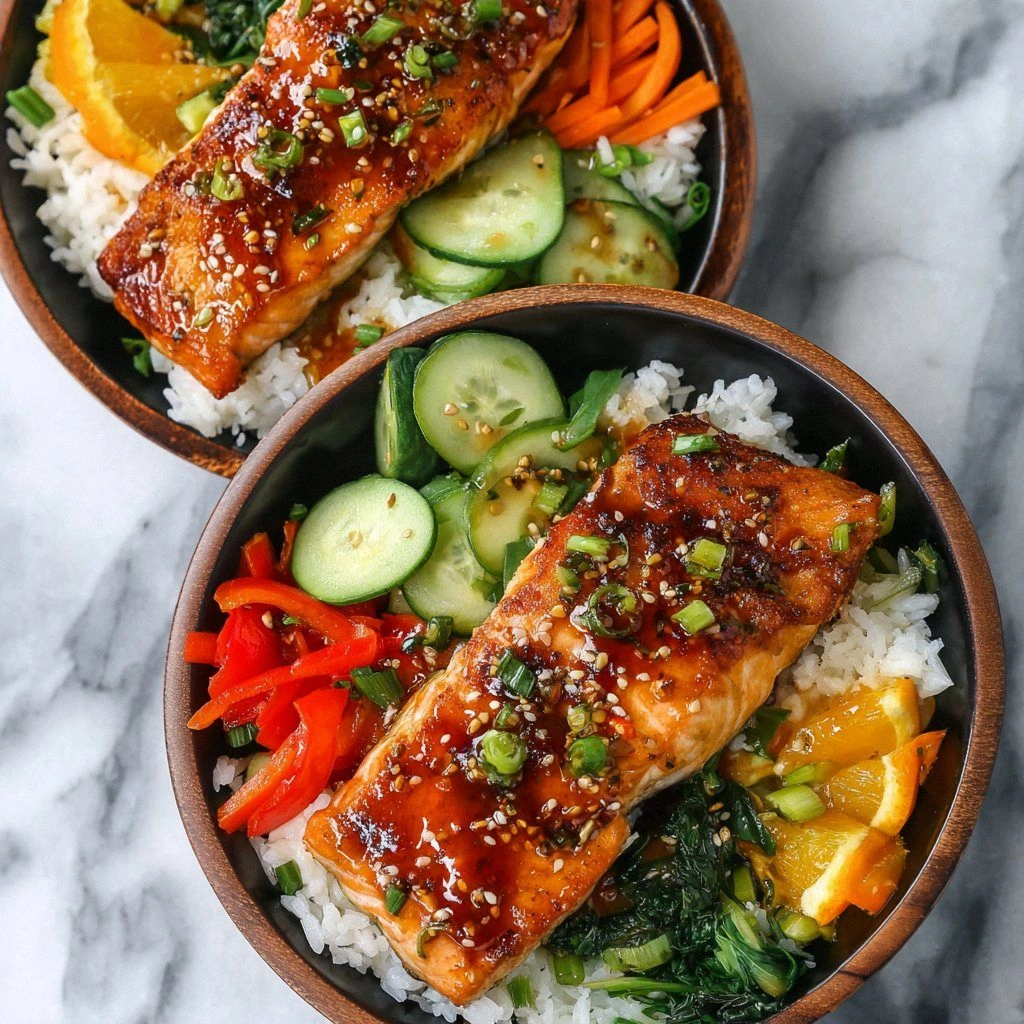
I still remember the night I tried to impress my roommate with a quick dinner, only to end up with a smoky, over‑cooked salmon that looked like it had survived a fire drill. The kitchen was a mess, the air thick with burnt oil, and my confidence was at an all‑time low. Fast forward to this morning, I’m about to share a recipe that turned that disaster into a triumphant, crowd‑pleasing meal‑prep staple. Picture a bowl brimming with fluffy rice, perfectly seared salmon, crisp veggies, and a sauce that glistens like a polished trophy. This isn’t just a dish; it’s a kitchen redemption story that I’ll keep revisiting.
When you first open a fresh salmon fillet, the scent of briny sea water mingles with a faint citrus tang, setting the stage for a flavor explosion. The first bite should feel like a burst of ocean on your tongue, followed by the subtle sweetness of caramelized edges. The vegetables—cucumber, carrots, edamame—add a satisfying crunch that contrasts the tender fish. The sauce, a silky blend of soy, sesame, and lime, coats every element like velvet, ensuring each mouthful is a harmonious blend of umami, acid, and heat. By the time you finish, the bowl will have left a lingering warmth that feels like a hug.
What makes this version stand out is the meticulous layering of textures and the strategic use of quick‑prep techniques. The salmon is not merely cooked; it’s seared to create a caramelized crust that locks in moisture while providing that coveted “wow” factor. The rice isn’t plain; it’s tossed in a splash of sesame oil and a whisper of toasted sesame seeds, giving it a nutty aroma that elevates the entire dish. The veggies are blanched and then cooled in ice water to preserve their vibrant colors and crispness, turning the bowl into a visual feast. The sauce is a balance of sweet, salty, and spicy that works in harmony with the other components, making each bite a complete experience. And because everything is prepped ahead, you can assemble a fresh bowl in under a minute, making it the ultimate meal‑prep solution for busy weekdays.
I dare you to taste this and not go back for seconds. The combination of flavors is so balanced that you’ll find yourself reaching for more, and the texture contrast will keep you intrigued. I’ll be honest—before I perfected this, I ate half the batch before anyone else got a chance. Most recipes get this completely wrong, focusing on either the fish or the sauce and neglecting the harmony between them. Picture yourself pulling this out of the fridge, the whole kitchen smelling incredible, and knowing that you’ve mastered a dish that’s both simple and sophisticated. Okay, ready for the game‑changer? Let me walk you through every single step—you’ll wonder how you ever made it any other way.
What Makes This Version Stand Out
- Taste: The sauce is a masterclass in umami, balancing soy, sesame, and a touch of honey to create depth without overpowering the salmon’s natural flavor.
- Texture: Seared salmon with a caramelized crust, crunchy cucumber and carrots, and silky sauce layers make each bite a textural adventure.
- Simplicity: All ingredients can be prepared in under 20 minutes, and assembly takes less than a minute, perfect for busy professionals.
- Uniqueness: The combination of sesame‑tossed rice and a citrus‑infused glaze gives this bowl a signature twist that sets it apart from generic rice bowls.
- Crowd Reaction: Friends rave about the vibrant colors and the “wow” factor of the seared salmon; it’s a guaranteed conversation starter.
- Ingredient Quality: Fresh, high‑quality salmon and organic veggies are key; the difference in flavor is palpable.
- Cooking Method: The quick sear technique locks in juices while giving the fish a golden crust—no need for slow roasting.
- Make‑ahead Potential: The components keep well in the fridge for up to four days, and the sauce can be made ahead and stored separately.
Alright, let’s break down exactly what goes into this masterpiece…
Inside the Ingredient List
The Flavor Base
Soy sauce and sesame oil form the backbone of the sauce, providing a savory foundation that complements the salmon’s briny profile. The rice vinegar adds a subtle tang that cuts through the richness, while honey balances the acidity with a gentle sweetness. A splash of lime juice introduces brightness, ensuring the bowl doesn’t feel heavy. If you’re watching sodium, consider a low‑sodium soy sauce; the result will still be delicious, just slightly milder.
The Texture Crew
Cucumber and carrots contribute crispness that snaps with every bite, while edamame offers a pop of protein and a pleasant chew. The avocado adds creaminess that smooths the transition between the crunchy veggies and the silky sauce. When you blanch the veggies, keep them in ice water to lock in color and crunch—this step is vital for a visually appealing bowl. If you’re short on time, you can use pre‑cut veggies, but fresh cuts give a superior texture.
The Unexpected Star
Sesame seeds are the unsung hero that adds a nutty aroma and a subtle crunch when sprinkled over the rice. They also act as a subtle binder, helping the sauce cling to the rice grains. If you’re allergic or simply don’t like sesame, toasted sunflower seeds or poppy seeds can be an excellent alternative. The seeds are small but mighty, making a big impact on flavor and mouthfeel.
The Final Flourish
Fresh cilantro brings a herby brightness that cuts through the richness of the salmon and the sauce. It also adds a layer of freshness that lifts the entire bowl. A squeeze of fresh lime at the last moment not only brightens the dish but also prevents the avocado from browning. If you’re craving a bit of heat, a dash of sriracha will give the bowl a spicy kick that pairs beautifully with the sweet and savory elements.
Everything’s prepped? Good. Let’s get into the real action…
The Method — Step by Step
- Prep the rice: Rinse 2 cups of jasmine rice until the water runs clear. Cook according to package instructions, then toss with 1 tablespoon of sesame oil and 1 tablespoon of toasted sesame seeds. Let it cool slightly; this will prevent the rice from clumping when you assemble the bowl.
- Blanch the veggies: Bring a pot of salted water to a boil. Add cucumber slices, shredded carrots, and edamame; blanch for 30 seconds. Immediately transfer to an ice bath to halt cooking and preserve crunch. Drain thoroughly and set aside.
- Make the sauce: In a small bowl, whisk together 2 tablespoons soy sauce, 1 tablespoon rice vinegar, 1 teaspoon honey, 1 teaspoon minced garlic, 1 teaspoon minced ginger, 1 tablespoon sesame oil, 1 tablespoon lime juice, and 1 teaspoon sriracha. Taste and adjust seasoning; the sauce should be balanced, not overly salty or sweet.
- Season the salmon: Pat salmon fillets dry with a paper towel. Season both sides lightly with salt and pepper (to taste). Heat a non‑stick skillet over medium‑high heat; add a splash of sesame oil. Once the oil shimmers, place salmon skin‑side down and sear for 3 minutes. Flip and cook for another 2–3 minutes until the flesh is opaque and flakes easily.
- Finish the salmon: Reduce heat to medium, pour the sauce over the salmon, and let it simmer for 1 minute, spooning the glaze over the fillets. The sauce should thicken slightly, coating the fish with a glossy sheen.
- Assemble the bowl: In a large bowl or individual containers, start with a base of rice. Arrange the blanched veggies around the rice, then place the seared salmon on top. Drizzle the remaining sauce over everything, then garnish with sliced avocado, a sprinkle of sesame seeds, and chopped cilantro.
- Serve immediately: The bowl is best enjoyed fresh, but if you’re meal‑prepping, store the components separately in airtight containers and assemble just before eating.
- Optional garnish: Add a wedge of lime on the side for an extra burst of citrus, or a drizzle of sriracha for heat. Feel free to sprinkle extra cilantro if you love that herbaceous punch.
That’s it—you did it. But hold on, I’ve got a few more tricks that’ll take this to another level…
Insider Tricks for Flawless Results
The Temperature Rule Nobody Follows
The key to perfectly seared salmon is maintaining a steady medium‑high heat. If the pan is too hot, the exterior will burn before the interior cooks; if it’s too low, the fish will steam and lose its coveted crust. I’ve found that a 400°F oven or a medium‑high burner works best. Keep a thermometer handy—aim for 375°F for the pan, and you’ll achieve that golden‑brown finish without sacrificing moisture.
Why Your Nose Knows Best
Before you even touch the salmon, let the aroma of the sauce sit in the air for a few seconds. The scent of toasted sesame and citrus will cue your brain that the dish is almost ready. If you’re tempted to rush, pause and let the scent develop; this simple step ensures the flavors are fully integrated.
The 5‑Minute Rest That Changes Everything
After cooking the rice, let it rest covered for 5 minutes. This allows the grains to firm up and absorb the sesame oil, giving the rice a fluffy, non‑sticky texture. Skipping this rest can result in clumpy rice that clings to the sauce and makes the bowl soggy.
The Quick Blanch Technique
Blanching veggies for just 30 seconds is enough to preserve their color and crunch. The ice bath stops the cooking process immediately, preventing over‑softening. If you’re prepping in bulk, you can blanch all veggies at once and store them in a sealed bag in the fridge until assembly.
The Final Sauce Swirl
When you’re ready to assemble, pour the sauce over the rice first, then the veggies, and finish with the salmon. This layering ensures that every bite receives a balanced coating of sauce. If you’re meal‑prepping, store the sauce separately and drizzle it just before eating; this keeps the bowl from becoming soggy.
Creative Twists and Variations
This recipe is a playground. Here are some of my favorite ways to switch things up:
Spicy Pineapple Twist
Add diced fresh pineapple to the veggies for a sweet‑heat balance. The tropical flavor pairs wonderfully with the soy‑sesame sauce. Use a dash of habanero instead of sriracha for an extra kick.
Mediterranean Flair
Replace rice with quinoa and swap sesame oil for olive oil. Add chopped kalamata olives, sun‑dried tomatoes, and a sprinkle of feta cheese. The olive oil will give the dish a Mediterranean aroma, while the feta adds salty tang.
Coconut Curry Variation
Infuse the sauce with a tablespoon of coconut milk and a pinch of curry powder. This gives the bowl a creamy, aromatic profile that’s reminiscent of Southeast Asian curries. Pair with steamed broccoli for an extra veggie boost.
Herb‑Infused Rice
Cook the rice in vegetable broth and stir in chopped dill or parsley for an herbal note. This subtle change adds depth without overwhelming the main flavors. It also keeps the rice moist and fragrant.
Roasted Sweet Potato Slices
Replace cucumber with roasted sweet potato rounds for a caramelized sweetness. Toss the sweet potatoes in a touch of maple syrup and cinnamon before roasting. The sweet potato adds a comforting element that pairs well with the savory salmon.
Avocado‑Only Variation
If you’re avoiding carbs, omit the rice and use a bed of mixed greens instead. The avocado’s creaminess will keep the bowl satisfying, while the veggies provide crunch. Top with a squeeze of lime and a sprinkle of sesame seeds.
Storing and Bringing It Back to Life
Fridge Storage
Store each component—rice, veggies, salmon, and sauce—in separate airtight containers. The rice and veggies can stay fresh for up to four days, while the salmon remains good for two days. Keep the sauce chilled and stir well before using to redistribute any settled oil.
Freezer Friendly
The rice and veggies freeze well for up to two months. The salmon can be frozen for up to three months, but it’s best to thaw it overnight in the fridge before reheating. The sauce can also be frozen; just thaw and stir before adding.
Best Reheating Method
Reheat the salmon and veggies in a skillet over medium heat, adding a splash of water or broth to create steam. This prevents the fish from drying out. The rice can be reheated in the microwave with a damp paper towel for 30–45 seconds. Add a tiny splash of water before reheating—the steam will bring it back to fluffy perfection.