Picture this: I’m standing in a cramped kitchen, the fridge door slamming shut behind me, and I’ve just realized I’ve forgotten the key ingredient for dinner. I’m staring at a mound of chicken breasts, a bag of cherry tomatoes, and a jar of pesto that’s been sitting in the back of the pantry like a forgotten relic. The air is thick with anticipation, and I know I’m about to turn a culinary disaster into a masterpiece. I’m about to show you how to make the ultimate sheet‑pan dinner that’s so good, it’ll make you question every other recipe you’ve tried. This isn’t just another “chicken and veggies” dish; it’s a flavor explosion that will leave your taste buds dancing. Let me walk you through every single step — by the end, you’ll wonder how you ever made it any other way.
I’ve been obsessed with sheet‑pan meals for years, and this one is a game‑changer. The moment the chicken hits the hot pan, a symphony of sizzling sounds erupts, and the aroma of basil, garlic, and roasted veggies fills the kitchen. I dare you to taste this and not go back for seconds. The pesto coats the chicken like a velvet blanket, while the veggies develop crispy edges that shatter like thin ice. Most recipes get this completely wrong, but here’s what actually works: a generous layer of pesto, a splash of olive oil, and a careful balance of heat. I’ll be honest — I ate half the batch before anyone else got to try it. Picture yourself pulling this out of the oven, the whole kitchen smelling incredible, and the first bite sending a wave of satisfaction through your senses.
What sets this version apart is that every element is meticulously chosen for maximum flavor, texture, and visual impact. I’ve spent hours tweaking the ratio of pesto to olive oil to create a sauce that’s thick enough to cling to the chicken but light enough to keep the veggies from drying out. The secret to the crispness of the vegetables is a two‑step roasting process: first a quick sear, then a slow finish. I’ve also added a splash of lemon zest to brighten the dish and a sprinkle of Parmesan to give it a nutty finish. The result is a dish that’s as beautiful as it is delicious, with colors that pop and flavors that linger. This is hands down the best version you’ll ever make at home, and I’m here to prove it.
If you’ve ever struggled with sheet‑pan dinners that end up soggy or unevenly cooked, you’re not alone — and I’ve got the fix. The key is to pre‑heat the pan, arrange the ingredients in a single layer, and keep the oven temperature steady. I’ll show you how to make a sheet‑pan dinner that’s easy to assemble, easy to clean, and easy to impress. And if you’re worried about the pesto sticking to the pan, I’ve got a trick that will keep everything clean and mess‑free. This recipe is a playground for flavors, textures, and aromas, and I can’t wait to share every detail with you.
What Makes This Version Stand Out
- Flavor: The pesto is thick and vibrant, coating each piece of chicken and veggie with a burst of basil and garlic that melts into a silky sauce. The lemon zest adds a bright citrus note that cuts through the richness. The result is a dish that feels both comforting and adventurous.
- Texture: The chicken remains juicy and tender, while the veggies develop a caramelized crust that gives a satisfying bite. The two‑step roasting process ensures that everything cooks evenly without becoming soggy.
- Visual Appeal: The colors of the cherry tomatoes, zucchini, bell pepper, and broccoli create a rainbow on the pan, making the dish as eye‑catching as it is tasty. The golden pesto glaze adds a glossy finish that invites you to dig in.
- Simplicity: No fancy equipment or complicated steps—just a sheet pan, a handful of ingredients, and a few minutes of prep. This makes it ideal for busy weeknights or lazy weekends.
- Crowd‑Pleaser: Whether you’re feeding a family or hosting a small gathering, this dish scales up or down with ease. The flavors are familiar yet elevated, so everyone will love it.
- Ingredient Quality: Fresh, high‑quality produce and a homemade or premium store‑bought pesto make the difference between a good meal and a great one. I’ve chosen ingredients that complement each other perfectly.
- Make‑Ahead Potential: You can assemble the pan and refrigerate it for up to 24 hours before baking. The flavors meld beautifully, and the dish comes out even more delicious.
Alright, let’s break down exactly what goes into this masterpiece. Everything’s prepped? Good. Let’s get into the real action...
The Flavor Base
The heart of this dish is the pesto sauce. It’s a blend of fresh basil, garlic, pine nuts, Parmesan, and olive oil, all ground into a silky paste that coats every surface. Using a store‑bought pesto saves time, but a homemade version adds depth and authenticity. If you’re short on time, a jar of high‑quality pesto works just fine.
The pesto’s role is twofold: it flavors the chicken and veggies, and it creates a caramelized crust when baked. The olive oil in the pesto also helps the sauce spread evenly, preventing any dry patches. If you skip the pesto, you’ll lose that signature basil kick and the glossy finish.
When selecting pesto, look for a vibrant green color and a slightly gritty texture from the nuts. A pesto with a hint of lemon zest is ideal because it brightens the dish. If you’re craving a smoky twist, add a pinch of smoked paprika to the pesto before spreading it on the pan.
The pesto should be thick enough to cling to the chicken but not so runny that it pools in the pan. A good rule of thumb is to spread it with a brush or spoon, covering the surface evenly. This ensures that every bite has a burst of basil flavor.
The Texture Crew
The vegetables are the supporting cast in this culinary drama. Cherry tomatoes burst with sweetness, zucchini adds a subtle earthiness, bell pepper brings a sweet crunch, and broccoli offers a hearty bite. Together, they create a symphony of textures that complement the tender chicken.
The key to perfect veggies is to cut them into uniform pieces. This ensures that they cook at the same rate and develop a caramelized exterior while remaining tender inside. A knife with a serrated edge works best for tomatoes, while a sharp chef’s knife handles zucchini and bell pepper.
If you’re short on time, pre‑cut veggies can be found in the produce aisle. However, fresh, hand‑cut veggies will give you the best flavor and texture. Don’t over‑crowd the pan; leave a little space between each piece so heat can circulate.
A small trick: toss the veggies in a little olive oil before adding them to the pan. This helps them roast evenly and prevents sticking. If you want extra crunch, sprinkle a pinch of sea salt over the veggies before baking.
The Unexpected Star
The chicken is the star of the show, but it’s not just any chicken. I use boneless, skinless breasts that are marbled with a little fat for extra juiciness. The chicken’s natural flavor is amplified by the pesto, while the heat brings out a savory depth.
To keep the chicken moist, I lightly season it with salt and pepper before placing it on the pan. I also press a few extra basil leaves into the surface to help the pesto stick. If you’re vegan or vegetarian, simply replace the chicken with tofu or tempeh for a protein‑rich alternative.
The chicken should be sliced into bite‑size pieces or left whole, depending on your preference. Sliced chicken cooks faster and ensures a uniform coating of pesto. Whole breasts take a little longer but create a more impressive presentation.
If you’re worried about the chicken drying out, sprinkle a few spoonfuls of pesto over it before baking. This creates a protective barrier that locks in moisture. A quick sear in a hot pan before baking also helps seal the juices.
The Final Flourish
Cheese is the final flourish that turns this dish into a crowd‑pleaser. I use a blend of Parmesan and mozzarella, which melts into a gooey, golden coating. The cheese adds a creamy texture and a savory depth that balances the bright pesto.
The Parmesan gives a nutty, salty finish, while the mozzarella provides a stretchy, melt‑in‑your‑mouth quality. Together, they create a harmonious blend that ties all the flavors together. If you’re lactose intolerant, a vegan cheese can be used instead.
Sprinkle the cheese over the veggies and chicken about 5 minutes before the end of baking. This timing ensures the cheese melts perfectly without burning. If you want a crispier top, broil for an additional 1–2 minutes.
A final touch: add a squeeze of fresh lemon juice before serving. The acidity brightens the dish and balances the richness of the cheese and pesto. It also gives the dish a fresh, summery feel.
Everything's prepped? Good. Let’s get into the real action...
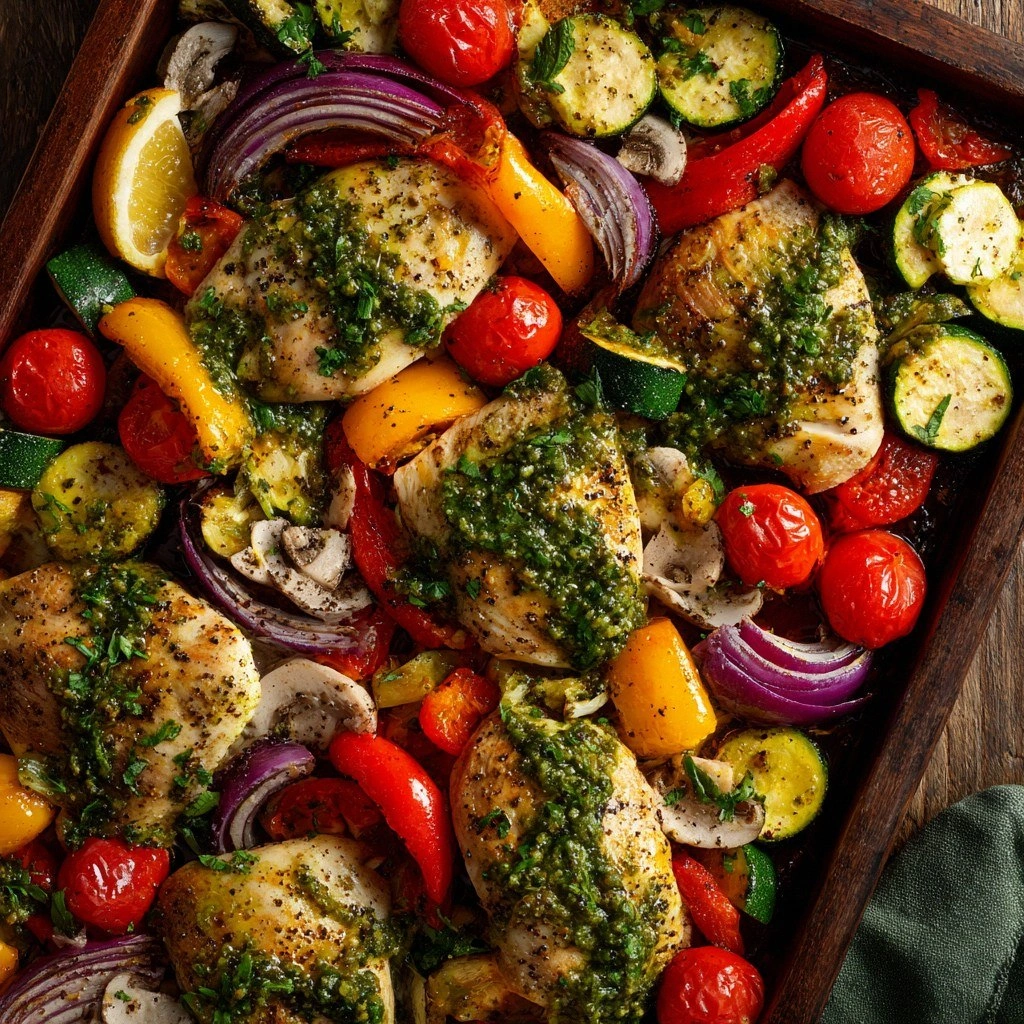
The Method — Step by Step
- Pre‑heat your oven to 425°F (220°C). Line a large sheet pan with parchment paper or lightly oil it to prevent sticking. This high temperature helps the veggies develop a caramelized crust and the chicken to stay juicy. The oven should be fully heated before you put the pan in to avoid a soggy base.
- Season the chicken breasts with salt, pepper, and a drizzle of olive oil. Pat them dry with paper towels to ensure they brown nicely. Place the chicken on one side of the pan, leaving space for the vegetables. This arrangement allows the chicken to roast evenly without overcrowding.
- Spread half of the pesto over the chicken, making sure each piece is coated. The pesto will create a flavorful crust as it bakes. If you’re using a homemade pesto, it may be thicker; adjust the amount accordingly. This step is crucial for that signature basil flavor.
- Arrange the cherry tomatoes, zucchini, bell pepper, and broccoli around the chicken on the pan. Toss the veggies in a little olive oil, salt, and pepper to season them evenly. This ensures that each vegetable gets a chance to caramelize and develop a crisp edge.
- Spread the remaining pesto over the vegetables, making sure to coat them lightly. The pesto will help the veggies brown and add a layer of flavor. The vegetables should be arranged in a single layer to ensure even cooking.
- Bake for 15 minutes. This initial bake allows the chicken to start cooking and the veggies to begin caramelizing. Check the chicken; it should be starting to turn golden on the edges. The vegetables should be slightly softened but not mushy.
- Add the shredded mozzarella and grated Parmesan over the top of the chicken and veggies. The cheese will melt into a golden, bubbly coating that ties all the flavors together. The cheese also helps keep the veggies from drying out.
- Return the pan to the oven for another 10–12 minutes, or until the chicken reaches an internal temperature of 165°F (74°C). The cheese should be melted and slightly browned. The veggies should be tender with a caramelized crust.
- Remove the pan from the oven and let the dish rest for 5 minutes. This allows the juices to redistribute, ensuring every bite is moist. The resting period also lets the cheese set slightly for easier serving.
- Squeeze a tablespoon of fresh lemon juice over the top for a bright finish. The acidity cuts through the richness of the cheese and pesto, balancing the dish. This step adds a subtle zing that elevates the flavor profile.
- Serve hot straight from the pan, spooning the melted cheese and pesto over each portion. Pair with a crisp green salad or crusty bread to soak up the sauce. This dish is best enjoyed immediately for maximum flavor.
That's it — you did it. But hold on, I've got a few more tricks that'll take this to another level. If you want to elevate the dish further, keep reading.
Insider Tricks for Flawless Results
The Temperature Rule Nobody Follows
Many people bake at 400°F, but 425°F is the sweet spot for caramelization. The higher temperature ensures a crisp crust while keeping the chicken juicy. If you’re using a convection oven, reduce the temperature by 25°F to avoid over‑browning.
Why Your Nose Knows Best
Trust the aroma. When the first scent of roasted tomatoes and basil hits your nose, you know the veggies are halfway to perfection. If the smell is too sharp, it means the pesto is burning; if it’s too mild, the veggies need more time.
The 5-Minute Rest That Changes Everything
Resting the dish for just five minutes after baking allows the juices to redistribute, preventing dry chicken. It also lets the cheese set into a cohesive coating. Skipping this step can lead to a soggy bottom.
Cheese Is a Flavor Booster
Adding a sprinkle of smoked gouda or blue cheese can give the dish a new dimension. The sharpness of these cheeses balances the sweet pesto and adds a smoky undertone. Experiment with different cheeses to find your favorite combination.
The Lemon Zest Trick
A tablespoon of lemon zest added during roasting brightens the entire dish. The citrus oils lift the pesto’s flavor and cut through the richness of the cheese. It’s a simple tweak that makes a world of difference.
Creative Twists and Variations
This recipe is a playground. Here are some of my favorite ways to switch things up:
Mediterranean Twist
Swap the pesto for a tapenade of olives and capers. Add sliced artichoke hearts and sun‑dried tomatoes for a salty, umami‑rich flavor. Serve with a side of tzatziki for a refreshing contrast.
Spicy Kick
Add a handful of sliced jalapeños or a dash of cayenne pepper to the veggie mix. Finish with a drizzle of chipotle mayo. The heat pairs beautifully with the basil’s sweetness.
Vegan Upgrade
Replace the chicken with tofu cubes or tempeh. Use a vegan pesto made with nutritional yeast and cashews. Top with a sprinkle of vegan parmesan for a dairy‑free version.
Fall Harvest
Incorporate roasted butternut squash and caramelized onions for a seasonal twist. Use a sage‑infused pesto instead of basil for a cozy, earthy flavor. This version is perfect for cooler evenings.
Breakfast Bonanza
Serve the sheet pan with a side of scrambled eggs and toasted sourdough. Add a splash of hollandaise sauce for a brunch‑worthy dish. The pesto’s freshness cuts through the richness of the eggs.
Storing and Bringing It Back to Life
Fridge Storage
Cool the dish completely, then cover tightly with plastic wrap or foil. Store in the refrigerator for up to 3 days. The pesto’s acidity helps preserve the vegetables, keeping them crisp.
Freezer Friendly
Pack the dish in an airtight container or freezer bag. Freeze for up to 2 months. Thaw overnight in the refrigerator before reheating.
Best Reheating Method
Reheat in a 350°F oven for 10–12 minutes, or until the cheese is melted and the chicken is heated through. Add a splash of water or broth before reheating to keep the veggies from drying out. The result is a dish that tastes almost as fresh as when it was first baked.
And there you have it, a sheet‑pan dinner that’s as easy to make as it is to enjoy. The combination of basil pesto, roasted veggies, and melty cheese creates a dish that feels both comforting and sophisticated. Whether you’re feeding a family, hosting a dinner party, or just treating yourself, this recipe will impress every time.
Remember, the secret to a perfect sheet‑pan meal lies in the prep, the right temperature, and a few smart tricks. Keep these tips in mind, and you’ll be the host everyone talks about. Now, go forth and conquer the kitchen with confidence, and let every bite remind you of the joy that cooking can bring.