I burned my first tray of butternut squash so badly the smoke alarm composed a tragic opera. My roommate ran in waving a dish towel like a white flag, and the dog still eyes me suspiciously whenever I preheat the oven. That charred disaster, however, led to this recipe — the one that now gets requested at every potluck, every Thanksgiving, and every random Tuesday when I want the apartment to smell like a candle named Autumn Nights. The secret? A whisper of cinnamon and nutmeg that makes the squash taste like it's wearing a cozy sweater, plus cranberries that burst into tart fireworks against the salty feta. Picture yourself pulling this out of the oven, the whole kitchen smelling like you bottled October and set it to simmer. Stay with me here — this is worth it.
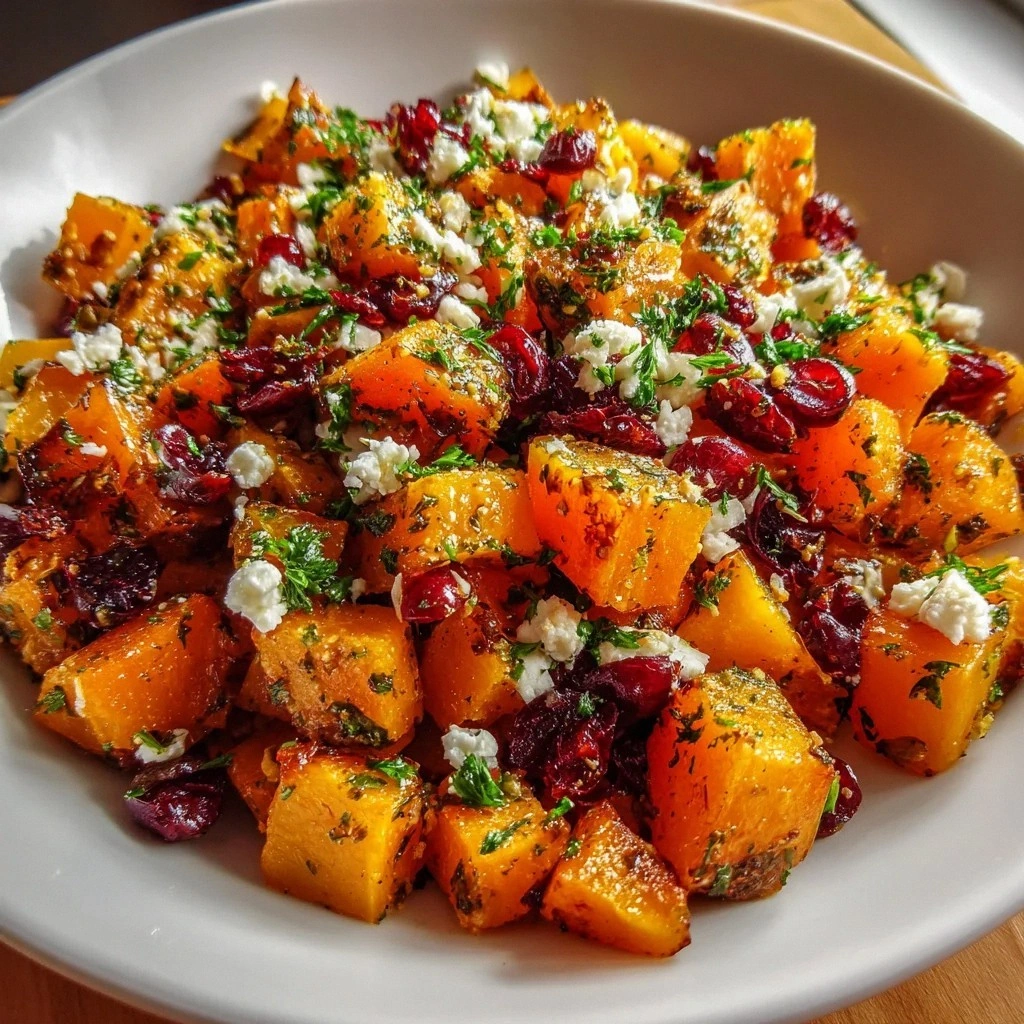
Most recipes get this completely wrong. They treat butternut squash like a sad side dish, tossing it with oil and hoping for the best. Here's what actually works: coaxing the natural sugars until they caramelize into candy-like edges, then shocking the sweetness with tangy cranberries and briny feta. The colors alone will make your guests gasp — sunset orange, ruby red, snow-white specks — like a sunset crashed into a Christmas market. I'll be honest — I ate half the batch before anyone else got to try it, standing over the baking sheet with a fork, doing a little victory dance in mismatched socks.
Okay, ready for the game-changer? We're roasting at a higher heat than usual, which means those squash cubes develop a mahogany sear instead of limp veggie sadness. The cranberries go in halfway through so they puff and wrinkle without turning to bitter ash. And the feta? Crumbled on only after the roasting pan leaves the oven, so it stays cool and creamy against the blistering vegetables. If you've ever struggled with watery, bland squash, you're not alone — and I've got the fix.
Let me walk you through every single step — by the end, you'll wonder how you ever made it any other way.
What Makes This Version Stand Out
- Candy-Shell Edges: High-heat roasting turns the squash corners into caramelized nuggets that taste like maple kettle corn. Other recipes leave them soft and forgettable; we chase the Maillard reaction like it's going out of style.
- Tart-Meets-Salty Pop: Cranberries and feta are the ultimate frenemies — they argue on your palate, then hug it out. One brings sour brightness, the other creamy salt, and together they keep each bite from sliding into dessert territory.
- Spice-Level Coziness: Cinnamon and nutmeg whisper rather than shout, so the squash smells like pumpkin-spice latte's sophisticated cousin who studied abroad. You'll catch hints of warmth without feeling like you're chewing potpourri.
- One-Pan Simplicity: Everything except the feta hops onto a single rimmed sheet, meaning fewer dishes and more Netflix. Cleanup is a quick scrub, not an archaeological dig through baked-on sugar.
- Make-Ahead Magic: Roast the veggies up to three days early; rewarm while the feta stays cool and fresh. Bring it to room temp for a picnic or serve piping hot at the holiday table — both ways win.
- Color-Blocked Wow Factor: Orange, red, white — it's basically edible confetti. People will photograph it before they taste it, tagging you as the friend who "makes vegetables look like art."
Alright, let's break down exactly what goes into this masterpiece...
Inside the Ingredient List
The Flavor Base
Butternut squash is the drama queen of the vegetable drawer — sweet, vibrant, and eager to caramelize under the right spotlight. Choose one that feels heavy for its size and sounds hollow when you thump it; that's your ticket to dense, creamy flesh instead of stringy disappointment. Olive oil isn't just a lubricant here, it's the matchmaker that helps spices cling and edges crisp. Go for a fruity extra-virgin variety because the oven heat will mellow its peppery bite into something buttery.
Salt is the ultimate hype man: without it, the squash tastes like orange cardboard, but with it, natural sugars bloom like they just got a standing ovation. Use kosher for even sprinkling; table salt can spot and burn, leaving unpleasant mineral nuggets.
The Texture Crew
Black pepper adds a prickly backbeat — not enough to make you sneeze, just a gentle throat tickle that keeps the sweetness honest. Freshly cracked is non-negotiable; pre-ground tastes like dusty library books. Ground cinnamon is the cozy sweater we talked about, but make sure it's fresh. Give the jar a sniff; if it reminds you of grandma's attic, it's lost its mojo.
Nutmeg is the quiet genius in the corner. A whisper of it makes people ask, "What's that warm hug in the background?" Grate it yourself from a whole seed and store the rest in the freezer; pre-ground nutmeg is about as lively as cardboard confetti.
The Unexpected Star
Cranberries can be fresh or dried, but they behave differently. Fresh ones burst into juicy pockets of sour that stain neighboring squash like watercolor. Dried ones become chewy gems reminiscent of fruit leather — pick your adventure. If you go dried, chop them roughly so every bite gets a tart fleck instead of a single sugar bomb.
The Final Flourish
Feta cheese adds creamy salt bombs that melt slightly against hot vegetables but keep their shape, giving you pockets of cool contrast. Buy the brick packed in brine, not the pre-crumbled stuff that tastes like chalk. Rinse it quickly to tame excess salt, then pat dry so it doesn't weep all over your beautiful roast. Fresh parsley is optional but recommended; it photographs like confetti and tastes like spring. Chop it last second so the leaves stay perky, not bruised and wilted.
Everything's prepped? Good. Let's get into the real action...
The Method — Step by Step
- Preheat your oven to 425°F (220°C). Position a rack in the middle so the squash gets even heat from top and bottom. While it heats, peel the squash using a sharp vegetable peeler, slicing off the ends first to create stable cutting boards. Halve it lengthwise, scoop the seeds with a spoon (roast those later for a crunchy snack), then cut into 1-inch cubes — large enough to stay meaty, small enough for fork-friendly bites.
- In a big mixing bowl, toss the squash cubes with olive oil until every surface gleams like it's ready for a magazine shoot. Sprinkle on salt, pepper, cinnamon, and nutmeg, tossing again until the spices look like tawny freckles. Your fingers should smell like autumn and distant carnivals. Don't taste yet — raw squash is starchy and sad, but trust the alchemy about to happen.
- Spread the seasoned cubes on a parchment-lined rimmed baking sheet, ensuring each piece has breathing room. Crowding equals steaming, and we want roasting. If they don't fit in a single layer, grab a second pan rather than piling; this is the difference between crispy edges and soggy middles.
- Slide the pan into the oven and set a timer for 20 minutes. Walk away but don't wander off; this is when the kitchen starts smelling like caramelized dreams. The edges will blister and bronze — that's the sugar talking.
- Meanwhile, prep your cranberries. If using fresh, rinse and pat dry; if dried, give them a rough chop so they distribute like confetti. Keep the feta in the fridge until the last second so it stays firm and cool.
- After 20 minutes, pull the pan halfway out. Scatter the cranberries over the squash, then shimmy the pan to roll everything around. The berries will tumble into hot spots and begin to blister like tiny fireworks. Return to the oven for another 10-12 minutes, until some cranberries pop and the squash sports dark amber corners.
- Remove the pan and let it rest for 5 minutes. This is the hardest part — the aroma will wrap around you like a fleece blanket, begging you to snatch a cube. Resist; cooling slightly prevents the feta from wilting into a chalky puddle.
- Crumble the cold feta over the top, aiming for snowy shards that contrast against the squash's sunset hues. Add parsley if you're feeling fancy, then serve straight from the pan for rustic charm or mound onto a platter for company polish.
That's it — you did it. But hold on, I've got a few more tricks that'll take this to another level...
Insider Tricks for Flawless Results
The Temperature Rule Nobody Follows
425°F sounds aggressive, but anything lower and the squash steams in its own moisture, emerging limp and weeping. If your oven runs cool, bump to 450°F, but watch like a hawk after 25 minutes. A friend tried skipping this step once — let's just say it didn't end well. She served beige cubes that tasted like library paste, and the dog wouldn't even nibble.
Why Your Nose Knows Best
Trust the aroma checkpoint: when you smell toasted sugar drifting into the living room, the edges are bronzing. That scent means Maillard is in full swing, and pulling it now would rob you of the deepest flavor. Wait another three minutes past that first fragrant wisp for peak caramelization. Your nose is more accurate than any timer.
The 5-Minute Rest That Changes Everything
Letting the pan sit off-heat allows residual sugars to settle, preventing a scalding bite and giving feta a fighting chance to stay cool. During this pause, juices reabsorb so the squash tastes plump instead of shriveled. Think of it as a post-gym stretch for vegetables — prevents cramping and enhances performance.
Spice Freshness Check
Before you start, wave open jars of cinnamon and nutmeg under your nose. If the scent is faint or dusty, the oils have evaporated, and you'll need an extra pinch to compensate. Fresh spices should make you think of hot apple cider on a snow day. When in doubt, replace; they're cheap, and stale spices are flavor vampires.
Feta Brine Bonus
Don't toss the brine from the feta tub — whisk a spoonful into salad dressings for salty tang, or drizzle over roasted chicken for Mediterranean vibes. Think of it as liquid gold that seasons without extra salt crystals. I keep a jar in the fridge labeled "flavor booster," and it's saved more bland soups than I can count.
Creative Twists and Variations
This recipe is a playground. Here are some of my favorite ways to switch things up:
Maple-Pecan Thanksgiving Edition
Swap cinnamon for pumpkin-pie spice and drizzle two tablespoons of maple syrup over the squash before roasting. Add a handful of pecan halves during the last five minutes so they toast without scorching. The maple forms a sticky lacquer that tastes like candied yams minus the marshmallow cloy. Grandma will ask for the recipe and then claim she invented it.
Harissa Heat Wave
Whisk a teaspoon of harissa paste into the olive oil before coating the squash. The North-African chili blend adds smoky heat that plays beautifully against sweet cranberries. Finish with crumbled goat cheese instead of feta for extra tang. If you like your vegetables with a sass mouth, this one's for you.
Citrus-Poppy Spring Fling
Replace cinnamon with lemon zest and a pinch of cardamom. Use dried blueberries instead of cranberries and finish with a shower of fresh mint. The flavors taste like sunshine wearing sandals, perfect for Easter brunch. People will swear it tastes like dessert, but it's still a vegetable — magic.
Everything-Bagel Breakfast Hack
Roast the squash plain, then dust with everything-bagel seasoning when it comes out of the oven. Stir in a handful of baby spinach so the residual heat wilts it just enough. Top with a runny fried egg and let the yolk mingle with feta. Breakfast for dinner never looked so chic.
Balsamic-Dark Chocolate Decadence
Drizzle two teaspoons of thick balsamic glaze over the finished dish, then shave a tiny bit of dark chocolate on top. The chocolate melts into the hot vegetables, creating mole-like depth without overt sweetness. Serve this version alongside grilled steak and watch grown adults fight over the last cube.
Smoked Gouda & Rosemary Winter Warmer
Use fresh rosemary needles and smoked paprika instead of cinnamon and nutmeg. Swap feta for diced smoked gouda so it melts into gooey pockets. The aroma will make your neighbors think you're running a clandestine fondue club. Perfect for January when you need edible hygge.
Storing and Bringing It Back to Life
Fridge Storage
Let leftovers cool completely, then pack into airtight glass containers. They'll keep up to four days without the feta turning slimy. Store the cheese separately in a little brine bath so it stays crumbly and bright. Layer squash first, cranberries second, so juices don't pool and turn everything soggy.
Freezer Friendly
Freeze roasted squash and cranberries (minus feta) in a single layer on a sheet pan, then transfer to zip-top bags. They'll keep three months, and clumps break apart like veggie gravel. Thaw overnight in the fridge, then reheat in a skillet with a splash of water to re-steam the interiors while the edges re-crisp.
Best Reheating Method
Skip the microwave unless you love rubbery sadness. Instead, spread leftovers on a sheet pan, tent with foil, and warm at 350°F for 10 minutes. Remove the foil for the last two minutes to revive caramelized edges. Add fresh feta only after reheating so it stays cool and creamy.