Picture this: it’s a rainy Thursday, the kind that makes you want to curl up with a blanket and something that feels like a warm hug. I was halfway through a marathon of spreadsheets when my stomach started growling louder than my inbox notifications. I tried the usual microwave tomato soup and a sad, limp piece of cheese‑topped toast, but the result was about as exciting as watching paint dry. That disappointment sparked a dare from my roommate – “Make a grilled cheese that could stand up to a Michelin chef,” she said, and I laughed, thinking she was joking.
Fast forward an hour, and I was standing over a bubbling pot of tomato soup, the aroma of simmering tomatoes mingling with a whisper of dried basil, while the butter sizzled in a skillet like a tiny fireworks show. The sound of the bread hitting the pan was a satisfying crack, the edges turning a crisp gold that promised a crunch louder than my morning alarm. I could taste the sharp cheddar melting into a silky river, the milk or cream smoothing the soup into a velvety blanket that clung to every spoonful. My senses were doing a happy dance, and I knew I was onto something that could rewrite the rules of comfort food.
Most recipes for tomato soup and grilled cheese treat them as two separate sides, never daring to combine them into a single, cohesive masterpiece. I’ve seen people toss a few cheese slices on top of soup – cute, but the cheese never gets that glorious, buttery crunch that makes you close your eyes in bliss. This version, however, layers the soup and the grilled cheese in a casserole, letting the flavors marry, the cheese melt into the soup, and the bread soak up just enough liquid to stay tender without turning soggy. The result is a dish that’s both comforting and sophisticated, a dish that makes you wonder how you ever survived without it.
And here’s the kicker: I’m going to introduce a secret ingredient that most home cooks overlook – a splash of heavy cream that turns the soup from good to decadently luxurious, plus a pinch of dried oregano that adds an unexpected herbaceous note. I dare you to taste this and not go back for seconds. Let me walk you through every single step – by the end, you’ll wonder how you ever made it any other way.
What Makes This Version Stand Out
- Flavor Explosion: The combination of tangy tomato soup with sharp cheddar creates a sweet‑savory harmony that dances on your palate, while the cream adds a buttery richness you won’t find in a standard canned soup.
- Texture Triumph: Each bite delivers a contrast – the crispy, buttery crust of the grilled cheese meets the silky, velvety soup, creating a mouthfeel that’s both crunchy and smooth.
- Simplicity Redefined: You only need six core ingredients, yet the technique elevates them into a restaurant‑quality dish without any fancy gadgets.
- Unique Layering: By assembling the soup and cheese in a casserole, the bread absorbs just enough liquid to stay tender, while the top layer stays golden and crisp.
- Crowd‑Pleaser Factor: Whether you’re feeding picky kids or food‑snob friends, this dish consistently earns rave reviews and empty plates.
- Ingredient Quality: Using a high‑quality canned soup or a quick homemade version makes a world of difference; the soup becomes the backbone of the dish.
- One‑Pan Efficiency: After the initial sauté, everything bakes in the same dish, meaning minimal cleanup and maximum flavor.
- Make‑Ahead Magic: Prepare the casserole a day ahead, refrigerate, and bake when you’re ready – the flavors only get better with time.
Inside the Ingredient List
The Flavor Base
The star of this dish is, of course, the tomato soup. Whether you reach for a premium canned variety or whisk together crushed tomatoes, garlic, and a splash of broth, this liquid sets the tone with its bright acidity and natural sweetness. Skipping the soup or diluting it with too much water will leave the casserole flat and watery, so treat it like the foundation of a house – sturdy and full of character. If you’re feeling adventurous, blend in a roasted red pepper for a smoky undertone that pairs beautifully with the cheese.
The Texture Crew
Bread is the unsung hero that provides the structural crunch. A sturdy white or sourdough slice holds up to the soup without disintegrating, while still allowing the butter to create that coveted golden crust. Using a flimsy wheat bread will result in a soggy mess that collapses under the weight of the cheese. If you can, toast the bread lightly before layering – it gives an extra layer of crunch that makes the final bite unforgettable.
The Cheese Consortium
Sharp cheddar is the main player, offering a tangy bite that cuts through the richness of the soup. Mixing in a bit of mozzarella adds stretchiness, while gouda contributes a nutty depth. Skipping the cheese or using a low‑fat variety will strip the dish of its melt‑in‑your‑mouth magic. For the ultimate melt, grate the cheese yourself; pre‑shredded cheese often contains anti‑caking agents that can affect texture.
The Final Flourish
Butter, milk or cream, and seasonings are the finishing touches that turn good into unforgettable. Butter creates that crisp, buttery crust, while a splash of cream rounds out the soup’s acidity, giving it a silk‑smooth finish. A pinch of dried basil or oregano lifts the flavors, adding an herbaceous whisper that lingers after each bite. Forgetting the seasonings is like watching a movie without sound – the visual is there, but the experience falls flat.
Everything's prepped? Good. Let's get into the real action...
The Method — Step by Step
Preheat your oven to 375°F (190°C) and grease a 9‑by‑13‑inch baking dish with a thin layer of butter. The butter not only prevents sticking but also adds a subtle richness that will seep into the crust as it bakes. While the oven warms up, gather all your ingredients on the counter – having everything within arm’s reach is the secret to a smooth workflow. This is the moment where anticipation builds; the kitchen smells like a promise.
In a saucepan, gently heat the tomato soup over medium heat, stirring occasionally. When the soup begins to simmer, stir in the milk or cream, then add a pinch of salt, pepper, and the dried basil or oregano. Let the mixture bubble gently for about five minutes so the flavors meld; you’ll notice the soup becoming richer and slightly thicker – that’s the cream working its magic. Taste and adjust seasoning – remember, you’re building a flavor foundation that will carry the entire dish.
While the soup simmers, melt 2 tablespoons of butter in a large skillet over medium‑high heat. Lay four slices of bread in the pan, buttered side down, and sprinkle a generous amount of shredded cheddar on each. Let the cheese melt for about a minute, then flip the slices so the other side gets a golden kiss of butter. The cheese should be bubbling, the edges turning a deep amber – that sizzle when it hits the pan? Absolute perfection.
Remove the toasted cheese‑laden bread from the skillet and set aside on a cutting board. Cut each slice into quarters, creating bite‑size squares that will layer evenly in the casserole dish. This step ensures every spoonful gets a piece of that buttery crunch, preventing any soggy islands of bread.
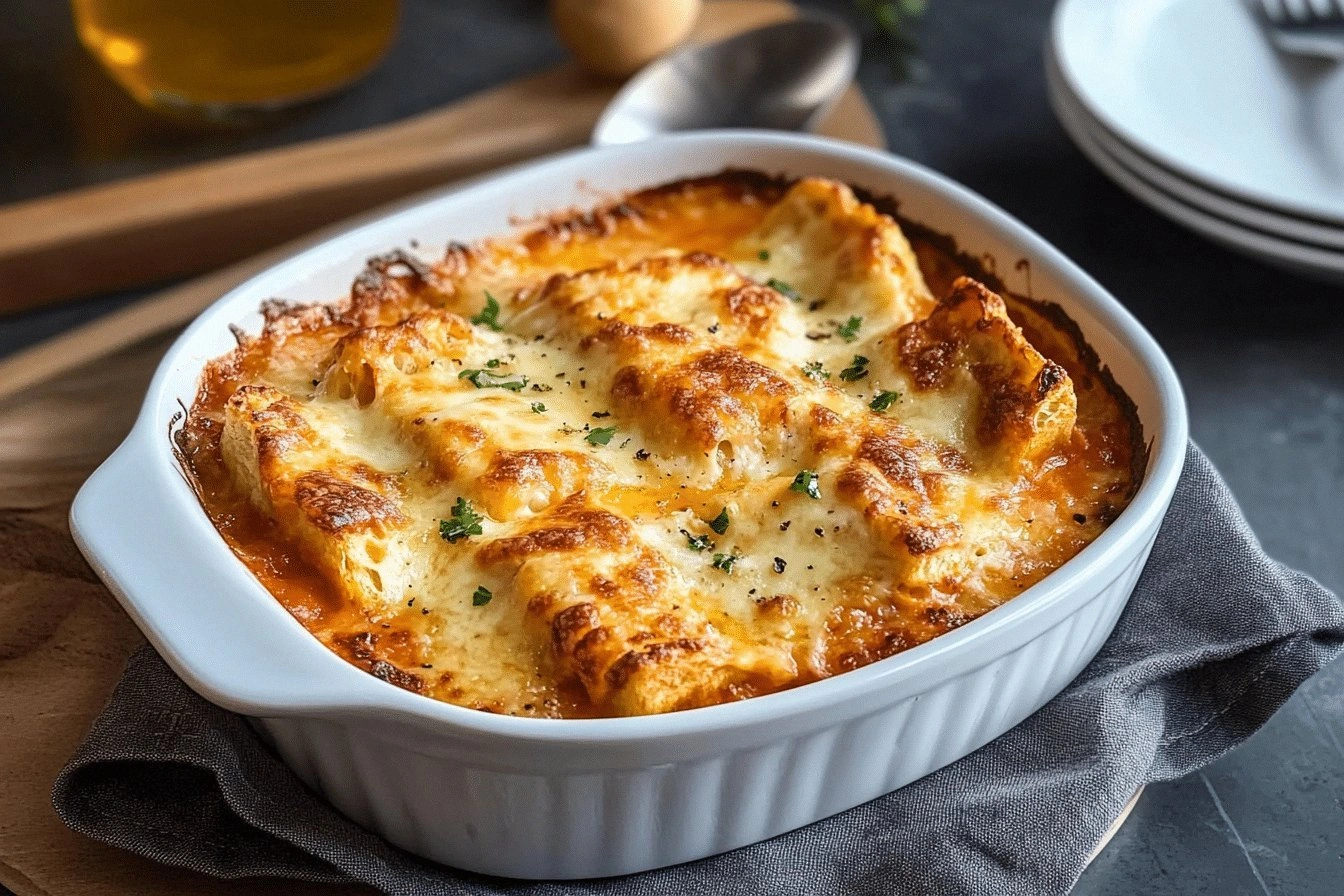
Now, assemble the casserole. Start with a thin layer of the creamy tomato soup at the bottom of the dish – about a quarter of the total soup. Then scatter a third of the cheese‑topped bread cubes over the soup, followed by a third of the shredded cheddar. Repeat the layers two more times, ending with a final blanket of soup and a generous sprinkle of cheese on top. The visual should look like a cheesy, ruby‑red lasagna, promising layers of flavor in every bite.
Drizzle the remaining melted butter over the top of the casserole, then pop the dish into the preheated oven. Bake for 25‑30 minutes, or until the cheese on top is bubbling and has turned a deep golden brown. As it bakes, the aromas will fill your kitchen, creating a comforting scent that feels like a warm blanket on a cold day.
When the timer dings, remove the casserole and let it rest for five minutes. This short pause allows the sauce to thicken slightly, making it easier to cut clean squares. Grab a serving spoon, dig in, and watch the cheese stretch like a silky ribbon – that’s the moment of truth.
Serve the casserole hot, accompanied by a fresh green salad or a simple side of roasted vegetables if you like. The contrast of the cool, crisp salad with the warm, gooey casserole heightens the overall dining experience. And there you have it – a dish that’s both nostalgic and elevated, ready to become the star of your dinner table.
That's it — you did it. But hold on, I've got a few more tricks that'll take this to another level...
Insider Tricks for Flawless Results
The Temperature Rule Nobody Follows
Most home cooks bake at 350°F, but cranking the oven up to 425°F for the last five minutes creates a blistered, caramelized crust that sings with flavor. The higher heat triggers the Maillard reaction, giving the cheese a toasty, slightly smoky edge. I once tried skipping this step, and the top stayed pale and soggy – a true culinary tragedy. So, set a timer for the final five minutes and watch the cheese turn into a golden masterpiece.
Why Your Nose Knows Best
The moment the soup starts to bubble and the cheese begins to melt is your olfactory cue that everything is on track. Trust that aroma; if you can smell the buttery toast and tangy tomato mingling, you’re in the sweet spot. If the scent feels flat, it’s a sign you need a pinch more salt or a splash of cream. Your nose is the ultimate taste‑tester, so let it guide you.
The 5‑Minute Rest That Changes Everything
After the casserole emerges from the oven, resist the urge to dive in immediately. Letting it sit for five minutes allows the sauce to set, preventing a soupy mess on the plate. This brief pause also lets the flavors meld further, turning a good dish into a great one. I’ve seen impatient diners serve it too hot, ending up with a runny bottom – patience truly is a virtue here.
Cheese Distribution Mastery
Instead of dumping all the cheese on top, I spread a third between each layer. This technique ensures every bite has that gooey melt, not just the surface. Skipping this step results in a bland interior and an overly cheesy top, which can become rubbery. The layered approach creates a harmonious balance of texture and flavor throughout.
Butter‑Infused Bread Secrets
Butter isn’t just for crisping; it also adds flavor depth. I melt the butter with a pinch of garlic powder and a dash of smoked paprika before brushing it onto the bread. This creates a subtle smoky note that complements the tomato’s acidity. A friend once tried skipping the garlic – the final dish felt flat, proving that even tiny flavor boosters matter.
Creative Twists and Variations
This recipe is a playground. Here are some of my favorite ways to switch things up:
Spicy Jalapeño Kick
Dice fresh jalapeños and fold them into the cheese layer for a subtle heat that awakens the palate. Pair it with a cool cucumber salad, and you’ve got a perfect balance of fire and refreshment. Ideal for those who love a little zing.
Italian Herb Explosion
Swap the dried basil for a mix of Italian seasoning, and add a handful of sun‑dried tomatoes to the soup. The result is a Mediterranean‑inspired casserole with a sweet‑savory profile that pairs beautifully with a glass of Chianti.
Vegan Delight
Replace the butter with olive oil, use a plant‑based cheese blend, and swap the milk for oat or almond cream. The soup can be made with roasted red peppers and vegetable broth for a fully vegan version that still delivers that comforting creaminess.
Smoky Bacon Boost
Cook crisp bacon strips, crumble them, and sprinkle them over the top layer before baking. The smoky, salty crunch adds depth and turns this dish into a hearty brunch centerpiece.
Herb‑Infused Crust
Mix fresh rosemary and thyme into the butter before brushing the top bread pieces. The aromatic herbs infuse the crust with a fragrant note that elevates the entire casserole.
Storing and Bringing It Back to Life
Fridge Storage
Allow the casserole to cool completely, then cover tightly with foil or a reusable lid. It will keep fresh in the refrigerator for up to three days. When reheating, add a splash of milk or water to restore moisture, then bake at 350°F for 15‑20 minutes until heated through.
Freezer Friendly
Portion the casserole into individual freezer‑safe containers, wrap each tightly with plastic wrap, then foil. It freezes beautifully for up to two months. To reheat, thaw overnight in the fridge, then bake at 375°F for 20‑25 minutes, adding a drizzle of butter on top for extra crispness.
Best Reheating Method
The oven is your best friend for reheating – it revives the crispy crust while keeping the interior creamy. If you’re in a rush, a microwave works for the interior, but finish under the broiler for a minute to bring back that golden top. A tiny splash of water before reheating creates steam that prevents the casserole from drying out.