What Makes This Version Stand Out
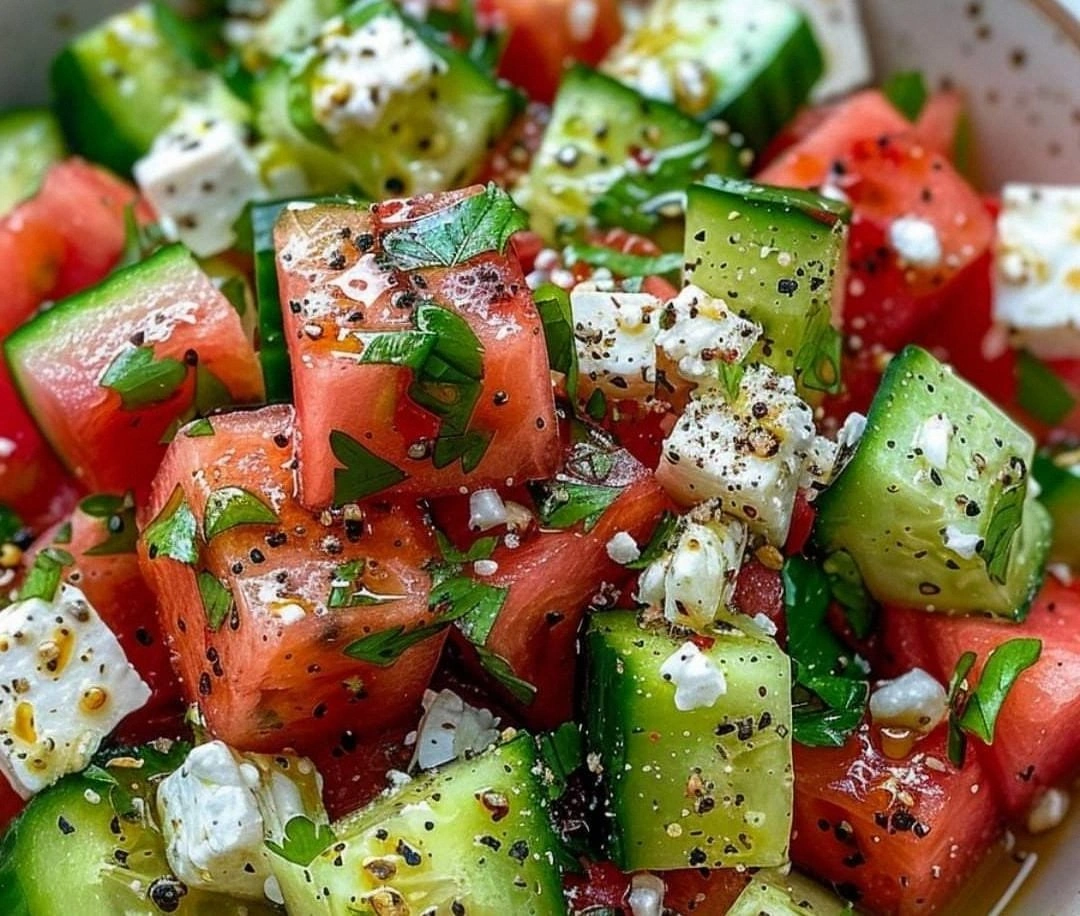
Arctic-Cold Technique: We chill every component—bowl, fruit, even the olive oil—so the salad hits the table like edible air-conditioning, a trick restaurants charge twenty bucks for but you can do with five minutes of foresight. Salt-Timing Brilliance: Instead of tossing the feta early and watching it weep salty tears, we scatter it on at the very end so you get explosive pops of brine against the sweet melon rather than a homogenous brine bath. Texture Tango: Paper-thin cucumber ribbons provide snap, watermelon cubes give juicy pop, and crumbled feta adds creamy crumble—three textures that dance together instead of turning into a sad soggy mess. Two-Minute Dressing: Most recipes drown everything in vinaigrette; we whisk lime juice with olive oil so lightly it just kisses the fruit, keeping the flavors bright rather than murky. Crowd Gasps Guaranteed: I bring this to every potluck and watch people do a double-take—then they hover protectively around the bowl like seagulls at the beach, guarding their stash against interlopers. Zero-Stovetop Glory: No heat, no sweat, no watching pans—just chop, toss, serve, which means the oven stays off and your kitchen stays blissfully cool. Okay, ready for the game-changer? A whisper of fresh mint at the very end lifts the whole dish into "wait, what IS this?" territory. Alright, let's break down exactly what goes into this masterpiece...Inside the Ingredient List
The Flavor Base
Watermelon is the star, obviously, but not just any wedge from the supermarket display. You want one that sounds hollow when you thump it and feels heavy for its size—those dense babies have the highest sugar-to-water ratio, which translates to candy-sweet cubes that won't dilute the salad. Seedless is easier, but if you snag a seeded melon, simply flick the black seeds out with the tip of your knife; the white immature seeds are tender enough to eat and add a pleasant nutty note. Skip the pre-cut stuff; it tastes like refrigerated disappointment and costs triple what a whole fruit does. Cut it into ¾-inch cubes—big enough to stay juicy, small enough to fit on a fork alongside cucumber without looking like you're pitching a food-juggling act.
The Texture Crew
English cucumber enters the chat here because its skin is thin and its seeds are tiny, meaning no peeling or deseeding drama. Use the side of a box grater or a mandoline to shave long, translucent ribbons that twist and curl around the melon like green streamers. These ribbons dry out if they sit, so slice them right before serving for maximum snap. If you can only find regular cucumbers, scrape out the seedy core with a spoon—those watery pockets will turn your salad into soup faster than you can say "summer bummer". A quick ice-water plunge firms the ribbons back up if life (or toddler tantrums) delays your dinner timeline.
The Salty Spark
Feta in brine beats every other variety by miles; the saltwater keeps it creamy instead of chalky. Greek sheep's-milk feta is tang city, but French feta made from sheep and goat milk is milder and silkier—pick whichever makes your palate sing. Buy it in a block and crumble it yourself; pre-crumbled cheeses are coated with anti-caking cellulose that turns gritty and refuses to melt on your tongue. And here's the part that makes people swoon: keep the feta chunks irregular—some tiny pebbles, some thumbnail shards—so every bite delivers a different burst of salt.
The Aromatic Whisper
Fresh mint is non-negotiable; dried tastes like dusty potpourri and will ruin everything. Look for perky leaves that snap, not wilt, and store them stem-down in a glass of water on the counter like flowers—plastic-bag storage turns them black within hours. Tear, don't chop; bruised leaves oxidize faster and develop bitter edges. If you're feeling fancy, add a few tiny basil leaves too—they give an almost bubble-gum note that plays beautifully with watermelon. A micro-plane of lime zest over the top right before serving makes the whole bowl smell like a beach vacation in edible form.
Everything's prepped? Good. Let's get into the real action...
The Method — Step by Step
- Start by parking your mixing bowl in the freezer for at least ten minutes; a frosty vessel keeps the melon from weeping and ensures every cube stays candy-crisp. While the bowl chills, slice the watermelon in half crosswise, lay each half cut-side down, and trim away the rind in wide strips—this flat base stops the fruit from rolling like a drunk sailor. Cube the flesh into ¾-inch pieces, letting them tumble directly onto a rimmed sheet pan lined with a kitchen towel; the towel wicks away excess juice so your salad doesn't swim. Work quickly and return the cubes to the fridge if they start to warm up—room-temperature watermelon tastes flat and vaguely musty.
- Grab your cucumber and shave it into whisper-thin ribbons using the wide side of a box grater or a mandoline set to 2 mm. Stop when you hit the seedy core; save those centers for smoothies or feed them to kids who think cucumber water is fancy. Dunk the ribbons into a bowl of ice water for five minutes while you move on—this quick bath tightens the cell walls and delivers that satisfying snap. Drain thoroughly and roll them in a clean dish towel to remove surface water; damp ribbons dilute the dressing faster than a summer thunderstorm.
- Now for the fun part: make the world's simplest dressing by whisking together equal parts fresh lime juice and extra-virgin olive oil—think two tablespoons of each for four servings—plus a pinch of flaky salt and a crack of white pepper. White pepper is my secret weapon here; it's milder than black and won't leave dark specks that mar the jewel-toned fruit. Whisk until the mixture looks like liquid sunshine and tastes bright enough to make you pucker slightly. Resist the urge to add honey or mustard; this salad's magic lies in restraint.
- Retrieve your arctic-cold bowl and layer in half the watermelon cubes, half the cucumber ribbons, and half the crumbled feta. Repeat the layers but don't toss yet—keeping things stratified prevents the feta from dissolving into premature brine. Drizzle the dressing in a thin spiral over the top, then scatter a palmful of torn mint leaves like green confetti. Now the moment of truth: use your hands to gently lift and fold the mixture, turning the bowl as you go until every cube glistens with oil and lime.
- Taste a cube—yes, right there at the counter—and adjust with an extra squeeze of lime if you want more zip or a flake more salt if the sweetness feels muted. Cover the bowl with a plate (plastic wrap traps condensation) and refrigerate for fifteen minutes to let the flavors mingle. This isn't just lazy downtime; the salt draws a whisper of juice from the fruit that mingles with the dressing and turns into pure ambrosia. Set a timer because longer than twenty minutes and the cucumbers start to wilt like they just heard bad news.
- Just before serving, add the final flourish: another scattering of fresh mint and a micro-plane of lime zest that releases citrus oils into the air like a tiny firework show. Use chilled forks or spoons; cold utensils keep the salad at peak refreshment from fridge to table. Bring the bowl to the table with a flourish and watch faces light up—this is hands down the best version you'll ever make at home. And now the fun part: stand back and bask in compliments while people hover protectively around the serving spoon.
That's it—you did it. But hold on, I've got a few more tricks that'll take this to another level...
Insider Tricks for Flawless Results
The Temperature Rule Nobody Follows
Everything about this salad hinges on temperature, yet most people cube lukewarm melon and wonder why it tastes flat. Keep your watermelon in the coldest part of the fridge (usually the back lower shelf) for at least four hours before cutting; the starches convert to sugars at cold temps, amplifying sweetness without extra calories. If you're rushed, submerge the whole melon in an ice-water bath for thirty minutes, rotating once—it'll chill through faster than a bottle of champagne and deliver that crisp snap that makes people close their eyes in happiness. A friend tried skipping this step once—let's just say it didn't end well; the salad tasted like it had been left in a hot car.
Why Your Nose Knows Best
Flavor is 80 percent aroma, so take thirty seconds to sniff your mint and lime before using. Mint should smell like a mountain meadow after rain; if it's faint or slightly sour, it's past prime and will flatten the final dish. Same with lime—scratch the skin with your nail and inhale; you want a bright, almost electric citrus burst that makes your mouth water instantly. If the aroma is muted, zest the lime first and leave the zest on the counter for five minutes; the essential oils oxidize slightly and become more aromatic, giving you a bigger olfactory punch without extra effort.
The 5-Minute Rest That Changes Everything
After you toss the salad, let it sit covered in the fridge for exactly five minutes—no more, no less. During this micro-marination, the salt draws just enough juice to create a light syrupy dressing that coats every cube, amplifying sweetness and tying the flavors together. Set a phone timer because at minute six the cucumbers start to surrender their crispness and the feta begins to dissolve into salty streaks. This tiny pause is the difference between a good salad and a legendary one that people talk about weeks later.
The Cube-Size Sweet Spot
Cut your watermelon into ¾-inch cubes—small enough to fit on a fork alongside cucumber, large enough to stay juicy. Go bigger and you risk watermelon juice running down chins at the barbecue; go smaller and the fruit begins to shed moisture like it's crying, drowning the salad in pink soup. Consistency matters too; uniform cubes mean every bite delivers the same perfect ratio of melon to feta to cucumber, so guests aren't playing fork roulette with their portions.
Creative Twists and Variations
This recipe is a playground. Here are some of my favorite ways to switch things up:
The Mediterranean Vacation
Swap lime juice for red-wine vinegar, fold in a handful of Kalamata olives and some diced ripe tomato, and finish with oregano instead of mint. The briny olives deepen the savory edge, turning the salad into a deconstructed Greek island lunch that pairs outrageously well with cold beer. Serve it alongside grilled lamb chops and watch people pretend they're dining cliffside in Santorini even if you're just on a Brooklyn rooftop.
The Spicy Backyard Bash
Add a finely diced jalapeño (seeds removed if you're heat-shy) to the dressing and finish with a dusting of Tajín or chili-lime seasoning. The gentle burn makes the watermelon's sweetness explode on your palate like a fruit-filled firework, and the chili tang keeps everyone reaching for another forkful to cool down. Bonus points if you serve it in mini plastic cups at a cookout—guests can mingle without balancing plates.
The Prosciutto-Wrapped Fancy-Pants Version
Thread cubes of watermelon and feta onto short skewers, wrap each bundle with a ribbon of prosciutto, and serve the cucumber ribbons as a nest underneath. Salty cured meat against sweet fruit is millennia-old brilliance, and the handheld format turns salad into cocktail-party canapé that disappears faster than you can plate it. Drizzle with the same lime-oil dressing but halve the quantity so guests don't drip on their party clothes.
The Vegan Beach-Day Remix
Trade feta for briny cubes of marinated tofu and add a handful of toasted pumpkin seeds for crunch. The tofu soaks up the dressing like a sponge, delivering those salty pops you crave without dairy, while the seeds give a nutty backbone that keeps plant-based eaters satisfied. Lime zest and fresh cilantro instead of mint push the flavor toward coastal Mexico, perfect for toting in a cooler to the beach.
The Breakfast Brunch Wildcard
Top the classic salad with a spoonful of Greek yogurt mixed with honey and lime, then shower everything with granola. The cool yogurt tames morning hunger, the granola adds crunch, and the watermelon hydrates you after one too many mimosas the night before. Serve it in small glass bowls so the colors glow like edible stained glass on your brunch table.
The Autumn Comfort Pivot
Roast cubes of butternut squash until caramelized, let them cool completely, then fold them in with the watermelon (use less squash by volume so the salad still feels summery). Add toasted pecans and a crumble of goat cheese instead of feta, plus a maple-lime dressing. The warm-sweet squash against cool melon is pure comfort without turning on the oven for a full roast dinner.
Storing and Bringing It Back to Life
Fridge Storage
Transfer leftovers to an airtight glass container, press a piece of plastic wrap directly onto the surface to minimize air contact, and refrigerate up to 24 hours—after that the cucumbers surrender their snap and the mint oxidizes into sad black flecks. Store any remaining feta separately in its brine; you can sprinkle it on just before serving the next day to keep the salt from leaching into the fruit. If you know you'll have leftovers, keep the components separate and assemble mini-batches as needed; the five-minute toss is worth the insurance policy on texture.
Freezer Friendly
Don't freeze the finished salad—thawed watermelon turns into mush reminiscent of sad snow cones. You can, however, cube extra melon and freeze it in a single layer on a sheet pan, then bag the frozen cubes for smoothies or granitas later. The cucumber ribbons won't survive freezing either, but you can pickle them quickly in rice vinegar and sugar, then stash in the fridge for up to two weeks as a tart topping for sandwiches.
Best Reheating Method
This salad is designed to be served ice-cold, so reheating isn't on the table—revival is about texture rescue. If the fruit has wept, drain off the excess liquid, add a fresh handful of mint, and toss with a teaspoon of fresh lime juice to brighten flavors that dulled overnight. A tiny pinch of flaky salt wakes everything up, and a few ice cubes tucked under the salad in the serving bowl keeps it perky at a picnic for up to an hour without refrigeration.