I was in the middle of a chaotic dinner rush when my phone buzzed with a frantic text from a friend: “I need a show‑stopper for tonight, and I only have chicken, shrimp, and some pantry staples.” The kitchen smelled like a storm of garlic and onions already, and the timer on the stove was ticking louder than a metronome. I stared at the array of ingredients, wondering how to turn them into a dish that would impress. The challenge was clear: create something that feels like a trip to Lisbon with ingredients I could find in my pantry.
I took a deep breath, pulled out a pinch of saffron, and let it steep in a cup of hot water, watching the liquid turn a golden hue that promised depth. Then I sliced the Portuguese chouriço into thin rounds, the sizzling sound announcing the start of a flavor explosion. I tossed the shrimp into the pan, letting them sear until they turned a rosy pink, the aroma lifting my spirits. Finally, I added the chicken thighs, confident that their savory juices would mingle with the spices and create a broth of their own.
The next step was to let the aromatics mingle: Vidalia onion, garlic, and roasted red peppers would soften into a fragrant base, while the tomato cubes would release their juices into the mix. I sprinkled the Arborio rice, letting it toast lightly until it turned translucent, a process that would lock in the flavors. After a few minutes, I poured in the clam juice and chicken broth, watching the liquid rise and settle around the grains. The bay leaves floated on the surface, adding an earthy note that would linger in the finished dish.
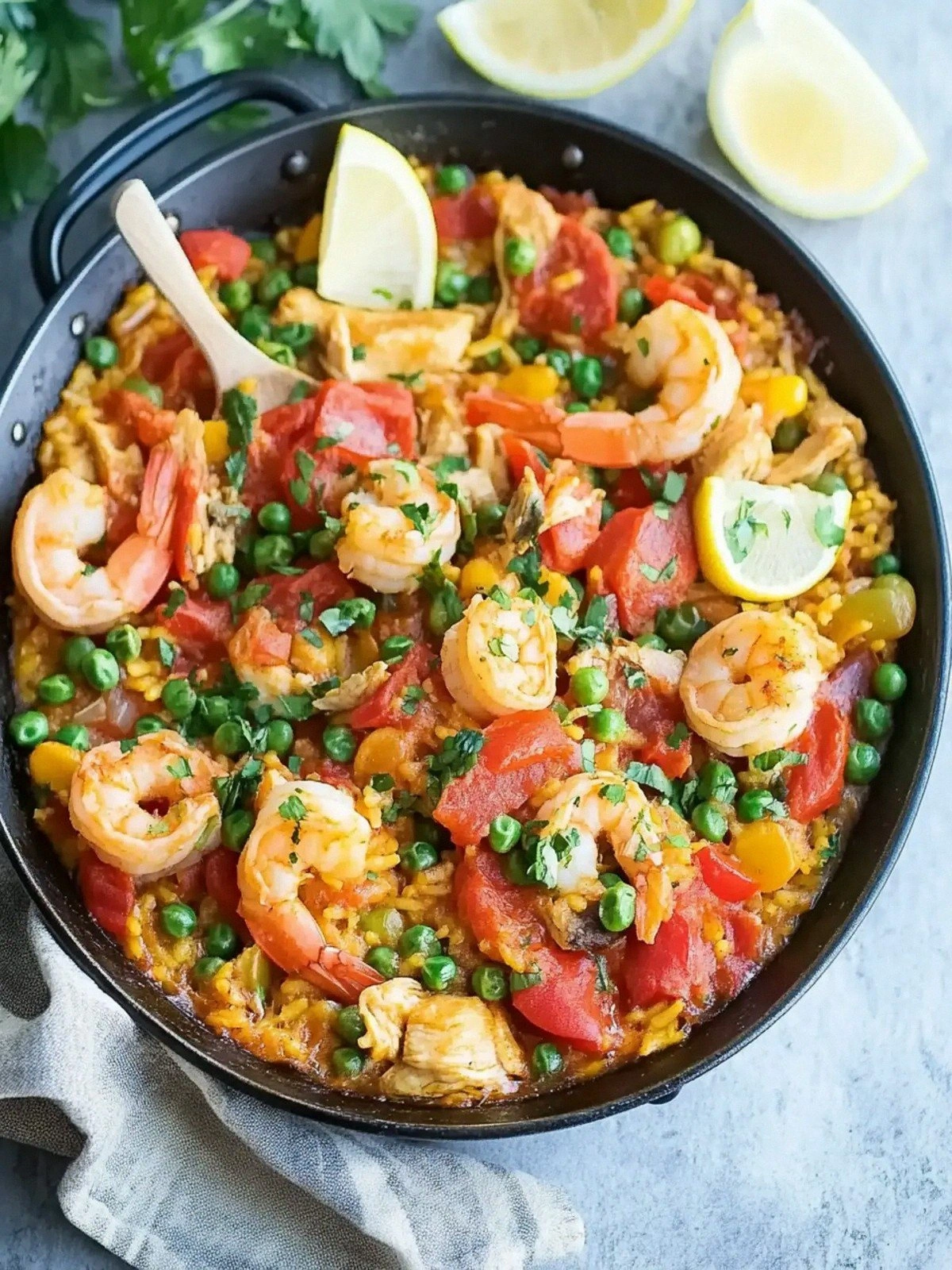
As the rice cooked, I added the frozen peas, a burst of green that added both color and a subtle sweetness. When the liquid was almost absorbed, I squeezed the lemon over the paella, the citrus brightening the dish like a sunrise over the Atlantic. The final flourish was a sprinkle of fresh parsley, the green leaves offering a fresh contrast to the smoky and briny elements. I could almost taste the crowd’s reaction, hearing their delighted gasps, and I knew this would be a meal to remember.
What Makes This Version Stand Out
- Flavor Depth: The saffron’s subtle perfume blends with the smoky chouriço, creating a complex profile that lingers on the palate. The combination of clam juice and chicken broth adds a briny undertone that balances the sweetness of the tomatoes.
- Texture Contrast: Each bite delivers a satisfying mix of tender chicken, plump shrimp, creamy rice, and crisp peas, all wrapped in a slightly caramelized crust. The final sizzle of the pan locks in moisture while giving a gentle crunch that shatters like thin ice.
- Simplicity of Prep: No fancy equipment is required; a single skillet or paella pan does the job. The ingredients are grouped logically, allowing you to work in stages without juggling too many pots.
- Crowd Appeal: The dish feels festive and indulgent, making it perfect for family dinners or a relaxed gathering with friends. Its vibrant colors and aromatic steam create a visual spectacle that invites conversation.
- Ingredient Quality: Using fresh, high‑quality chouriço and shrimp elevates the dish, while the saffron’s aroma is unmistakable. The use of Arborio rice instead of short‑grain rice provides a slightly firmer bite.
- Make‑Ahead Potential: The paella can be cooked ahead, then reheated to preserve the flavors. The rice stays firm, and the shrimp and chicken reheat quickly without drying out.
The Flavor Base
The saffron is the secret backbone of this paella; it infuses the rice with a mellow, floral aroma that can’t be replicated by any spice alone. A pinch steeped in hot water releases the essential oils, giving the dish its signature golden hue and subtle earthiness. The chouriço, sliced thin, offers a smoky, slightly spicy undertone that complements the sweetness of the tomatoes and the briny notes from the clam juice. Olive oil is the medium that binds these flavors together, allowing each ingredient to shine while preventing sticking.
The Vidalia onion adds a gentle sweetness that mellows the heat from the chouriço, while the garlic’s sharpness cuts through the richness, creating a harmonious balance. Roasted red peppers contribute a smoky depth and a sweet bite that pairs well with the tomato cubes, which release their juice and add a natural tang. Together, these aromatics form a fragrant base that permeates the rice and the proteins, ensuring every bite is layered with complexity.
Bay leaves bring a subtle, herbal note that rounds off the flavor profile, while the lemon’s bright acidity lifts the dish, cutting through the richness and adding a citrusy freshness. Fresh parsley, sprinkled at the end, offers a burst of green that not only brightens the visual appeal but also adds a herbaceous finish. The interplay of these elements transforms a simple skillet into a culinary stage where every ingredient performs its part.
The Texture Crew
The Arborio rice, chosen for its slightly firmer bite, absorbs the broth and saffron, resulting in a creamy yet al dente center that holds the dish together. The frozen peas are added later to preserve their vibrant color and crispness, providing a pop of green that contrasts the warm tones of the rice and meats. Shrimp, with their quick cooking time, add a delicate sweetness and a firm texture that balances the softness of the chicken thighs.
Chicken thighs, seasoned with salt and pepper, release their fat into the pan, enriching the broth and creating a savory base that enhances the overall flavor. The combination of clam juice and chicken broth creates a complex liquid that both hydrates the rice and imparts a subtle briny flavor, echoing the sea. This layered approach to texture ensures that the dish never feels one‑dimensional, offering a satisfying bite in every spoonful.
Water, the most overlooked component, is the medium that allows the rice to steam properly. It is essential to add the correct amount to avoid a dry or mushy result; the ratio of liquid to rice is carefully calibrated to achieve that coveted al dente finish. The careful balance of liquids also helps the saffron’s aroma to permeate the entire dish, making every mouthful a fragrant experience.
The Unexpected Star
Chouriço, though a traditional Portuguese sausage, is often underutilized in paella. Its smoky, slightly spicy flavor acts as a bridge between the sweet shrimp and the savory chicken, creating a harmony that feels both exotic and familiar. When sliced thinly and browned, it releases a savory fat that coats the pan, preventing sticking and adding depth.
Shrimp, with its natural sweetness and firm texture, adds a luxurious touch that elevates the dish beyond a standard chicken paella. Their quick cooking time ensures they remain tender and juicy, contrasting nicely with the slow-cooked chicken thighs. When combined, shrimp and chouriço create a flavor synergy that is both unexpected and delightful.
When you taste the final dish, you’ll notice how the chouriço’s smoky undertone is complemented by the shrimp’s briny sweetness, creating a flavor profile that feels like a culinary adventure. This unexpected star duo sets this paella apart from the countless variations that rely solely on chicken or seafood, giving it a distinctive edge.
The Final Flourish
Fresh parsley, finely chopped, is sprinkled over the finished paella, adding a bright, herbaceous note that cuts through the richness. Lemon wedges sit on the side, ready to be squeezed in for an extra burst of citrus whenever you desire. The final touch is a drizzle of good olive oil, which adds a silky finish and enhances the aroma.
Serving suggestions include a side of crusty bread or a simple green salad to balance the meal. The paella’s vibrant colors make it a centerpiece that invites conversation, while the aroma of saffron and chouriço fills the kitchen. The dish is so versatile that it can transition from a casual family dinner to a more formal gathering with ease.
Everything's prepped? Good. Let's get into the real action...
The Method — Step by Step
- Heat the olive oil in a large paella pan over medium heat until shimmering. Add the sliced chouriço and cook until it releases its fat and turns golden brown, about 3 minutes. This step builds the base flavor and creates a savory coating that will cling to the rice. Keep an eye on the heat to avoid burning the sausage.
- Add the Vidalia onion, garlic, and roasted red peppers. Sauté until the onion turns translucent and the peppers soften, about 5 minutes. The aromatics should emit a sweet, smoky scent that signals the pan is ready for the next layer. Stir occasionally to ensure even cooking.
- Introduce the shrimp to the pan, letting them sear for 1 minute on each side until they turn pink. Then add the chicken thighs, browning them on all sides. The searing creates a caramelized crust that locks in juices and adds depth to the dish. This is where the texture contrast begins to take shape.
- Stir in the tomato cubes and let them break down, forming a saucy base. Add the Arborio rice and toast it for 2 minutes, stirring until the grains are coated in oil and slightly translucent. This step locks in the rice’s natural starch, ensuring a creamy interior. The toast also adds a subtle nutty flavor.
- Pour in the clam juice and chicken broth, bringing the liquid to a gentle simmer. Add the bay leaves and a pinch of saffron steeped in hot water. The broth should bubble lightly but not boil vigorously, as a steady simmer helps the rice absorb flavors evenly. This is the moment of truth; watch the liquid level closely.
- Reduce the heat to low, cover the pan with a lid or foil, and let the paella simmer for 18 minutes, or until the rice is al dente and the liquid is absorbed. Check the rice with a fork; it should be tender but still firm to the bite. This slow cooking allows the flavors to meld while keeping the grains distinct.
- Add the frozen peas and let them heat through for 2 minutes. Squeeze the lemon over the paella, then sprinkle the fresh parsley. The citrus brightens the dish, while the parsley adds a fresh, herbal finish. Remove the bay leaves before serving.
- Let the paella rest for 5 minutes, uncovered, to develop a slight crust on the bottom. This crust, known as socarrat in Spanish, adds a delightful crunch that many paella lovers crave. Serve directly from the pan, ensuring each guest gets a share of the golden bottom layer.
That's it — you did it. But hold on, I've got a few more tricks that'll take this to another level...
Insider Tricks for Flawless Results
The Temperature Rule Nobody Follows
Many cooks keep the heat high throughout, which can scorch the bottom and leave the rice uneven. I discovered that starting at medium, then dropping to low after adding the liquids, preserves the rice’s structure. Keep the heat steady; a rolling boil is a recipe for soggy grains.
Why Your Nose Knows Best
The aroma is your best judge of doneness. When the rice is ready, the scent will be nutty and slightly toasty, not raw. Trust your nose; it will tell you when the liquid has been absorbed.
The 5‑Minute Rest That Changes Everything
After cooking, let the paella rest uncovered. This allows the steam to finish cooking the rice and prevents the bottom from becoming soggy. The rest also lets the flavors settle, making each bite more harmonious.
Use Fresh Shrimp, Not Frozen
Frozen shrimp can release excess water during cooking, diluting the broth. If you must use frozen, thaw them completely and pat dry before adding. Fresh shrimp stay firm and absorb flavors better.
Season the Broth, Not Just the Rice
Adding salt and pepper to the broth, not the rice, ensures even seasoning. A well‑seasoned liquid infuses the grains as they absorb, creating a balanced flavor profile.
Finish with a Splash of Lemon Juice
Lemon adds brightness that cuts through the richness of the sausage and the depth of the broth. Squeeze just before serving; the acidity will lift the dish and make it feel fresh.
Creative Twists and Variations
This recipe is a playground. Here are some of my favorite ways to switch things up:
Veggie‑Rich Paella
Swap the shrimp for a mix of bell peppers, artichoke hearts, and zucchini. The vegetables add color and a mild sweetness that complements the chouriço. Serve with a side of crusty bread to soak up the sauce.
Seafood Medley
Add mussels, clams, and scallops to the shrimp for an oceanic twist. The seafood will release a briny sweetness that pairs beautifully with the saffron. Keep the cooking time short to avoid overcooking the delicate shellfish.
Chicken‑Only Paella
Omit the shrimp and increase the chicken thighs to 2 lbs. This version is great for larger gatherings where you want a hearty, protein‑rich dish. The rice will absorb more of the chicken’s savory juices.
Low‑Carb Version
Replace Arborio rice with cauliflower rice or a small amount of quinoa. Keep the rest of the ingredients the same for a lighter, keto‑friendly dish. The texture will be slightly different but still satisfying.
Vegan Paella
Use plant‑based sausage or omit the chouriço entirely. Substitute the chicken broth with vegetable broth, and add tofu or tempeh for protein. The saffron and spices will still provide a deep, savory flavor.
Spicy Kick
Add a handful of crushed red pepper flakes or a sliced fresh jalapeño to the aromatics. The heat will cut through the richness of the sausage and shrimp, giving the dish a lively edge. Adjust the amount to taste.
Storing and Bringing It Back to Life
Fridge Storage
Let the paella cool completely, then transfer it to an airtight container. Store in the refrigerator for up to 3 days. The rice will retain its texture, and the flavors will deepen.
Freezer Friendly
Pack the paella in freezer‑safe bags, removing as much air as possible. Freeze for up to 2 months. Thaw overnight in the refrigerator before reheating.
Best Reheating Method
Reheat in a skillet over low heat, adding a splash of water or broth to create steam. Stir gently to re‑integrate the rice and prevent it from drying out. The dish should feel warm and fragrant, just like when it was first cooked.