Picture this: I’m standing in my kitchen, the oven humming like a contented cat, and I’ve just realized I’ve run out of my go‑to comfort food—mac and cheese. Panic? Absolutely not. I tossed a few sweet potatoes onto the tray, grabbed the nearest bag of ricotta, and before I knew it I was orchestrating a culinary masterpiece that would make even the most skeptical foodie swoon. That frantic, improvisational moment turned into the birth of the Creamy Ricotta & Spinach Stuffed Sweet Potatoes with Balsamic, a dish that feels like a warm hug from the inside out.
The kitchen was a symphony of smells: the earthy aroma of fresh spinach hitting a hot pan, the sweet perfume of caramelizing sweet potatoes, and that faint, seductive whisper of balsamic vinegar mingling with maple syrup. I could hear the gentle crackle of butter as it melted, the soft sizzle of garlic turning golden, and the occasional pop of the oven door opening and closing like a well‑timed drumbeat. My hands felt the weight of the potatoes, their skins rough and promising, while the creamy ricotta waited like a cloud ready to burst. Every sense was on fire, and I knew I was onto something extraordinary.
Why does this version outshine every other stuffed sweet potato recipe you’ve ever tried? First, the filling is a luxurious blend of ricotta, spinach, and just enough lemon zest to cut through the richness, creating a balance that dances on the palate. Second, the balsamic‑maple glaze adds a glossy, sweet‑tangy finish that turns a humble side into a show‑stopper. Most recipes either drown the potatoes in sauce or leave the filling dry and bland; this one hits the sweet spot—creamy, bright, and just a tad crunchy from the cranberries.
And here’s the kicker: I’m about to reveal a secret ingredient that most cooks overlook—a pinch of ground nutmeg that adds a whisper of warmth, like a hidden spice in a classic novel. Trust me, once you taste that subtle depth, you’ll never settle for the ordinary again. I dare you to taste this and not go back for seconds.
Let me walk you through every single step — by the end, you’ll wonder how you ever made it any other way.
What Makes This Version Stand Out
- Flavor Explosion: The combination of ricotta’s silkiness, spinach’s earthiness, and the sweet‑tart balsamic glaze creates a layered taste that evolves with each bite.
- Texture Harmony: You get the tender fluff of roasted sweet potato, a creamy interior, and a delightful crunch from dried cranberries.
- Simplicity Meets Sophistication: Only a handful of pantry staples are needed, yet the result feels restaurant‑worthy.
- Ingredient Quality: Fresh spinach and high‑quality ricotta make all the difference; you’ll taste the difference immediately.
- Crowd‑Pleaser Factor: Even the pickiest eaters rave; the sweet‑savory balance wins hearts at family dinners and potlucks alike.
- Make‑Ahead Magic: The filling can be pre‑made and stored, allowing you to assemble and bake on the day you need it.
- Season‑Neutral: Sweet potatoes are a year‑round staple, making this dish perfect for any season.
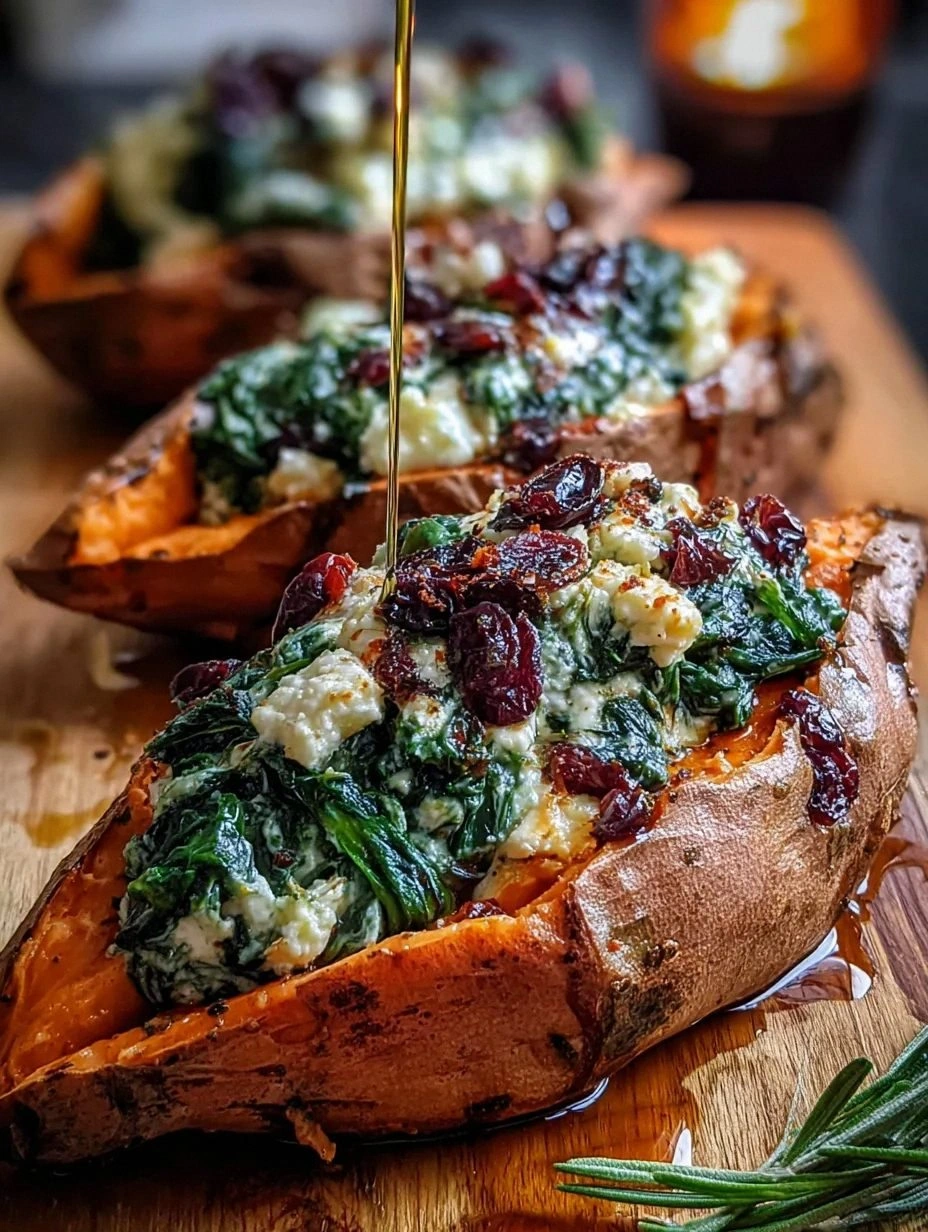
- Visual Wow Factor: The glossy balsamic drizzle and vibrant green spinach peek through the orange potato skin—Instagram gold.
Inside the Ingredient List
The Flavor Base
Sweet Potatoes: The star of the show! Naturally sweet and nutritious, they provide a beautiful base for stuffing. If you pick potatoes that are firm to the touch and have smooth skins, you’ll avoid soggy interiors. Skipping them isn’t an option—without the sweet potato, there’s no vessel for the luscious filling. Look for orange-fleshed varieties that are firm yet slightly soft when pressed.
Olive Oil: A dash of this liquid gold adds flavor and helps in roasting the potatoes to perfection. It also encourages a crisp skin that contrasts the creamy interior. If you’re out of olive oil, a neutral oil like grapeseed works, but you’ll lose some of that fruity nuance.
Salt and Black Pepper: Basic seasoning enhances the natural flavors. Always adjust to your taste, but a generous pinch of sea salt brings out the sweetness of the potatoes, while cracked black pepper adds a subtle bite. Forgetting this step is a rookie mistake that leaves the dish flat.
The Texture Crew
Butter: It adds richness to the sautéed garlic and spinach, giving depth to the filling. When melted, it coats the spinach, preventing it from releasing too much water, which could make the filling watery. If you’re dairy‑free, swap with a plant‑based butter—just make sure it’s unsalted.
Garlic: Freshly minced, garlic infuses the dish with aroma and flavor. A little goes a long way, and over‑cooking can turn it bitter, so keep an eye on that golden hue. If you love a punchier flavor, add a second clove, but remember it will dominate the subtle sweetness.
Fresh Spinach: This vibrant green packs vitamins and adds a lovely earthy taste to the filling. It wilts quickly, so add it in batches to keep the pan from steaming. If fresh isn’t available, frozen spinach works—just thaw, squeeze out excess moisture, and you’ll be fine.
The Unexpected Star
Ricotta Cheese: Creamy ricotta is the heart of the filling, creating that decadent texture that we all crave. Its mild flavor lets the other ingredients shine while providing a luxurious mouthfeel. Low‑fat ricotta will still work, but the richness will be slightly muted.
Ground Nutmeg: Just a pinch brings warmth and a hint of spice, making the filling more interesting. It’s the secret that turns a simple cheese‑spinach mix into something memorable. Too much, however, can overwhelm, so stick to a quarter teaspoon.
Lemon Zest: It brightens up the filling, adding a fresh, citrusy note that balances the creaminess. The zest should be finely grated; larger pieces can be bitter. If you’re out of fresh lemons, a splash of lemon juice works, though the zest’s aromatic oils are irreplaceable.
The Final Flourish
Dried Cranberries: These little gems bring sweetness and a chewy texture, enhancing the dish’s overall appeal. They also add a pop of ruby color that makes the plate look festive. If you prefer a tart bite, try dried cherries or golden raisins.
Balsamic Vinegar: This tangy liquid adds complexity and sweetness to the glaze, complementing the sweet potatoes beautifully. Reduce it slightly with maple syrup for a glossy finish that clings to each bite. Using a cheap balsamic can result in a harsh flavor—opt for a good-quality, aged balsamic.
Maple Syrup: A touch of natural sweetness from maple syrup balances the tang of balsamic vinegar perfectly. It also adds a subtle caramel note that deepens the overall flavor profile. If you don’t have maple, a drizzle of honey works, but the flavor will shift slightly.
Everything’s prepped? Good. Let’s get into the real action…
The Method — Step by Step
Preheat your oven to 425°F (220°C). While the oven warms, give the sweet potatoes a quick scrub under cold water, pat them dry, and slice each one lengthwise, leaving about a half‑inch hinge so they stay together. Drizzle both sides with olive oil, then season generously with salt and black pepper. Place them skin‑side down on a parchment‑lined baking sheet; the heat will coax the sugars to caramelize, producing a sweet, nutty aroma that fills the kitchen. That sizzle when it hits the pan? Absolute perfection.
Roast the potatoes for 20‑25 minutes, or until the flesh is fork‑tender and the edges start pulling away from the skin. Flip them over and give them another 5 minutes to crisp the exposed flesh. This two‑stage roasting ensures a fluffy interior while maintaining a slightly crisp outer layer—think of it as a textural duet.
While the potatoes are in the oven, melt the butter in a large skillet over medium heat. Add the minced garlic and sauté for 30 seconds, just until fragrant—watch out for browning, as burnt garlic turns bitter. Then, toss in the fresh spinach in batches, allowing each handful to wilt before adding the next. The pan should look like a vibrant green waterfall, and the spinach will release a tiny amount of liquid; keep stirring to evaporate excess moisture.
When the spinach is fully wilted and the pan is dry, remove it from the heat and let it cool for a minute. Transfer the mixture to a large bowl, then fold in the ricotta, ground nutmeg, lemon zest, and dried cranberries. The ricotta should melt slightly from the residual heat, creating a silky binding agent that holds the spinach together. Taste and adjust seasoning with a pinch more salt or pepper if needed.
Now for the glaze: In a small saucepan, combine balsamic vinegar and maple syrup. Bring to a gentle simmer over low heat, stirring constantly. Let it reduce by about one‑third, which will thicken it into a glossy syrup that clings to the potatoes like a sweet‑tangy veil. This reduction is the secret weapon that transforms a simple roasted veg into a masterpiece.
Remove the roasted potatoes from the oven and let them cool just enough to handle. Using a spoon, gently scoop out a shallow well along the center of each half, being careful not to pierce the skin. The scooped flesh can be saved for soups or mashed as a side—don’t waste it!
Fill each potato cavity with the ricotta‑spinach mixture, mounding it slightly so it peaks above the skin. The contrast between the orange flesh and the pale green filling is as striking as a sunrise over a meadow. Return the stuffed potatoes to the oven for a final 10‑12 minutes, just enough for the filling to set and the top to turn a light golden hue.
When the timer dings, pull the tray out and immediately drizzle the balsamic‑maple reduction over each potato, letting it cascade down the sides. The glaze will sizzle upon contact, sealing in moisture and adding that glossy finish we promised. Let the potatoes rest for two minutes; this short pause allows the flavors to meld and the glaze to thicken further.
That’s it — you did it. But hold on, I’ve got a few more tricks that’ll take this to another level…
Insider Tricks for Flawless Results
The Temperature Rule Nobody Follows
Never underestimate the power of a hot oven. Starting at 425°F ensures the sweet potatoes develop a caramelized exterior while staying fluffy inside. If you lower the temperature, you risk soggy skins and a longer cooking time, which can dry out the ricotta filling. I once tried 375°F out of “health consciousness” and the result was a limp, sad potato that lacked that coveted edge. Keep the heat high and trust the process.
Why Your Nose Knows Best
The moment the potatoes start to smell sweet and nutty, you’re close to perfection. Trust that olfactory cue more than the clock. I’ve watched people pull potatoes out too early because the timer said “done,” only to discover they were still a little firm. When the kitchen smells like a caramelized orchard, you’re ready to move on to stuffing.
The 5‑Minute Rest That Changes Everything
After the final bake, let the potatoes sit for five minutes before serving. This pause allows the filling to settle, preventing a watery spill when you cut into them. It also gives the balsamic glaze a chance to thicken further, coating each bite with a glossy sheen. Skipping this rest is a common mistake that leads to a soggy plate.
Seasonal Swap Savvy
If you’re cooking in winter, consider adding a pinch of cinnamon to the glaze for a warm holiday twist. In summer, fresh herbs like basil or mint brighten the filling. The dish is a canvas; these subtle changes keep it exciting year after year.
Don’t Forget the Crunch
For an added textural surprise, sprinkle toasted pumpkin seeds or chopped walnuts on top just before serving. The nuts introduce a buttery crunch that contrasts the creamy interior, creating a symphony of mouthfeel. A friend once tried skipping the nuts and complained the dish felt “one‑note” — never underestimate the power of a little crunch.
Creative Twists and Variations
This recipe is a playground. Here are some of my favorite ways to switch things up:
Spicy Sriracha Swirl
Mix a teaspoon of sriracha into the ricotta filling for a gentle heat that pairs beautifully with the sweet potatoes. Top with a drizzle of extra balsamic glaze for a sweet‑heat balance that will wow any spice lover.
Cheesy Goat Delight
Replace half of the ricotta with soft goat cheese. The tangy goat adds a sophisticated bite, and the blend creates a richer, more complex flavor profile. Serve with a sprinkling of fresh thyme for an earthy finish.
Harvest Apple Crunch
Dice a crisp apple and fold it into the spinach‑ricotta mixture. The apple’s tartness lifts the dish, while its crunch adds a surprising texture. This variation shines in autumn, especially when paired with a drizzle of caramelized onion jam.
Vegan Victory
Swap ricotta for a well‑drained tofu “ricotta” seasoned with nutritional yeast, lemon juice, and a pinch of garlic powder. Use coconut oil instead of butter, and choose a maple‑balsamic glaze. The result is a plant‑based version that still delivers that creamy, comforting feel.
Herb‑Infused Balsamic
Infuse the balsamic reduction with rosemary or thyme while it simmers. The herbaceous notes add depth, turning the glaze into a fragrant sauce that complements the earthy spinach.
Cheddar‑Cheese Crust
After stuffing, sprinkle shredded sharp cheddar on top and broil for 2‑3 minutes until bubbly and golden. The cheese crust adds a crunchy, melty layer that transforms the dish into a hearty casserole.
Storing and Bringing It Back to Life
Fridge Storage
Allow the stuffed potatoes to cool completely, then place them in an airtight container. They’ll keep fresh for up to 3 days. When you’re ready to reheat, pop them in a 350°F oven for 15 minutes, covered with foil to prevent drying out.
Freezer Friendly
Freeze the unbaked, stuffed potatoes on a parchment sheet, then transfer to a zip‑top bag. They’ll stay good for up to 2 months. To bake from frozen, add an extra 10‑12 minutes to the cooking time and keep an eye on the glaze to avoid burning.
Best Reheating Method
For the ultimate texture, reheat in a skillet over medium heat with a splash of water—cover for 5 minutes, then uncover to let the glaze caramelize again. The added moisture steams the interior back to fluffy perfection while the outside crisps up nicely.